Curriculum

‘Spore’ Plays Games With Evolution Theory

By Sean Cavanagh — January 16, 2009 2 min read
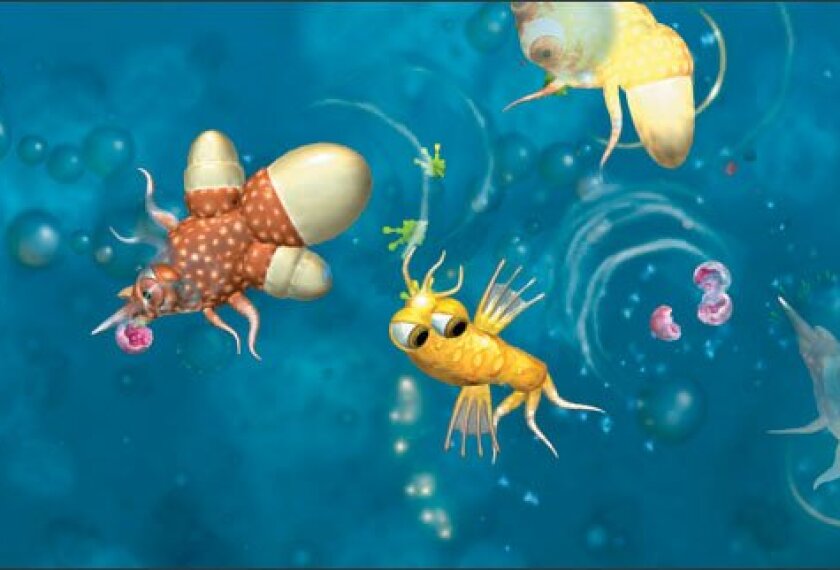
The new Spore computer game allows users to choose traits for living things to help them survive. Scholars caution the game is not a substitute for learning science directly.
  • Save to favorites
  • Print

A much-anticipated commercial computer game about evolution is getting a favorable response from some scholars, who welcome its interactive, engaging approach to the topic even though a few of its features sacrifice strict scientific accuracy to fun.

The game, called Spore, was recently released in stores across the United States. It gives users the ability to “evolve life,” or customize creatures by giving them traits that affect their ability to survive and prosper, as well as share their creations with a vast network of other game players.

Debates over how to teach about evolution, a foundational theory in the study of biology, have raged in schools for years. For a number of academic experts familiar with those debates who had heard of Spore or seen demonstrations of it, the game is a clever way to raise students’ interest in evolution.

But they also say that the game’s primary benefits are probably recreational, rather than educational, given some of the liberties it takes with the science of evolution.

Computer games like Spore “are a natural place for students to gravitate to,” says Joe Meert, an associate professor of geology at the University of Florida, in Gainesville, who covers evolution in his classes. He is a member of Florida Citizens for Science, a group that supports the teaching of evolution in public schools and opposes what it regards as unscienti?c alternatives to it.

“Even the things that it gets wrong, it could be a teachable moment,” Meert says. “Here’s something the game gets wrong. Why is it wrong?”

Spore was designed by Will Wright, known for having previously created popular games such as SimCity, which allows users to plan and build imaginary cities.

The evolution game allows users to create living things, from their inception as “pond scum” to fully evolved beings, by choosing advantageous features. Players can also build civilizations and entire worlds.

The theory of evolution, advanced most famously by Charles Darwin, posits that humans and other living things have evolved over millions of years through the process of natural selection—basically, survival of the fittest—along with random mutation.

In allowing students to control how a creature evolves, Spore employs a process of “external manipulation” that mainstream scientists would reject as unscientific, says Barbara Forrest, a professor of philosophy at Southeastern Louisiana University, in Hammond, who has written extensively about the history of evolution study.

Related Tags:

A version of this article appeared in the January 21, 2009 edition of Digital Directions as ‘Spore’ Plays Games With Evolution Theory

Events

This content is provided by our sponsor. It is not written by and does not necessarily reflect the views of Education Week's editorial staff.
Sponsor
School & District Management Webinar
Stop the Drop: Turn Communication Into an Enrollment Booster
Turn everyday communication with families into powerful PR that builds trust, boosts reputation, and drives enrollment.
Content provided by TalkingPoints
This content is provided by our sponsor. It is not written by and does not necessarily reflect the views of Education Week's editorial staff.
Sponsor
Special Education Webinar
Integrating and Interpreting MTSS Data: How Districts Are Designing Systems That Identify Student Needs
Discover practical ways to organize MTSS data that enable timely, confident MTSS decisions, ensuring every student is seen and supported.
Content provided by Panorama Education
Artificial Intelligence Live Online Discussion A Seat at the Table: AI Could Be Your Thought Partner
How can educators prepare young people for an AI-powered workplace? Join our discussion on using AI as a cognitive companion.

EdWeek Top School Jobs

Teacher Jobs
Search over ten thousand teaching jobs nationwide — elementary, middle, high school and more.
View Jobs
Principal Jobs
Find hundreds of jobs for principals, assistant principals, and other school leadership roles.
View Jobs
Administrator Jobs
Over a thousand district-level jobs: superintendents, directors, more.
View Jobs
Support Staff Jobs
Search thousands of jobs, from paraprofessionals to counselors and more.
View Jobs

Read Next

Curriculum Interactive Play the EdWeek Spelling Bee
Educators use these words all the time. But can they spell them?
Image of a stage set up for a spelling bee.
Leonard Mc Lane/DigitalVision
Curriculum Outdoor Learning: The Ultimate Student Engagement Hack?
Outdoor learning offers a host of evidence-based benefits for students. One Virginia school serves as an example how.
7 min read
Students from Centreville Elementary School in Fairfax, Va., release brook trout they’ve grown from eggs in their classroom into Passage Creek at Elizabeth Furnace Recreational Area in the George Washington National Forest in Fort Valley, Va. on April 23.
Students from Centreville Elementary School in Fairfax, Va., release brook trout that they’ve grown from eggs in their classroom at a creek in Fort Valley, Va., on April 23.
Sam Mallon/Education Week
Curriculum Opinion Classical Education Is Taking Off. What’s the Appeal?
Classical schooling is an apprenticeship to the great minds and creators of the past, enabling students to develop their own thinking.
9 min read
Image shows a multi-tailed arrow hitting the bullseye of a target.
DigitalVision Vectors/Getty
Curriculum Download For Earth Day, Try These Green Classroom Activities (Downloadable)
16 simple ideas for teachers and their students.
Earth Day Downloadable 042024
iStock/Getty