Opinion
Reading & Literacy Letter to the Editor

Reading Instruction Must Use Whole Books

February 27, 2026 1 min read
  • Save to favorites
  • Print

To the Editor:

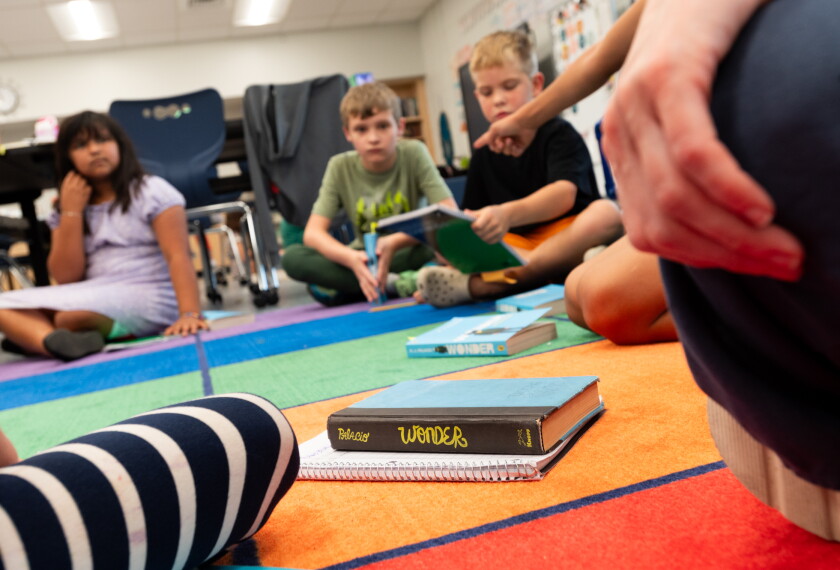
The Oct. 27, 2025, article “Novels vs. Excerpts: What to Know About a Big Reading Debate” and related reporting about reading instruction resonated with me. I’m fortunate enough to spend time in English/language arts classrooms that center instruction around whole books rather than excerpts or basal readers.

During my visits, I see students deeply engaged in what they’re reading, building knowledge on important topics, developing empathy through the characters in stories, and gaining the required focus and stamina to finish complex texts. All this will serve them well in school and in life.

Reading passages serve a purpose. They bring in more perspectives on a topic and build content knowledge. However, they seldom spark curiosity and do not encourage kids to keep reading in the way that a whole book will. As a former teacher, I loved when my students kept turning the pages of a class text even when it was time to switch to another lesson.

To support kids in reading grade-level works from start to finish, it’s helpful to build their background knowledge on the topic they’re reading about, pre-teach difficult vocabulary words, practice reading aloud to support fluency, encourage peer discussions about books, and connect reading and writing assignments. Natural curiosity kicks in with the right support.

Reading scores for 4th and 8th grade students declined on the 2024 National Assessment of Educational Progress. There are likely multiple reasons for this trend, but a move away from whole books in recent years is likely part of the problem. Helping young people grapple with great books has to be part of the solution.

Lorraine Griffith
Senior Director, Content Architect
Great Minds
Leicester, N.C.

read the article mentioned in the letter

Timothy Rimke reads during Casey Cuny's English class at Valencia High School in Santa Clarita, Calif., on Aug. 27, 2025.
Timothy Rimke reads during Casey Cuny's English class at Valencia High School in Santa Clarita, Calif., on Aug. 27, 2025. Some observers of English/language arts curriculum fear that several growing in popularity subordinate the reading of novels and whole texts to shorter excerpts, but the evidence is still sketchy.
Jae C. Hong/AP
Reading & Literacy Novels vs. Excerpts: What to Know About a Big Reading Debate
Sarah Schwartz, October 27, 2025
3 min read

Related Tags:

A version of this article appeared in the March 01, 2026 edition of Education Week as Reading instruction must use whole books

Events

This content is provided by our sponsor. It is not written by and does not necessarily reflect the views of Education Week's editorial staff.
Sponsor
Special Education Webinar
Hidden Costs of Special Ed Vacancies: Solutions for Your District
When provider vacancies hit, students feel it first. Hear what district leaders are doing to keep IEP-related services on track.
Content provided by Huddle Up
This content is provided by our sponsor. It is not written by and does not necessarily reflect the views of Education Week's editorial staff.
Sponsor
Privacy & Security Webinar
How Technology Is Reshaping Childhood
How do we protect kids online while embracing innovation? Learn about navigating safety, privacy, and opportunity in the Digital Age.
Content provided by Connect x Protect
Budget & Finance Webinar Creative Approaches to K-12 Budget Realities
What are districts prioritizing in 2026? New survey data reveals emerging K-12 budgeting trends.

EdWeek Top School Jobs

Teacher Jobs
Search over ten thousand teaching jobs nationwide — elementary, middle, high school and more.
View Jobs
Principal Jobs
Find hundreds of jobs for principals, assistant principals, and other school leadership roles.
View Jobs
Administrator Jobs
Over a thousand district-level jobs: superintendents, directors, more.
View Jobs
Support Staff Jobs
Search thousands of jobs, from paraprofessionals to counselors and more.
View Jobs

Read Next

Reading & Literacy Letter to the Editor Classic Literature Has Value in English Classes
A letter to the editor pushes back on the argument that classic literature is boring.
1 min read
Reading & Literacy What Might Matter More Than Phonics in Early Literacy
A district invested in evidence-based literacy instruction but reaped uneven results. Here's why.
4 min read
Anjanette McNeely teaches a reading block with her kindergarten students at Windridge Elementary School in Kaysville, Utah, on Dec. 4, 2025.
Anjanette McNeely teaches a reading block with her kindergarten students at Windridge Elementary School in Kaysville, Utah, on Dec. 4, 2025. Districts have emphasized structured literacy, though research suggests that how teachers use that time can significantly affect student outcomes.
Niki Chan Wylie for Education Week
Reading & Literacy Yes, Teachers Do Still Assign Full-Length Books. But Numbers Vary
Most middle and high school teachers have students read books—but often just one or two a year.
4 min read
Laura Patranella, a 5th grade teacher at Vogel Elementary School in Seguin, Texas, distributes copies of “Bud, Not Buddy” to her students to read in class on Nov. 3, 2025.
Students in Laura Patranella's 5th grade class at Vogel Elementary School in Seguin, Texas, read copies of <i>Bud, Not Buddy</i> on Nov. 3, 2025. On average, middle and high school teachers assign four full-length books a year, a new survey shows.
Brenda Bazán for Education Week
Reading & Literacy Quiz Quiz Yourself: How Much Do You Know About Helping Struggling Students Get Back on Track?
Too many students struggle with reading. Test your knowledge of what works—and discover strategies to help them get back on track.