

Kindergarten “redshirting”—when a parent decides to delay the start of their child’s academic career by a year—was once largely a choice made by higher-income parents of white boys.
But the COVID-19 pandemic seems to have shifted that trend—at least temporarily—with a more diverse group of students pushing kindergarten back a year, according to new research out of Delaware.
Most students start kindergarten when they are 5, but traditionally, about 4 percent of students are “redshirted” each year, or held back for one year and enrolled at age 6, a decision made by their parents or guardians.
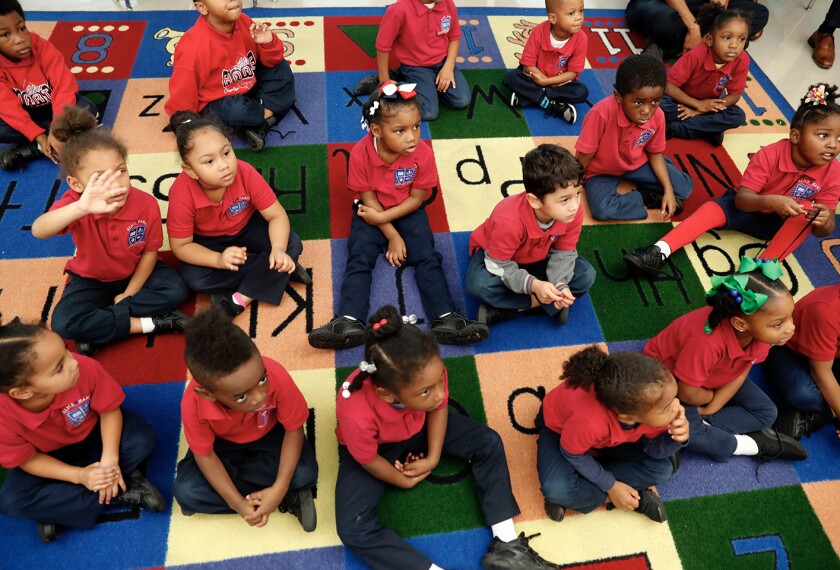
The most common reasons parents give is concern about their children’s social and academic preparedness compared to their classmates’. Often, parents redshirt students with summer birthdays who would have been young for their grade.
But now—following years of pandemic-related interruptions that appear to have hindered the youngest students’ ability to learn foundational fine-motor and social-emotional skills—some parents’ attitudes about redshirting appear to have shifted.
In an analysis of Delaware enrollment data between 2014 and 2022, researchers at the University of Delaware found that the rate of kindergarten redshirting swung back and forth, depending on the year, during the pandemic, landing below pre-pandemic levels in 2022.
When the use of redshirting was at its peak in this pandemic period, in 2021, it was larger for subgroups of students who previously weren’t as likely to delay their children’s kindergarten start by a year—such as girls and Black and Hispanic students.
Prior to the pandemic, Delaware 5-year-olds with summer birthdays were about 12 percentage points more likely to delay kindergarten than those with a fall birthday. But in 2021, the students whose parents delayed kindergarten were more mixed in age, suggesting the practice had moved beyond children with summer birthdays. In 2022, children with summer birthdays were less likely to delay kindergarten than they were pre-pandemic, “suggesting continued changes to redshirting patterns,” the researchers concluded.
“The pandemic may have caused parents to consider redshirting differently, given concerns about virus exposure or virtual learning,” the report says. “Such risks may have exacerbated inequality in redshirting, as more privileged families may have selected into alternative learning environments; or the increased risk of exposure for disadvantaged families may have driven redshirting among groups previously less likely to redshirt.”

Christopher Brown, a professor in the department of educational leadership and policy at the University of Texas at Austin, has studied kindergarten redshirting but did not participate in the Delaware research. He said the findings are interesting, but noted the authors did not disclose how long school buildings were generally closed to students during the pandemic.
Longer closures could have led more parents to redshirt to ensure their children had an in-person kindergarten experience.
“Having kids miss all that opportunity to socialize and gain, not only social and emotional skills, but also some academic skills in a community learning environment, I’m sure parents were quite worried about where their children were in relation to where they think they should be as they go into kindergarten,” he said.
The findings are helpful, Brown said, because researchers could now follow the cohort of students who were studied to link redshirting decisions with other outcomes, like academic achievement and high school completion.
“It’s a nice modern dataset, and it gives some insight to what impact pandemics have,” he said.
Redshirting decisions can be ‘complicated and complex’
Along with more time to develop academically and socially, some experts have found that parents also decide to redshirt their children to give them an advantage later on in athletics, especially in the South, a region with especially strong support for high school sports.
By holding their children back a year, families reason, the kids will potentially be physically stronger and larger than their peers once they reach high school, providing them with an advantage in athletics.
While physical size does not always equate to ability, professional and college recruiters pay attention to it when evaluating high school athletes.
For others, the additional year of paying for child care is simply not affordable, discouraging them from redshirting their children.
“For a lot of families, it’s a really complicated and complex decision,” Brown said.
Decades of research support the idea that early education works
Some research has shown that delaying kindergarten can give kids a temporary boost compared to their peers, but the advantage typically disappears by 1st or 2nd grade, Brown said.
Decades of research support the idea that early education is critical to developing young students’ learning and social-emotional skills and also crucial to their long-term academic success. In recent years, more states have pushed to expand access to pre-kindergarten, citing its success in narrowing achievement gaps and increasing test scores throughout students’ time in school.

The fact that more students missed early education opportunities during the pandemic adds an additional layer of complexity to school districts’ already complex learning recovery efforts, said Thomas Dee, a researcher at Stanford University who spoke to Education Week about the issue in 2023. He has noted that many students likely skipped kindergarten altogether during the pandemic.
“If kids are missing developmentally critical instruction, because they’re delaying kindergarten, that’s going to raise learning challenges when they do show up in formal schooling,” Dee said at the time. “Much of the academic recovery discourse is where we have test data, which tends to be among older students. But the kids for whom the enrollment data tell us the learning disruptions were the most significant, they still haven’t even aged into those testing windows.”


