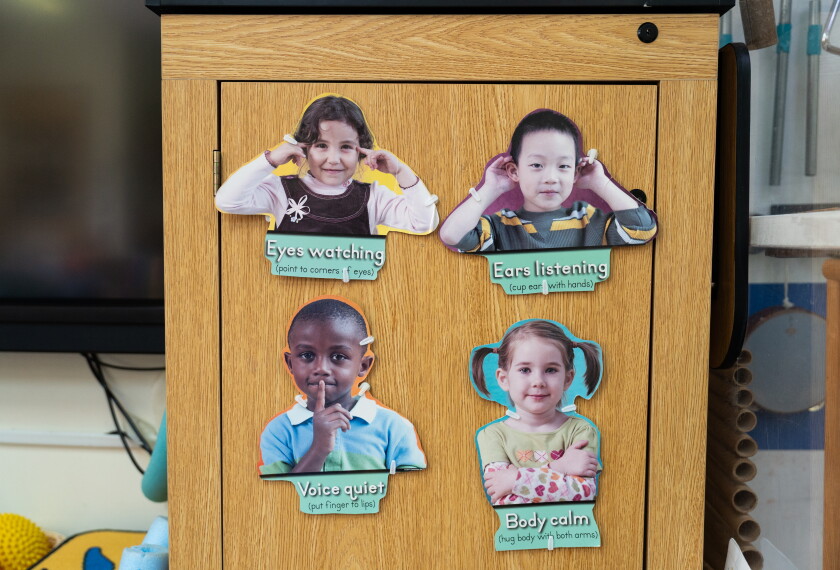
Teachers of K-12’s youngest learners find themselves at a crossroads.
With reading and math proficiency scores at record or near-record low levels, many state and district officials are pushing for academic rigor to begin as early as kindergarten. At the same time, a growing number of children are entering formal education ill-prepared to manage their emotions, as evidenced by feedback from educators, including a recent national EdWeek Research Center survey.
Teachers can’t control the many contributing factors blamed on this surge in emotional dysregulation among kindergartners: the disruptions of the pandemic, an increased use of technology at ever-earlier ages, “permissive” parenting, and a rise in academic demands, to name a few. But teachers can be better equipped to respond to students when they’re having a hard time managing their emotions.

This downloadable tip sheet outlines seven strategies teachers can use when young learners struggle to manage their emotions in the classroom.
Sign up for a free online discussion about the science and practice of emotional regulation in the classroom on Sept 18.