
At first, I cringed when I thought about a classroom without perfectly tidy desks, pushed-in chairs, and thoughtfully chosen seating assignments. I thought, “Why would any teacher want to lose control of his or her classroom that way?”
While I despised making seating charts every month, I prided myself on it, too. Doing it well was kind of like solving a Rubik’s cube or complicated equation. But I started to warm to the idea of a flexible-seating classroom, where students can pick their own seats from a variety of options, when I visited one in action. What I saw was kids looking comfortable and engaged in their work.
Being ready to make the change was the easiest part of the process. There are many considerations to think about when implementing flexible seating: designing a classroom layout, purchasing items, logistics, and communication.
Pinterest and teacher blogs are flooded with idyllic-looking flexible-seating classrooms. The tricky part about them is that no two classrooms will look the same, so you have to do many sketches and adjustments to find what works for your space, your kids, and your style.
First Try
At first, I took out many desks, took off the legs of some desks, and raised other desks. I started the year with standing desks, wobble stools, stability cushions, scoop seats, crate seats, and our tent as seating choices.
I noticed that when kids didn’t have a desk, their belongings were everywhere (surprise, surprise) and it was harder to get their attention. I ended up adding all of my desks back into the classroom so that everyone has a desk. Some are standard height, and others are tall or very low. But all the children have a “home base” for their materials. It works better for my teaching, too, because when I teach whole group lessons, I can get students’ attention more quickly when they’re all sitting at desks.

Another consideration in implementing flexible seating is actually buying different kinds of seats. Some seats can cost more than $100 each. A shopping outlet mall near me has a program called TangerKIDS Grants. I won a $600 grant from this program, and that let me buy items I needed for this project. I bought scoop seats, stability cushions, six wobble stools, and log-shaped pillows for my tent.
Scholastic Book Club also has alternative seating that teachers can buy with points. And teachers can get bonus points at the beginning of the school year, which can aid in some of the most expensive purchases for alternative seats, like yoga balls and wobble stools. To encourage participation, I suggest telling parents this will be the only time you will send home catalogs, so they aren’t pressured repeatedly during the year.
How Will It Work?
The next consideration is classroom organization. Since the kids are not always going to work at the same spot, their materials need to be able to move around easily. This is where I thought I could simply use book bins that I already had.

As the year progressed, we added workbooks, packets, papers, and other items along the way. But we ended up having materials spill out of fallen book bins every few minutes or get tripped on. I decided to take the dingy-looking crate seats that I had made over the summer, remove the cushions, and zip-tie two horizontal crates together for every seating group so they had storage shelves. That way kids can put their book bins in the crates so their materials don’t spill constantly.
I ended up going back to collaborative groups of four, but with different seats and levels. It helps to have a “home base” for everyone because that allows me to hold supplies that don’t need to be moved around each day, like books and privacy folders, in each desk.
Learning a New System
Doing my flexible-seating arrangement, I quickly learned that the kids need to be taught very explicitly how to use each seat and what to expect. I created a video showing the dos and don’ts of each seating option so that they can visualize appropriate behavior and responsibility.
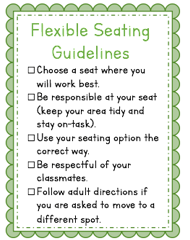
We also created some guidelines as a group and they each signed them like a contract. During the first month of school, the kids tried all of the seating options because we rotated through each choice. Then when they had the choice to pick spots, they knew which spots were best for them.
Flexible seating can be frustrating and expensive. It can take a while for the kids to make good choices about where they should sit to be successful. Once that metacognition piece starts and they understand how they learn and work best, it’s worth all of the challenges. I’ve observed more thoughtful conversations, better peer relations, more teamwork, and fewer frustrations since they are in collaborative groups and can exert their energy through constant movement.


