Special Report
Classroom Technology

Assessing the Impact of COVID-19 on Ed-Tech Use

Planning for the Future, Hoping for the Best
By Kevin Bushweller — June 02, 2020 1 min read
  • Save to favorites
  • Print

Planning for the Future, Hoping for the Best

Late March feels like a lifetime ago.

Everyone at Education Week was working remotely by then, schools were scrambling to make the shift to online teaching and learning, the coronavirus was taking the lives of thousands of people—including educators—and the economy was in the beginning of its downward spiral.

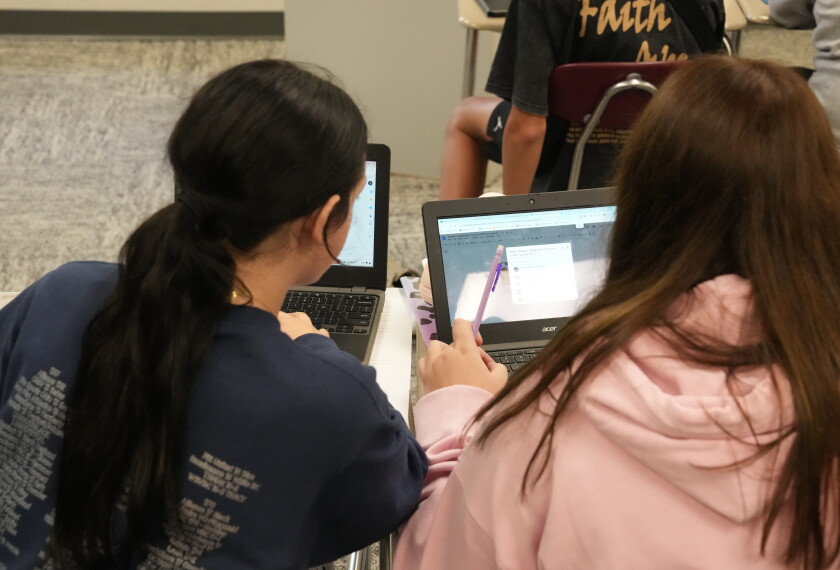
The educational technology landscape was shifting more rapidly than we had ever seen before. Many school districts were making last-minute purchases of Chromebooks, iPads, or other digital devices to put in the hands of students, with the goal of giving everyone an opportunity to engage in remote learning.

In the rush to throw together online learning programs, confusion reigned, especially around equity issues. Officials in some districts, such as Philadelphia, initially said they would not continue instruction while school buildings were closed, because some students would not have access to WiFi or computing devices. But then those districts reversed course and put virtual or remote learning programs in place.

It was during that confusion that Education Week decided to reschedule its annual Technology Counts report—which every year takes a look at the state of educational technology in K-12 schools—from mid-April to early June. We wanted to let the dust settle a bit on the remote learning scramble, giving us some time to see how things evolved and what those changes are likely to mean for the 2020-21 academic year and beyond.

Clearly, tech-driven remote learning created huge frustrations for educators. We saw that in the results from surveys conducted by the EdWeek Research Center—and in our reporting. But we also noticed that, by necessity, K-12 educators across the country had upgraded their tech skills faster than ever before.

What impact will those newfound technology and virtual teaching skills have on K-12 education when school buildings reopen? How will schools use all the new digital devices they purchased this spring? And could the increased use of technology heighten already big concerns about data privacy and students spending too much time in front of screens?

This issue of Technology Counts tackles those questions, because we are all now looking ahead, planning for the future, and hoping for the best.

Kevin Bushweller
Executive Project Editor
A version of this article appeared in the June 04, 2020 edition of Education Week as Editor’s Note: Planning for the Future, Hoping for the Best

Events

This content is provided by our sponsor. It is not written by and does not necessarily reflect the views of Education Week's editorial staff.
Sponsor
Student Absenteeism Webinar
Attendance Isn't an Attendance Problem
Boost attendance by strengthening relationships, belonging, and support with practical strategies from Doug Fisher & Nancy Frey.
Content provided by Corwin
This content is provided by our sponsor. It is not written by and does not necessarily reflect the views of Education Week's editorial staff.
Sponsor
School & District Management Webinar
The Principal's Role in Collective Efficacy and Student Outcomes
Learn practical strategies that help principals translate their confidence into stronger collective teacher efficacy and student outcomes.
Content provided by Otus

EdWeek Top School Jobs

Teacher Jobs
Search over ten thousand teaching jobs nationwide — elementary, middle, high school and more.
View Jobs
Principal Jobs
Find hundreds of jobs for principals, assistant principals, and other school leadership roles.
View Jobs
Administrator Jobs
Over a thousand district-level jobs: superintendents, directors, more.
View Jobs
Support Staff Jobs
Search thousands of jobs, from paraprofessionals to counselors and more.
View Jobs

Read Next

Classroom Technology Q&A Why a 'Blunt Force' Approach to Screen Time May Be Problematic
District and state leaders should avoid one-size-fits-all mandates on screen time, expert argues.
3 min read
Ninth-graders Charley Mays, left, and Grace Coleman work on iPads during an honors physical science class at Minnetonka High School on Oct. 30, 2019 in Minnetonka, Minnesota .
Ninth-graders Charley Mays, left, and Grace Coleman work on iPads during an honors physical science class at Minnetonka High School on Oct. 30, 2019 in Minnetonka, Minn. Some experts caution schools not to go too far in dialing back the use of classroom technologies, a trend called the "techlash" that is driven by concerns about the overuse of technology in schools.
Jerry Holt/The Minnesota Star Tribune via TNS
Classroom Technology Spotlight Spotlight on the Screen Time Reckoning: Educators, Parents, and the Fight for Healthier Classrooms
Screens are reshaping classrooms, but educators are pushing back to restore balance, protect learning, and prioritize human connection.
Classroom Technology Spotlight Spotlight on the Future of Blended Learning: Finding the Right Model for Your School
Discover practical insights for evaluating blended learning models and building flexible, future-ready schools.
Classroom Technology Q&A Why This District Is Getting Rid of Chromebooks for K-2 Students
Some parents, educators, and even students are souring on the ubiquitous presence of the technology.
6 min read
Numberpad visible on keyboard of ASUS CX1 Chromebook, Lafayette, California, October 27, 2025.
The Canon-McMillan school district in Pennsylvania is one of a growing number of school districts that are scaling back students’ classroom screen time. Students in grades K-2 will no longer have regular access to school-issued laptops or tablets, and students in grades 3-8 will have limited access through Chromebook carts.
Photo by Smith Collection/Gado/Sipa via AP Images