With the issue of accountability continuing to top the nation’s education agenda, demands for greater information on student performance are starting to filter down to children who haven’t even started school.
Especially in states with publicly financed preschool, policymakers are increasingly seeking data on how well such programs have prepared young children for kindergarten. That interest, in turn, is leading more states to view school-readiness testing as an accountability tool whose time has come.
“There is a movement toward testing that is unprecedented,” said Sharon L. Kagan, a senior associate at Yale University’s Bush Center in Child Development and Social Policy and the current president of the National Association for the Education of Young Children. “Every state in the union is playing around with this.”
Many experts argue that in order for states to maintain public and political support for preschool programs, proof is needed that those early-childhood-education services are effective. Yet as the interest in readiness assessment grows, it is colliding with experts’ long-held concerns about the dangers of subjecting very young children to standardized testing.
Such concerns were at the forefront here late last month, when about 200 people, representing 28 states, convened for a conference billed as a National Summit on School Readiness Assessment. The two-day event was sponsored by SERVE, one of the U.S. Department of Education’s regional laboratories and the only one with a special focus on early-childhood education. The lab is based in Greensboro, N.C.
As the keynote speaker, Ms. Kagan told participants that it was time for the early-childhood educators to “develop assessments that meet policymakers’ needs and are developmentally and culturally sensitive.”
That admonition was especially timely for officials from North Carolina and Florida, both of which are due to devise readiness assessments—usually given during kindergarten—in the next several months.
The same held true for representatives from Georgia, where the legislature recently passed an education accountability bill that requires testing beginning in 1st grade. The legislation also calls for a “prekindergarten accountability assessment program,” but some state officials are still wondering what that means.
“There’s a big question mark hanging over Georgia right now,” said Kathleen Gooding, who directs the state’s prekindergarten program.
Experts in early-childhood education have long contended that standardized, paper-and-pencil tests given to children before they are 8 years old, or in 3rd grade, are usually unreliable because young children are unpredictable. During those years, children develop rapidly. Therefore, a skill they don’t have one day may appear the next.
Young children are also more likely to perform at their best when they are in a comfortable environment, not taken out of the classroom to answer questions from a stranger.
|
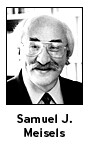
“Young children are bad test-takers,” said Samuel J. Meisels, an education professor at the University of Michigan. “They don’t do short answers.”
The NAEYC, in a position statement about testing young children, also stresses that important decisions about promotion or tracking, for example, should never be based on a single test, and that the primary purpose of evaluating young children should be to improve instruction.
Testing Over Time
It is possible to assess young children appropriately, if it is done on a continuous basis and in a nonthreatening way, Mr. Meisels said.
A program that he has designed, called the Work Sampling System, uses a combination of checklists and portfolios to monitor children’s progress at three points during the school year. Classroom teachers implement the program, and parents’ input is considered.
The program, or at least parts of it, has already been adopted by Maryland, Minnesota, and South Carolina for use in the early grades.
But making teachers such an integral part of the assessment process prevents the results from being used for accountability purposes—especially if rewards or penalties are tied to how well the students performed, Mr. Meisels noted.
“The teachers will try to protect themselves and their students,” he said at the conference. “It’s a natural instinct.”
The interest in school-readiness assessment is part of a general trend among governments to ensure they are spending money wisely, said Helene Stebbins, a program director for children and youth at the National Governors’ Association. States have increased spending on programs for young children in recent years, with more than 40 states now offering some form of publicly funded preschool.
Producing some evidence that such programs are working increases the chances that legislators and others who control state funds will continue to provide money for them, said Eva L. Baker, a professor of educational psychology at the University of California, Los Angeles, and a co-director of the National Center for Research on Evaluation, Standards, and Student Testing. “Doing good for little kids also means making sure the resources are there,” she said.

|
Ron Newcomb, the education adviser to Gov. Roy Barnes of Georgia, said assessing preschoolers can also help schools intervene early when children require extra help. In his state’s new school improvement package, such intervention means a 1-to-11 teacher-student ratio in the early grades for children performing below grade level.
“If you can detect a weakness at age 4, why would you wait until age 6 or 7?” he asked.
Labeling a Concern
But as policymakers seek to hold preschool programs accountable for results, many experts agree that they must avoid assessment systems that end up labeling children prematurely.
In Georgia, for example, the state’s goal is not to confine young children to a particular academic track, Mr. Newcomb stressed. In reality, he added, children in the early-intervention program will not necessarily be separated from other students.
“We’re just trying to get some gentle assessments to provide some guidance,” Mr. Newcomb said. “It won’t be a strict pass-fail, color-in-the-bubble test.”
Still, some early-childhood educators have reservations about the growing emphasis on results.
“I do want to know if we’re making a difference,” said James H. Squires, an early-education consultant for the Vermont Department of Education. “But I’m worried about what the potential might be.”
Several speakers at the conference suggested that one way to satisfy policymakers’ requests for accountability, without focusing on individual children, is to assess just a sample of pupils. Sampling costs less, but still lets officials track trends, they said.
North Carolina officials, for example, will test just a percentage of kindergartners using an assessment battery that was designed to track the progress of children in Head Start. Those results will be used for the accountability program, while a separate assessment will guide instruction. That plan avoids the problem of using one test for multiple purposes—a practice that some testing experts call inappropriate.
Standards Needed
Other experts worry that if assessments for young children focus only on academics, they will exclude other areas, such as social and emotional growth and physical development.
Ms. Kagan, who shares that concern, said early-childhood educators are partly at fault because they have not agreed on what young children should know and be able to do.
While professional organizations that represent some subject areas, such as the National Council of Teachers of Mathematics, have drawn up standards for preschoolers, the NAEYC has not.
Changing the NAEYC’s stance is an issue that Ms. Kagan raised with the association’s board when it met March 31-April 1 in Washington.
“We’re seeing this as the next big project,” said Barbara A. Willer, the group’s deputy executive director, adding that it was unclear what direction the organization might take. She pointed out that the association is already updating its guidelines for curriculum and assessment and for teacher education. Both, she said, are related to the issue of accountability.
Ms. Kagan added that the NAEYC also needs to help people understand the distinction between one-shot standardized tests and ongoing assessments.
“If we are not scrupulously clear every time we talk about assessment and testing,” she said, “the public will be confounded.”


