Curriculum

Adapting Technology to Meaningful Lessons

February 23, 2009 1 min read
  • Save to favorites
  • Print

Over at the Digital Education blog, my colleague, Katie Ash, has an interesting report on a discussion she heard at the Northwest Council for Computer Education’s “Navigating the New World With Technology” conference in Portland.

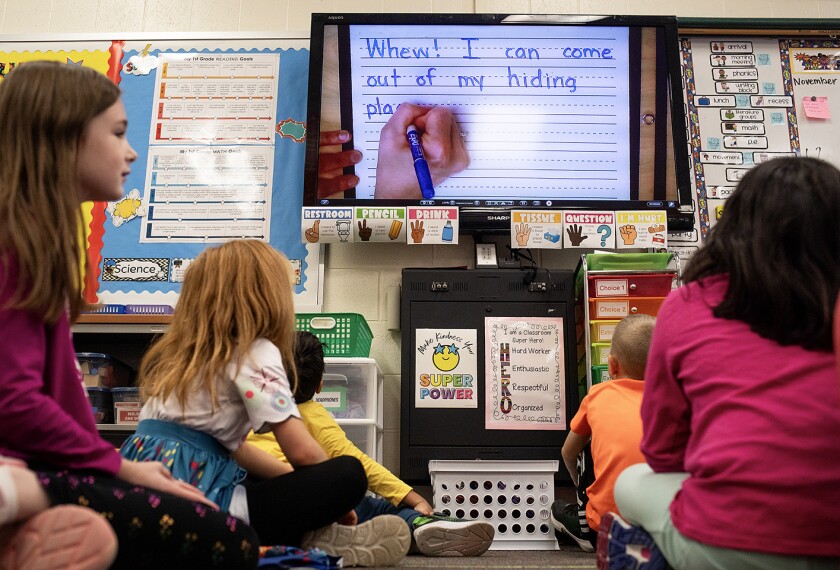
Debra Pickering, author of several books about teaching and learning that she’s co-wrote with Robert Marzano, gave the keynote address about building lessons that incorporate technology. It’s about the lesson, not the technology, Pickering said.

From Katie’s post: “At the root of those questions was something I hear over and over again from the ed-tech community—don’t use technology for technology’s sake. Just because you can use technology doesn’t always mean you should, Pickering stressed. Without a clear purpose and effective integration, technology doesn’t add anything to the lesson and could even be more distracting, she said.”

A decade or so ago, the prevailing conversation was more about the hardware, but now there is more and more discussion about the substance of learning, and how to use technology to deliver that content and improve learning.

A version of this news article first appeared in the Curriculum Matters blog.

Events

School & District Management Webinar Squeeze More Learning Time Out of the School Day
Learn how to increase learning time for your students by identifying and minimizing classroom disruptions.
This content is provided by our sponsor. It is not written by and does not necessarily reflect the views of Education Week's editorial staff.
Sponsor
Reading & Literacy Webinar
Improve Reading Comprehension: Three Tools for Working Memory Challenges
Discover three working memory workarounds to help your students improve reading comprehension and empower them on their reading journey.
Content provided by Solution Tree
Recruitment & Retention Webinar EdRecruiter 2026 Survey Results: How School Districts are Finding and Keeping Talent
Discover the latest K-12 hiring trends from EdWeek’s nationwide survey of job seekers and district HR professionals.

EdWeek Top School Jobs

Teacher Jobs
Search over ten thousand teaching jobs nationwide — elementary, middle, high school and more.
View Jobs
Principal Jobs
Find hundreds of jobs for principals, assistant principals, and other school leadership roles.
View Jobs
Administrator Jobs
Over a thousand district-level jobs: superintendents, directors, more.
View Jobs
Support Staff Jobs
Search thousands of jobs, from paraprofessionals to counselors and more.
View Jobs

Read Next

Curriculum NYC Teens Could Soon Bank at School as Part of a New Initiative
The effort in America's largest school district is part of a growing push for K-12 finance education.
3 min read
Natalia Melo, community relations coordinator with Tampa Bay Federal Credit Union, teaches a financial literacy class to teens participating in East Tampa's summer work program.
Natalia Melo, community relations coordinator with Tampa Bay Federal Credit Union, teaches a financial literacy class to teens participating in East Tampa's summer work program. In New York City, a new pilot initiative will bring in-school banking to some of the city's high schools as part of a broader financial education push.
Chris Urso/Tampa Bay Times via TNS
Curriculum 84% of Teens Distrust the News. Why That Matters for Schools
Teenagers' distrust of the media could have disastrous consequences, new report says.
5 min read
girl with a laptop sitting on newspapers
iStock/Getty
Curriculum Opinion Here’s Why It’s Important for Teachers to Have a Say in Curriculum
Two curriculum publishers explain what gets in the way of giving teachers the best materials possible.
5 min read
The United States Capitol building as a bookcase filled with red, white, and blue policy books in a Washington DC landscape.
Luca D'Urbino for Education Week
Curriculum The Many Reasons Teachers Supplement Their Core Curricula—and Why it Matters
Some experts warn against supplementing core programs with other resources. But educators say there can be good reasons to do so.
7 min read
First grade students listen as their teacher Megan Goes helps them craft alternate endings for stories they wrote together at Moorsbridge Elementary School in Portage, Mich., on Nov. 29, 2023.
First grade students listen as their teacher Megan Goes helps them craft alternate endings for stories they wrote together at Moorsbridge Elementary School in Portage, Mich., on Nov. 29, 2023. In reading classrooms nationwide, teachers tend to mix core and supplemental materials—whether out of necessity or by design.
Emily Elconin for Education Week