School Climate & Safety

Children’s Trauma Lasts Long After Disasters, Studies Show

By Sarah D. Sparks — September 08, 2017 4 min read
Furniture is piled up outside Houston’s Thompson Intermediate School. Students are moving to another campus while the Pasadena, Texas district fixes the flooded school.
  • Save to favorites
  • Print

From Hurricane Katrina to the Joplin, Mo., tornado, the past dozen years have given education researchers unwelcome opportunities to study schools in the wake of disaster.

Lessons learned from studying those disasters may help Texas and Louisiana educators pick up the pieces in the aftermath of Hurricane Harvey and, potentially, Hurricane Irma as Florida braced for that storm late last week.

Above all, this body of research finds that the full effects of disasters on children are far deeper and longer-lasting than expected.

While floodwaters may recede in a matter of days or weeks, students in communities hit by natural disaster often face disruptions for months or years, including missed school, living in a shelter or a home under repair, and experiencing family financial and emotional stress.

“It is not only the event itself, but what comes after the event that causes problems for children,” said David Schonfeld, a developmental-behavioral pediatrician and the director of the National Center for School Crisis and Bereavement at the University of Southern California.

“There’s a tendency to say, ‘Look, the kids are better'—meaning they aren’t crying anymore and they can sit in a classroom and have a conversation—and they say, ‘Well, kids like structure, let’s get them back to normal.’ But they still may not be functioning at full level,” Schonfeld said.

One large-scale analysis of studies of children after natural and manmade disasters found they often reported symptoms of trauma—such as intrusive memories and feelings of detachment—that adults did not observe. “PTS [post-traumatic stress] may manifest largely without parents’ awareness,” found the study by researchers at Boston and Temple universities. “Observable symptoms of PTS may occur only in situations outside of the home, e.g., at school.”

After Hurricane Katrina, a group of researchers led by Joy Osofsky of the Louisiana State University Health Sciences Center also found that, “children’s worries about school were significantly associated with long-term distress.” Trauma not only sometimes triggered test anxiety, but interventions that addressed test anxiety improved students’ post-traumatic-stress symptoms, too.

Osofsky tracked children in the hard-hit St. Bernard Parish schools for three years. After that time, while most students showed lower levels of depression and post-traumatic stress, nearly 28 percent still had made little or no recovery from the trauma and required ongoing mental-health services. The children who were ages 9 to 11 were significantly more likely to be anxious, depressed, or show signs of PTSD than were the older students.

Age Differences in Effects

In a separate but related study, LSU psychiatrist Tonya Hansel, Osofsky, and others also found that the reverse was true for students who had to move to new communities after the disaster; younger students adapted more quickly and had fewer symptoms than older students. Overall, students who had to relocate had longer-lasting trauma—at times years longer—than those who returned to their homes.

Older students, in particular, may be called to take on more family or financial responsibility after a disaster. One Syracuse University study of students in Nicaragua after Hurricane Mitch in 1998 found the percentage of students working and attending school at the same time jumped 58 percent in storm-affected areas.

Findings like those suggest schools both in and out of the disaster zone need to prepare for long-term supports. But Schonfeld found children recover most easily when schools and districts provide broad help for both adults and students, rather than asking the teachers to put aside their own trauma on the students’ behalf.

“We tend in the literature on disasters to look at the stress of the individual and not understand that the family, the community, the school systems all are in distress and need support—and they aren’t likely going to get the supports they need,” Schonfeld said.

Schools that rebounded the fastest after disasters acknowledged the disruption and distress of both students and staff members and provided flexible supports for both, studies found.

For example, schools used substitutes and volunteers to take over classes for teachers who needed to speak with family members or home contractors to supervise their own recovery and allowed more flexible schedules for students who were needed to help their families during reconstruction.

All those responses are likely to require outside financial and administrative support. Yet federal and private studies have also found mixed progress in the state and national supports for schools following disaster.

In 2010, the congressionally mandated National Commission on Children and Disasters reported that state and local governments need to better identify the needs of children—including those with special needs—ahead of disasters and draft long-term recovery plans that address their housing, education, health, and mental-health needs.

The nonprofit Save the Children, which has been tracking states’ disaster preparedness since Hurricane Katrina, found in its most recent report card in 2015 that only 17 of the federal commission’s 81 recommendations had been fully implemented in states. K-12 education remained one of the areas that needed the most improvement.

A version of this article appeared in the September 13, 2017 edition of Education Week as Students Feel Trauma’s Aftereffects Long After Crises End, Studies Find

Events

This content is provided by our sponsor. It is not written by and does not necessarily reflect the views of Education Week's editorial staff.
Sponsor
Classroom Technology Webinar
Better Tools, Not More: What Educators Say About Teaching and Technology
Optimism is up. AI use is rising. Coherence is the next challenge. Hear what the 2026 Educator Confidence Report reveals about the field.
Content provided by HMH
This content is provided by our sponsor. It is not written by and does not necessarily reflect the views of Education Week's editorial staff.
Sponsor
Student Achievement Webinar
The Relationship Advantage for Attendance, Engagement, and Achievement
Relationship-building goes beyond back-to-school. Get practical ideas from district leaders and educators to strengthen student connections.
School & District Management Webinar EdMarketer Quick Hit: Build Campaigns That Engage K-12 Leaders
We’ll share what’s resonating with Education Week’s K-12 audience based on user behavior across platforms and other proprietary data.

EdWeek Top School Jobs

Teacher Jobs
Search over ten thousand teaching jobs nationwide — elementary, middle, high school and more.
View Jobs
Principal Jobs
Find hundreds of jobs for principals, assistant principals, and other school leadership roles.
View Jobs
Administrator Jobs
Over a thousand district-level jobs: superintendents, directors, more.
View Jobs
Support Staff Jobs
Search thousands of jobs, from paraprofessionals to counselors and more.
View Jobs

Read Next

School Climate & Safety A Shooting Strikes an Elementary School. Some Doubt Policy Change Will Follow
Tragedies like the one in Bend., Ore., draw public outcry, but typically not swift change on school safety.
5 min read
Children place flowers at a makeshift memorial outside Silver Rail Elementary in Bend, Ore., Friday, Oct. 16, 2026, a day after a deadly shooting.
Children place flowers at a makeshift memorial outside Silver Rail Elementary in Bend, Ore., Friday, Oct. 16, 2026, a day after a deadly shooting. The child victims, ages 5, 8, and 11, include the youngest person killed in a school shooting since Education Week began<a href="https://www.edweek.org/leadership/school-shootings-this-year-how-many-and-where/2026/01" target="_blank" link-data="{&quot;cms.site.owner&quot;:{&quot;_ref&quot;:&quot;00000173-0561-d1f0-a17f-adef4bee0000&quot;,&quot;_type&quot;:&quot;ae3387cc-b875-31b7-b82d-63fd8d758c20&quot;},&quot;cms.content.publishDate&quot;:1792177418426,&quot;cms.content.publishUser&quot;:{&quot;_ref&quot;:&quot;00000180-d7b2-d193-a1b2-dfbba3aa0001&quot;,&quot;_type&quot;:&quot;6aa69ae1-35be-30dc-87e9-410da9e1cdcc&quot;},&quot;cms.content.updateDate&quot;:1792177418426,&quot;cms.content.updateUser&quot;:{&quot;_ref&quot;:&quot;00000180-d7b2-d193-a1b2-dfbba3aa0001&quot;,&quot;_type&quot;:&quot;6aa69ae1-35be-30dc-87e9-410da9e1cdcc&quot;},&quot;link&quot;:{&quot;disableUtmTracking&quot;:false,&quot;target&quot;:&quot;NEW&quot;,&quot;attributes&quot;:[],&quot;url&quot;:&quot;https://www.edweek.org/leadership/school-shootings-this-year-how-many-and-where/2026/01&quot;,&quot;_id&quot;:&quot;000001a1-4619-d1d1-a3f3-f77b151b0000&quot;,&quot;_type&quot;:&quot;ff658216-e70f-39d0-b660-bdfe57a5599a&quot;},&quot;linkText&quot;:&quot; tracking these incidents&quot;,&quot;theme.brightspot-theme-default.:core:enhancement:Enhancement.hbs.enhancementAlignment&quot;:null,&quot;theme.brightspot-theme-default.:core:link:Link.hbs._template&quot;:null,&quot;theme.brightspot-theme-default.:core:link:Link.hbs.type&quot;:null,&quot;theme.brightspot-theme-default.:core:link:Link.hbs._preset&quot;:null,&quot;theme.brightspot-theme-default.:core:enhancement:Enhancement.hbs._preset&quot;:null,&quot;_id&quot;:&quot;000001a1-4619-d1d1-a3f3-f77b14b10001&quot;,&quot;_type&quot;:&quot;809caec9-30e2-3666-8b71-b32ddbffc288&quot;}"> </a>tracking those incidents eight years ago.
Joe Kline/AP
School Climate & Safety Three Children and Teacher Killed in Oregon Elementary School Shooting
Authorities in Bend, Ore., said the attacker gained entry by shooting through locked doors.
2 min read
Police tape is placed outside Silver Rail Elementary school following a shooting, on Oct. 15, 2026 in Bend, Ore.
Police tape is placed outside Silver Rail Elementary School following a shooting, on Oct. 15, 2026 in Bend, Ore. Authorities said an attacker shot through locked school doors to enter the building.
Joe Kline/AP
School Climate & Safety 4 Ways AI Data Centers Can Affect Schools
From health to productivity and finances, data centers could pose risks for students and schools.
3 min read
Carroll
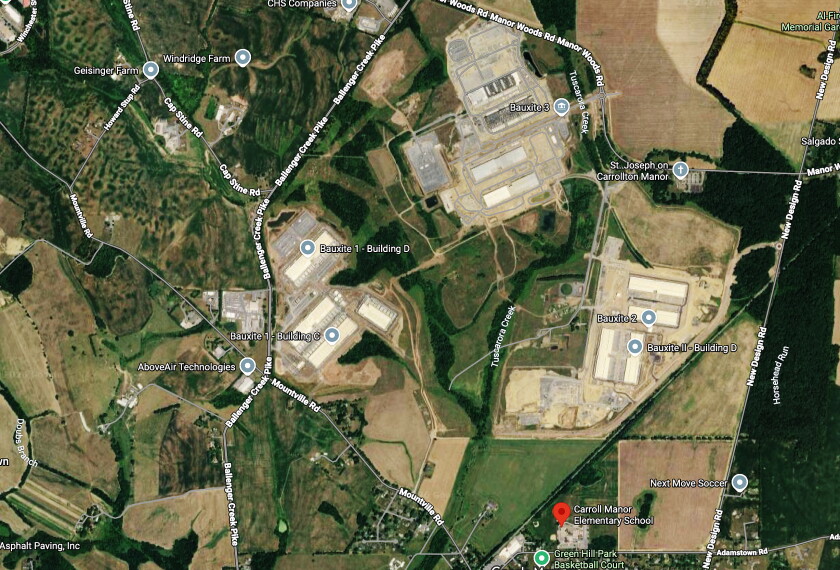
The Quantum Frederick Data Center Campus near the Carroll Manor Elementary School.
Map data ©2026 Google, Imagery ©2026
School Climate & Safety For Students Walking to School, the Route Can Be Deadly. What Can Make It Safer?
School districts, including New York City, have rolled out a number of strategies to reduce risks.
5 min read
A student leaving Greenspun Junior High School in Henderson, Nev., enters a car in the travel lane of Valle Verde Drive on Sept. 14, 2022. Pedestrian fatalities near schools are most likely to occur in the early morning and early evening hours, federal data show.
Rachel Aston/Las Vegas Review-Journal via TNS