Opinion
Classroom Technology Letter to the Editor

The Dangers of Technologizing School

September 29, 2020 1 min read
  • Save to favorites
  • Print

To the Editor:

The article, “COVID-19 Fuels Big Enrollment Increases in Virtual Schools” (Sept. 3, 2020) raises red flags about virtual schools, but the larger trend of technologizing education is of equal concern.

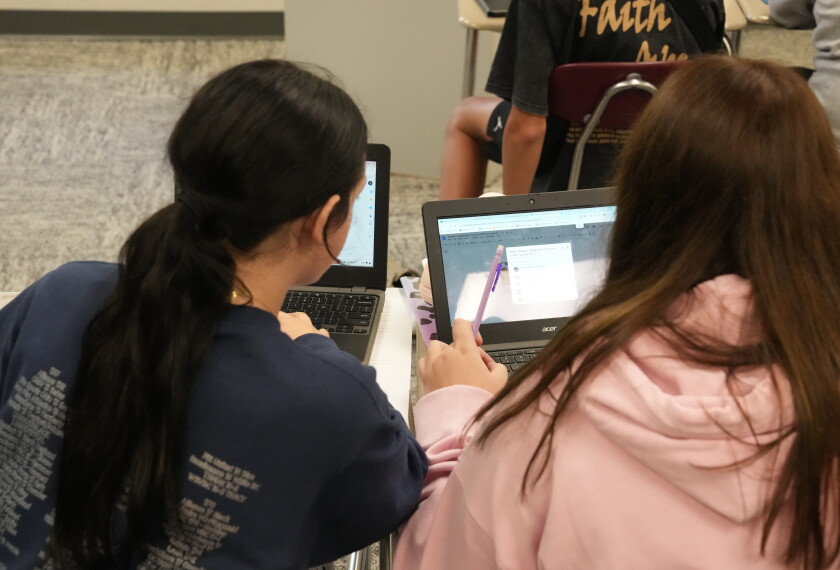
The California Alliance of Researchers for Equity in Education has released a brief about the shift to online learning during the pandemic, and the research is clear—technologies for online learning can amplify inequities. Six large-scale studies show that fully online schools are far less effective than in-person schools. Even when students are attending schools in person, their learning is negatively impacted when spending significant time on computer-based technologies, as shown in large-scale studies of schools in the United States and abroad.

All of this is exacerbated by existing inequities. In spring 2020, students in poverty, of color, with disabilities, and/or who were English-language learners were far less likely than other students to regularly access online platforms. Other problems associated with extended screen time are increased risks related to physical and mental health, online bullying and sexual exploitation, and data and personal-privacy intrusion. Schools still have not received adequate resources and support to address such problems.

The California Alliance of Researchers for Equity in Education brief further shows that the shift to remote learning and the availability of federal stimulus funding provided the perfect storm for profiteering by technology corporations and providers. A recent analysis of the marketing claims about the effectiveness of various technology products showed a woeful lack of research basis for such claims. Yet companies grew their profits during the spring, and industry leaders saw their wealth soar.

Schools must do better with online education when it is still unsafe to reopen.

Such improvement starts with more research-based, democratic policies and funding priorities at the state and federal level.

Kevin Kumashiro

Former Dean

School of Education

University of San Francisco

Emeryville, Calif.

Related Tags:

A version of this article appeared in the September 30, 2020 edition of Education Week as The Dangers of Technologizing School

Events

This content is provided by our sponsor. It is not written by and does not necessarily reflect the views of Education Week's editorial staff.
Sponsor
Special Education Webinar
Bridging the Math Gap: What’s New in Dyscalculia Identification, Instruction & State Action
Discover the latest dyscalculia research insights, state-level policy trends, and classroom strategies to make math more accessible for all.
Content provided by TouchMath
This content is provided by our sponsor. It is not written by and does not necessarily reflect the views of Education Week's editorial staff.
Sponsor
School & District Management Webinar
Too Many Initiatives, Not Enough Alignment: A Change Management Playbook for Leaders
Learn how leadership teams can increase alignment and evaluate every program, practice, and purchase against a clear strategic plan.
Content provided by Otus
This content is provided by our sponsor. It is not written by and does not necessarily reflect the views of Education Week's editorial staff.
Sponsor
College & Workforce Readiness Webinar
Building for the Future: Igniting Middle Schoolers’ Interest in Skilled Trades & Future-Ready Skills
Ignite middle schoolers’ interest in skilled trades with hands-on learning and real-world projects that build future-ready skills.
Content provided by Project Lead The Way

EdWeek Top School Jobs

Teacher Jobs
Search over ten thousand teaching jobs nationwide — elementary, middle, high school and more.
View Jobs
Principal Jobs
Find hundreds of jobs for principals, assistant principals, and other school leadership roles.
View Jobs
Administrator Jobs
Over a thousand district-level jobs: superintendents, directors, more.
View Jobs
Support Staff Jobs
Search thousands of jobs, from paraprofessionals to counselors and more.
View Jobs

Read Next

Classroom Technology These Students Tricked Teachers With Phishing Emails—for a Good Cause
The exercise helped students understand how to protect themselves against hackers.
8 min read
Illustration of thief/fisherman catching at (@) symbol.
DigitalVision Vectors
Classroom Technology What's Worse for Students: A Boring Worksheet or Ineffective Ed Tech?
Some parents and policymakers are growing skeptical of the value of education technology.
5 min read
Amelia Vance, the founder & president of the Public Interest Privacy Center, leads a discussion on Feb. 10, 2026, at George Washington University law school in Washington, D.C. about problems in providing clear information about digital learning tools to educators and families. Panelists included Meg Jones, a professor at Georgetown, and Sara Collins, the director of government affairs at Public Knowledge, a nonprofit organization.
Amelia Vance, at left, the founder and president of the Public Interest Privacy Center, leads a discussion on Feb. 10, 2026, at George Washington University law school in Washington. The panel discussed problems schools are having providing clear information to parents and educators about the digital learning tools students are using. <br/>
Alyson Klein/Education Week
Classroom Technology How These Elementary Schools Are Teaching Students Good Digital Habits
Two schools are trying to instill smart tech practices in even the youngest learners.
4 min read
A vector silhouette illustration of a young boy using electronic devices in various poses including laying down and using a tablet, crouched and using a smart phone, and standing taking a selfie. A multi-coloured wave pattern is the background.
DigitalVision Vectors
Classroom Technology More States Are Pairing Cellphone Bans With Media Literacy Instruction
Students need to develop the skills to critically analyze the content they view on their phones.
2 min read
Hand holding sieve to filter truth from lies, facts from fakes. Concept of media literacy, fake news detection, and critical thinking in digital age.
iStock/Getty