
Classroom Technology

So Long, Remote Learning: Why Some Districts Are Ending Virtual Options

By Lauraine Langreo — September 02, 2022 3 min read
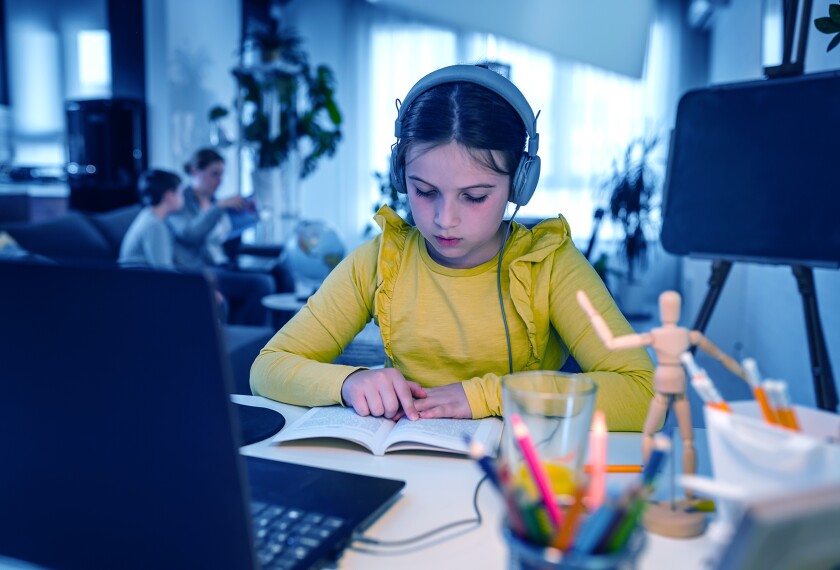
Photograph of a young girl reading, wearing headphones and working at her desk at home with laptop near by.
  • Save to favorites
  • Print

Remote learning became the primary mode of instruction for most K-12 schools during the height of the coronavirus pandemic, when many students and staff weren’t able to meet in person.

But more than two years later, about one-third of a sample of 100 large and urban districts in the country report they are ending their remote learning programs for the 2022-23 school year, according to an analysis by the Center on Reinventing Public Education.

Since the pandemic began, CRPE, a nonprofit research organization, has been monitoring the learning options offered by 100 school districts, which serve nearly 10 million students. The database includes a mix of large urban districts, smaller rural ones, and others from states not otherwise represented.

“We weren’t sure what districts were going to do [this school year],” said Bree Dusseault, principal and managing director at CRPE. In spring 2021, a small percentage of districts planned to keep remote learning programs going, but when the Delta coronavirus variant was on the rise, almost all of the districts in the CRPE analysis stood up remote programs in response to parent demand, she said.

But this school year is different.

“School districts, and the families and students they serve are in different places with their comfort with the virus now,” Dusseault said. A lot more people are vaccinated or have had COVID exposure so they have some immunity, and the U.S. Centers for Disease Control and Prevention has de-emphasized some common prevention strategies school districts had adopted throughout the pandemic.

As of August, 35 of the 100 districts indicated that they were not planning to offer full-time remote options for the 2022-23 school year, CRPE found. Last school year, only six of the 100 districts said they were not offering full-time remote options.

While the remote schools don't generally, on average, serve students academically as well as in-person schools, there are certain profiles of learners who really flourish in remote schools. So if a district had a remote program that it felt could serve some of those needs, I do think that there is a value to keeping a remote option available.

One reason school districts might be shutting down their remote learning options is because they have not matched the academic quality of in-person learning.

“Districts could just look at that data and say, ‘Actually, this is just not an option that we want to continue because we don’t know if it can provide the same level of quality education,’” Dusseault said.

Another reason, she said, could be the complexity of continuing remote learning options. Enrolling and staffing those programs simply may not be worth it for districts. And if the vast majority of families and students themselves aren’t asking for remote learning options anymore, then districts are unlikely to feel pressure to keep those options.

On the other hand, 34 districts said they would continue virtual programs that had been in place before the pandemic, and 31 districts said they would keep the remote options they created during the pandemic, CRPE found.

See also

Young girl looking bored during online class at home.
E+/Getty
Classroom Technology What Schools Really Learned From Remote Learning
Mark Lieberman, June 27, 2022
2 min read

For example, Broward County Public Schools in Florida will continue to offer its Broward Virtual School, which has been open to all K-12 students since 2001. And in Colorado, Aurora Public Schools will continue the virtual school it opened last year for K-8 students, but only for students in 3rd through 8th grade.

Similar to the Aurora school district, some other districts that are continuing their remote programs are also limiting enrollment eligibility for their remote options. CRPE found that this school year, fewer students in general are eligible to enroll in district-run virtual programs than last school year.

Only four of the 100 districts are expanding their virtual options because of student or parent demands.

Because school districts have differing needs based on their communities, Dusseault said that they should continue to think about giving students “more quality learning options.”

“While the remote schools don’t generally, on average, serve students academically as well as in-person schools, there are certain profiles of learners who really flourish in remote schools,” she said. “So if a district had a remote program that it felt could serve some of those needs, I do think that there is a value to keeping a remote option available.”

See also

Illustration of a laptop puzzle piece fitting into a larger puzzle made of blue pieces. Teacher and student profiles on the laptop screen.
Daniel Hertzberg for Education Week

Related Tags:

Events

Jobs Regional K-12 Virtual Career Fair: DMV
Find teaching jobs and K-12 education jubs at the EdWeek Top School Jobs virtual career fair.
This content is provided by our sponsor. It is not written by and does not necessarily reflect the views of Education Week's editorial staff.
Sponsor
College & Workforce Readiness Webinar
Blueprints for the Future: Engineering Classrooms That Prepare Students for Careers
Explore how to build career-ready engineering programs in your high school with hands-on, real-world learning strategies.
Content provided by Project Lead The Way
This content is provided by our sponsor. It is not written by and does not necessarily reflect the views of Education Week's editorial staff.
Sponsor
School Climate & Safety Webinar
Cardiac Emergency Response Plans: What Schools Need Now
Sudden cardiac arrest can happen at school. Learn why CERPs matter, what’srequired, and how districts can prepare to save lives.
Content provided by American Heart Association

EdWeek Top School Jobs

Teacher Jobs
Search over ten thousand teaching jobs nationwide — elementary, middle, high school and more.
View Jobs
Principal Jobs
Find hundreds of jobs for principals, assistant principals, and other school leadership roles.
View Jobs
Administrator Jobs
Over a thousand district-level jobs: superintendents, directors, more.
View Jobs
Support Staff Jobs
Search thousands of jobs, from paraprofessionals to counselors and more.
View Jobs

Read Next

Classroom Technology Opinion What If Ed Tech Does More Harm Than Good?
An influential new book delves into the research on how ed tech affects learning.
10 min read
The United States Capitol building as a bookcase filled with red, white, and blue policy books in a Washington DC landscape.
Luca D'Urbino for Education Week
Classroom Technology Do Student Cellphone Bans Improve Academic Achievement?
Researchers recommend continued examination of cellphone policies, which are still relatively new.
4 min read
Students at Washington Junior High School use the unlocking mechanism to open the bags their cell phone were sealed in during the school day as they leave school for the day on Oct. 27, 2022, in Washington, Pa. Citing mental health, behavior and engagement as the impetus, many educators are updating cellphone policies, with a number turning to magnetically sealing pouches.
Students at Washington Junior High School use the unlocking mechanism to open the bags their cellphones were sealed in during the school day as they leave school on Oct. 27, 2022, in Washington, Pa. A new study suggests that cellphone restrictions in school don't seem to boost student achievement or attendance.
Keith Srakocic/AP
Classroom Technology From Our Research Center What Happens When Schools Restrict Cellphone Use
New survey sheds light on how cellphone restrictions are improving student behavior and engagement.
5 min read
A student takes notes on their cell phone during class at Bel Air High School in Bel Air, Md., on Jan. 25, 2024.
A student takes notes on a cellphone during class at a high school in Bel Air, Md., on Jan. 25, 2024. The vast majority of educators say their school districts now have policies that restrict cellphone use during school hours.
Jaclyn Borowski/Education Week
Classroom Technology Students Can Hear Questions Aloud When They Take Many Tests. Does It Help?
Text-to-speech tech helps some students answer questions correctly, but hurts others' performance.
2 min read
Young student in a school computer lab concentrates on a laptop while wearing pink headphones; classmates work nearby in a bright, collaborative learning environment focused on technology and study.
Vanessa Solis/Education Week + Getty Images
