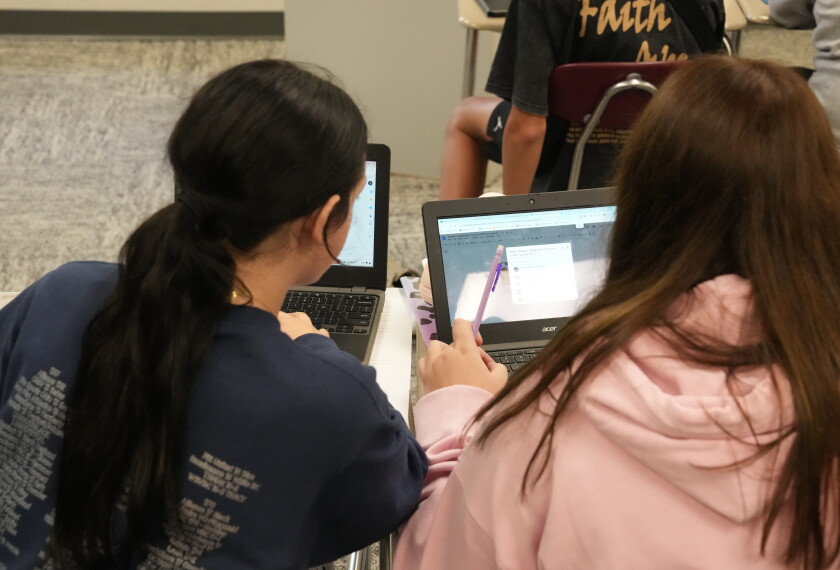
Esports became an official competitive high school sport in Colorado in 2022.
Since then, the education technology team at Denver Public Schools has been thinking about how to use esports to increase elementary and middle school students’ engagement at school, said Emily Dixon, an education technology specialist for the district.
Dixon created an esports development program in which elementary and middle school teachers can check out gaming consoles for students to play an approved video game that aligns with a specific lesson or standard, she said.
Education Week interviewed Dixon at the ISTELive 26 + ASCD Annual Conference held here between June 28 and July 1, where she presented about how the Denver district is integrating esports into its STEM and social-emotional learning curricula.
This interview has been edited for length and clarity.
How does the program work?
It’s a checkout system, where teachers can check out Nintendo Switches. We have a set of approved games, and I’ve worked on aligning them to approved Denver Public Schools’ high-quality instructional materials. It aligns with our SEL curriculum, our STEM curriculum, our reading curriculum.
I work with teachers to utilize video games, and there’s two goals: either they want to connect it directly to the curriculum or they want more of that SEL/student engagement piece—working on collaboration, teamwork. So I identify the teachers’ goals, and then we work through which games can align the best, and then how we can implement this in the classroom.

So esports is not a class that students take. It’s being integrated into what teachers are already doing?
Yes. We usually start about 3rd grade and beyond. Our elementary teachers are really focused on that collaboration piece, the problem solving. A lot of them love to check out the consoles and make it a part of their SEL instruction.
Then our middle school teachers are implementing it directly into the curriculum. I had a math teacher last year connect it to his algebra class. I had a health teacher connect it to his SEL curriculum, so it depends on what those teachers’ goals are, and we will figure out a way to implement it for them.
What’s an example of a teacher using esports for SEL?
I worked with a middle school teacher with a 7th grade class on implementing all of our games—Mario Kart, Rocket League, Snipperclips—into his SEL curriculum.
The key things he wanted to focus on were: What do we do when we are essentially filled with rage, when we are really upset and we can’t calm down? The connection to video games is, [and] I’m sure you’ve heard the phrase “rage quitting”—kids getting so frustrated, throwing controllers.
Well, we connected that to getting that same feeling when you take a math test and you don’t understand [the concepts], or when you get really frustrated with a friend at school. We made a lot of those real-world connections with them, and then we talked through some strategies and coping mechanisms we can practice while using the video games.
What about connecting esports to academics?
One of my favorite curriculum connections was a teacher, who instead of asking students to write in a “reading response journal,” had them write in a “player response journal.” So the teacher had kids play through scenarios in the games, and then they had to reflect on their gameplay in the journal. This helped support the teacher’s writing instruction.
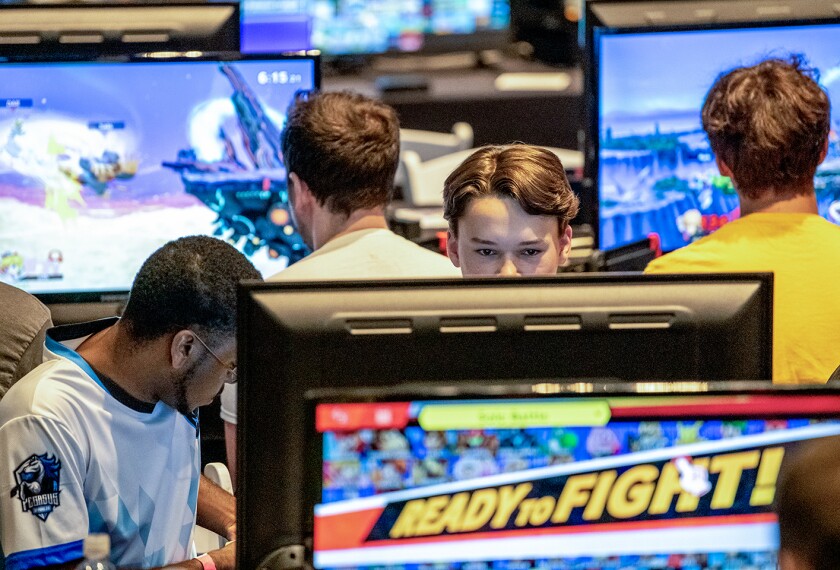
What was the biggest challenge in putting this program together?
One of the biggest challenges has been helping people see esports as more than “just playing video games.” Our success came from being really intentional about the games we chose and the purpose behind the gameplay. Every game and activity is selected because it supports a specific learning objective, whether that’s collaboration, problem-solving, computer science concepts, or academic skill development. We use gameplay to support learning rather than treating gameplay as the goal itself.
Another challenge is access. We wanted to make sure schools of all sizes and budgets could participate, which is why we created a district checkout model.
But we also knew that simply providing equipment wasn’t enough to set teachers up for success. Every teacher meets with us for a planning session before their checkout so they feel confident using the consoles, understand the instructional resources we’ve developed, and have a clear plan for implementation.
What recommendations do you have for other districts that might to try this?
My biggest recommendation for other districts is to start small and build intentionally. You don’t need a large budget or a competitive league to get started. Start with a few high-quality games, support your teachers, and focus on creating engaging learning experiences that align with your curriculum and your students’ needs. The technology is important, but thoughtful implementation is what makes the biggest difference.
Is the tech/screen time backlash something your team is thinking about?
Absolutely. That’s been such a big conversation in our team and in Denver Public Schools in general. We’re hearing a lot of feedback from teachers and community members about how we cut back that screen time. That is something our team is working through and deciding what the future of ed tech looks like in our district, and how we can meaningfully integrate tech.
We don’t agree that kids should be sitting on screens with no purpose, and so we try to be very intentional anytime we put kids on technology. That’s part of our conversations that we’ll continue to have this summer and into the next school year: how do we have these conversations and what are our next steps?