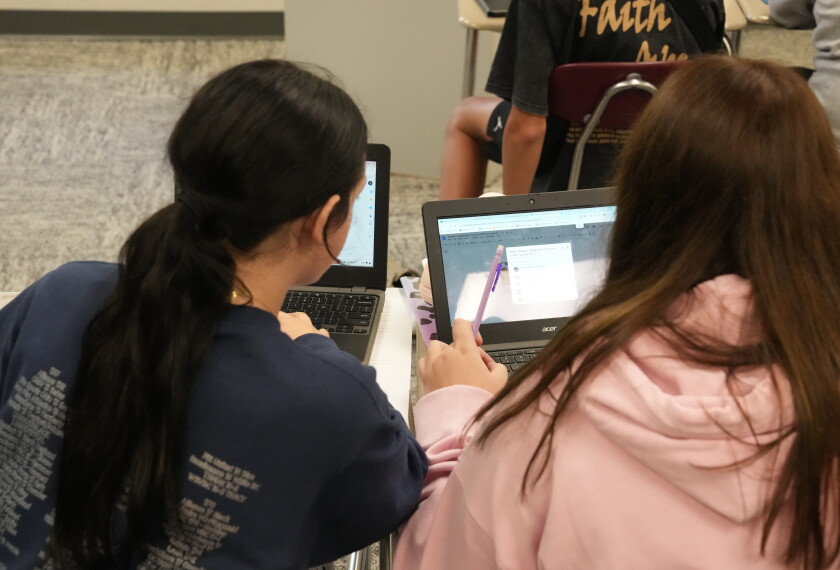
Some school districts are reevaluating their students’ technology use because of pushback against overreliance on laptops, tablets, and other digital tools in the classroom.
Los Angeles Unified, the second-largest school district in the country, will scale back classroom screen use starting in the 2026-27 school year. Among the new restrictions: No classroom screen use for kindergarten and 1st grade students, and providing maximum daily and weekly screen limits for students in grades 2-12.
The Canon-McMillan school district in Pennsylvania is also scaling back its 1-to-1 computing program and no longer giving K-2 students school-issued laptops or tablets.
At ISTE, one of the largest ed-tech conferences in the country, the tech backlash was looming over some district leaders’ conversations.
Device use in schools expanded rapidly during the pandemic, as 1-to-1 computing programs became nearly universal, supported by federal relief funding. But in the last few years, there’s been mounting scrutiny of screen time, especially with its correlation with worsening youth mental health and student behavior problems.
Many districts responded by limiting student cellphone use during school hours. Districts in at least 38 states and the District of Columbia are required to place restrictions on student cellphone use in schools.
Now, some parents, educators, and even students want districts to limit other types of screen time in schools.
State lawmakers are paying attention to these concerns about tech overuse in K-12, too. At least 17 states are considering or have already passed bills that seek to rein in the use of digital technology during school hours.
But how much time are kids really spending on technology in schools? The EdWeek Research Center asked a nationally representative sample of 753 teachers, principals, and district leaders. Here’s what they said:

Data analysis for this article was provided by the EdWeek Research Center. Learn more about the center’s work.