Artificial Intelligence
Find out how artificial intelligence could change education, inside the classroom and out

AI Literacy, Explained
Now that AI is expected to influence fields from medicine to policing, what do students need to understand about the technology?
How can AI be used effectively in classrooms?
More than a third of teachers are already using AI to plan lessons, according to 2024 data from the EdWeek Research Center. Teachers are also using AI to create presentation materials for teaching, writing rubrics and student assignments, and checking for student plagiarism. Experts stress, however, that teachers should always review anything AI creates and be aware that AI can be inaccurate and biased. Read more.
What jobs are in jeopardy of being replaced by AI?
In recent years, companies and schools have pushed students to learn to code in order to get high-paying computer science-related jobs. Now, though, layoffs and tech CEO comments are raising fears in students that AI will greatly diminish the number of entry-level tech jobs. Teachers and business leaders say that soft skills are key for students to be able to thrive in a workforce where AI plays a bigger role.
What teacher tasks can AI replace?
9 in 10 educators said that artificial intelligence has changed the job of teaching at least a little, according to a December 2024 EdWeek Research Center survey.
Many companies are now offering AI tools to assist teachers in tasks like lesson planning, differentiating schoolwork to match students’ skill levels or interests, and grading. The tools can also help save teachers time when writing messages to families. Experts stress that the tools should not be a replacement, but only an aide for teachers. For the most effective results, teachers need to be very clear in their prompts and check the results carefully for accuracy and bias. Read more.
Of course, AI can’t take over many key things teachers do, from building genuine relationships with students to teaching critical thinking.
Many companies are now offering AI tools to assist teachers in tasks like lesson planning, differentiating schoolwork to match students’ skill levels or interests, and grading. The tools can also help save teachers time when writing messages to families. Experts stress that the tools should not be a replacement, but only an aide for teachers. For the most effective results, teachers need to be very clear in their prompts and check the results carefully for accuracy and bias. Read more.
Of course, AI can’t take over many key things teachers do, from building genuine relationships with students to teaching critical thinking.
How should schools handle cheating in the age of AI?
Artificial intelligence is part of many aspects of K-12 education already, and likely to grow in the next few years. Many digital learning software programs used in classrooms incorporate AI tutors and tools for differentiating materials so they can be used with students of varying proficiency levels.
Of course, students also use AI. But while many teachers are concerned about students using chatbots to cheat on their assignments, some research suggests that students aren’t cheating more than before AI was widely available. AI-detection tools should not have the final say on whether a student plagiarized and should be punished, experts say, because they can have false positives and may be more likely to falsely identify the work of English learners as produced by AI. Instead, teachers should talk with students and, if a student admits to using AI, use it as an opportunity to talk about appropriate uses of AI.
Of course, students also use AI. But while many teachers are concerned about students using chatbots to cheat on their assignments, some research suggests that students aren’t cheating more than before AI was widely available. AI-detection tools should not have the final say on whether a student plagiarized and should be punished, experts say, because they can have false positives and may be more likely to falsely identify the work of English learners as produced by AI. Instead, teachers should talk with students and, if a student admits to using AI, use it as an opportunity to talk about appropriate uses of AI.
Special Report
AI Is Supercharging Cyberattacks. What Schools Need to Know and Do
Schools are working to protect themselves against increasingly sophisticated, AI-driven cyberattacks.

Special Report
Career and Technical Education Meets AI. What Happens Next?
School districts are modernizing their Career and Technical Education programs to help students develop AI skills.

Special Report
AI Is Picking Up Speed. Are Schools Keeping Pace?
See how schools are trying to keep pace with advances in artificial intelligence and use it in meaningful ways.

- Artificial Intelligence Whitepaper AI Is Changing Work. Is It Changing Learning?SponsorThis content is provided by our sponsor. It is not written by and does not necessarily reflect the views of Education Week's editorial staff.Download the report and explore how schools can lead in an AI-augmented future.
 Artificial Intelligence Schools Play Game of Media Literacy Catch-Up as AI Use RisesStudents are now seeing more AI-generated social media content that is problematic.
Artificial Intelligence Opinion AI Can Read to Our Children. That Doesn’t Mean It ShouldAre AI tools encroaching on the acts of care that define parenting and teaching?
Artificial Intelligence Frustration, Skepticism: Survey Reveals Shifting Gen Z Attitudes Toward AIThe Gallup survey shows that K-12 schools are increasingly allowing students to use AI.
Artificial Intelligence Video AI + Math Learning. How to Solve a New ProblemThe National Council of Teachers of Mathematics makes the argument that teachers, principals, and district leaders must “stay up to date on current AI trends” to prepare students for the future.Artificial Intelligence Webinar MTSS + AI in Action: Reimagining Student SupportSponsorThis content is provided by our sponsor. It is not written by and does not necessarily reflect the views of Education Week's editorial staff.See how one district is using AI to strengthen MTSS, reduce workload, and improve student support.
Artificial Intelligence Opinion Schools Are Urged to Embrace AI—and Ban Phones. Can We Resolve the Tension?Don’t reflexively adopt AI just because “that’s where the world is moving,” cautions Michael Horn.
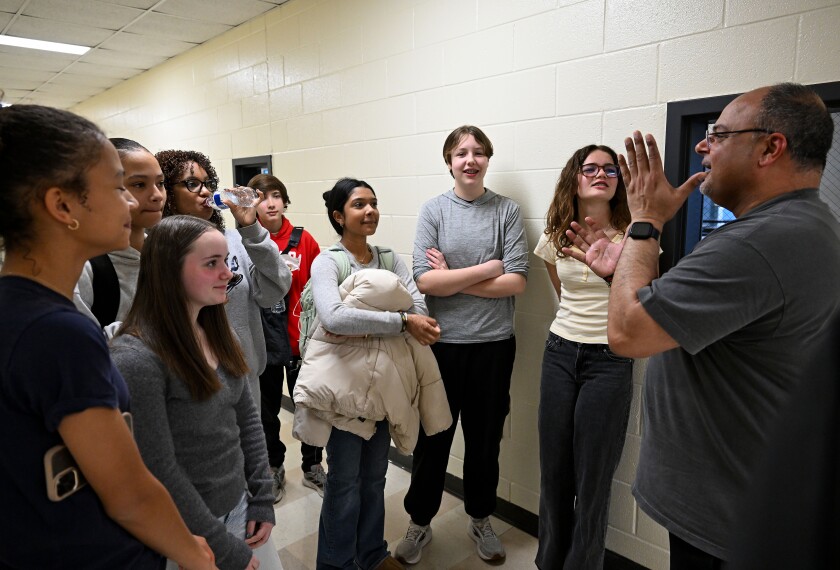
Artificial Intelligence A Group of Students Took a Deep Dive Into AI. Here’s What They Told TeachersThey came away with new skills, but also confronted some thorny ethical questions.
Artificial Intelligence Opinion Bloom's Taxonomy Needs an Update for the AI AgeHere’s how one superintendent is reimagining the classic framework of learning objectives.
Artificial Intelligence Opinion Is Your School’s Approach to AI Too Flexible?It’s tempting to prioritize adaptability when dealing with AI tools. It can also be a mistake.
Artificial Intelligence Opinion Can AI Support Student Learning? Depends Who You AskEd tech is supposed to give teachers more time to mentor. It’s not clear if it does.
Artificial Intelligence Letter to the Editor Artificial Intelligence: Reality Versus Hype"AI is a deeper manifestation of the pernicious trend to let technology co-opt human agency."
Artificial Intelligence Video Reading Is Hard to Teach. Can AI Help?Artificial intelligence might be able to drive cars, treat diseases, and train your front door to recognize your face. But can it help kids learn how to read?
Artificial Intelligence What the Research Says AI Chatbots Tend Toward Flattery. Why That's Bad for StudentsFlattering technology can make people less willing to admit they are wrong.
Artificial Intelligence FAQ: Artificial Intelligence in SchoolsEducation Week answers some key questions about the use of artificial intelligence in schools.
Artificial Intelligence Schools Play Game of Media Literacy Catch-Up as AI Use RisesStudents are now seeing more AI-generated social media content that is problematic.
Artificial Intelligence Opinion AI Can Read to Our Children. That Doesn’t Mean It ShouldAre AI tools encroaching on the acts of care that define parenting and teaching?
Artificial Intelligence Frustration, Skepticism: Survey Reveals Shifting Gen Z Attitudes Toward AIThe Gallup survey shows that K-12 schools are increasingly allowing students to use AI.
Artificial Intelligence Video AI + Math Learning. How to Solve a New ProblemThe National Council of Teachers of Mathematics makes the argument that teachers, principals, and district leaders must “stay up to date on current AI trends” to prepare students for the future.Artificial Intelligence Webinar MTSS + AI in Action: Reimagining Student SupportSponsorThis content is provided by our sponsor. It is not written by and does not necessarily reflect the views of Education Week's editorial staff.See how one district is using AI to strengthen MTSS, reduce workload, and improve student support.
Artificial Intelligence Opinion Schools Are Urged to Embrace AI—and Ban Phones. Can We Resolve the Tension?Don’t reflexively adopt AI just because “that’s where the world is moving,” cautions Michael Horn.
Artificial Intelligence A Group of Students Took a Deep Dive Into AI. Here’s What They Told TeachersThey came away with new skills, but also confronted some thorny ethical questions.
Artificial Intelligence Opinion Bloom's Taxonomy Needs an Update for the AI AgeHere’s how one superintendent is reimagining the classic framework of learning objectives.
Artificial Intelligence Opinion Is Your School’s Approach to AI Too Flexible?It’s tempting to prioritize adaptability when dealing with AI tools. It can also be a mistake.
Artificial Intelligence Opinion Can AI Support Student Learning? Depends Who You AskEd tech is supposed to give teachers more time to mentor. It’s not clear if it does.
Artificial Intelligence Letter to the Editor Artificial Intelligence: Reality Versus Hype"AI is a deeper manifestation of the pernicious trend to let technology co-opt human agency."
Artificial Intelligence Video Reading Is Hard to Teach. Can AI Help?Artificial intelligence might be able to drive cars, treat diseases, and train your front door to recognize your face. But can it help kids learn how to read?
Artificial Intelligence What the Research Says AI Chatbots Tend Toward Flattery. Why That's Bad for StudentsFlattering technology can make people less willing to admit they are wrong.
Artificial Intelligence FAQ: Artificial Intelligence in SchoolsEducation Week answers some key questions about the use of artificial intelligence in schools.