Reading & Literacy

People in the News

January 31, 2001 1 min read
  • Save to favorites
  • Print

John A. Vaille

John A. Vaille has announced he will resign March 31 as the chief executive officer of the International Society for Technology in Education. The Eugene, Ore.-based organization of education technology professionals is well- known for establishing a set of standards for what students should know about technology. After he steps down, Mr. Vaille, 51, will lead the Corporation for Education Network Initiatives in California, a program to bring high-speed networking to the state’s elementary and secondary schools.
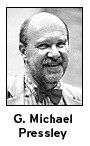
G. Michael Pressley

G. Michael Pressley was the recipient of the 2000 Oscar Causey Award from the National Reading Conference, a Chicago-based organization that advocates for programs that improve children’s reading skills. The award was given in December to recognize Mr. Pressley’s contribution to literacy research and children’s education. Mr. Pressley, 49, is a professor of psychology and the director of the Master of Arts in teaching program at the University of Notre Dame in Notre Dame, Ind.


Sodexho Marriott Services Inc. has announced the appointment of Rod L. Bond as the president of the company’s school services division. He had been the acting president and, before that, the senior vice president of school services.
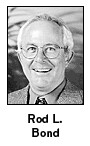
Rod L. Bond

As president, Mr. Bond, 51, will be responsible for overseeing school food and facilities-management services nationally. Sodexho Marriott, which has its headquarters in Gaithersburg, Md., is one of the largest providers of school food and facilities services.

—Vanessa Dea

A version of this article appeared in the January 31, 2001 edition of Education Week

Events

This content is provided by our sponsor. It is not written by and does not necessarily reflect the views of Education Week's editorial staff.
Sponsor
Artificial Intelligence Webinar
Decision Time: The Future of Teaching and Learning in the AI Era
The AI revolution is already here. Will it strengthen instruction or set it back? Join us to explore the future of teaching and learning.
Content provided by HMH
This content is provided by our sponsor. It is not written by and does not necessarily reflect the views of Education Week's editorial staff.
Sponsor
School & District Management Webinar
Stop the Drop: Turn Communication Into an Enrollment Booster
Turn everyday communication with families into powerful PR that builds trust, boosts reputation, and drives enrollment.
Content provided by TalkingPoints
This content is provided by our sponsor. It is not written by and does not necessarily reflect the views of Education Week's editorial staff.
Sponsor
Special Education Webinar
Integrating and Interpreting MTSS Data: How Districts Are Designing Systems That Identify Student Needs
Discover practical ways to organize MTSS data that enable timely, confident MTSS decisions, ensuring every student is seen and supported.
Content provided by Panorama Education

EdWeek Top School Jobs

Teacher Jobs
Search over ten thousand teaching jobs nationwide — elementary, middle, high school and more.
View Jobs
Principal Jobs
Find hundreds of jobs for principals, assistant principals, and other school leadership roles.
View Jobs
Administrator Jobs
Over a thousand district-level jobs: superintendents, directors, more.
View Jobs
Support Staff Jobs
Search thousands of jobs, from paraprofessionals to counselors and more.
View Jobs

Read Next

Reading & Literacy Opinion Yes, Small-Group Reading Instruction Works. But Use It Wisely
When is the best time to use the approach over whole-class literacy instruction?
Nell K. Duke & Claude Goldenberg
4 min read
Collage of different instruction types including, one-on-one, small group, and whole class instruction.
Getty Images + Education Week
Reading & Literacy How to Build a Reading Block: Two Teachers Share Their Approaches
Studies don't prescribe how best to knit together components of reading—leaving it up to teachers to devise.
7 min read
Students in Anjanette McNeely's class work on their letters during a reading block at Windridge Elementary School in Kaysville, Utah, on Dec. 4, 2025.
What's the best way to attend to all the elements of the 'science of reading' in a literacy block? Research doesn't specify a specific answer, but kindergarten teacher Anjanette McNeely has designed hers to incorporate foundational skills, content, and writing. McNeely's class works on their letters at Windridge Elementary School in Kaysville, Utah, on Dec. 4, 2025.
Niki Chan Wylie for Education Week
Reading & Literacy Many Teens Lack Basic Reading Skills. These Teachers Are Trying to Change That
Schools are building programs to provide sustained reading support to older students.
6 min read
Loralyn LaBombard, a reading specialist, reads “Among the Hidden” by Margaret Peterson Haddix with a group of students in a 7th grading reading class at Bow Memorial School in Bow, N.H., on Oct. 29, 2025.
Loralyn LaBombard, a reading specialist, reads <i>Among the Hidden</i> by Margaret Peterson Haddix with a group of students in a 7th grade reading class at Bow Memorial School in Bow, N.H., on Oct. 29, 2025. Nationally, experts say there is a lack of resources available to help middle and high school students learn basic reading skills.
Sophie Park for Education Week
Reading & Literacy From Our Research Center Secondary Students Are Struggling With Reading, Too. A Look at the Landscape
Exclusive survey findings outline how educators perceive the obstacles affecting older students' reading.
5 min read
Students attend Bow Memorial School in Bow, N.H. on Oct. 29, 2025. Bow Memorial School is a middle school that has developed a systematic approach to addressing foundational reading gaps in middle school students.
New data show that many educators report that middle and high school students struggle with aspects of foundational literacy. At Bow Memorial School in Bow, N.H., pictured on Oct. 29, 2025, students work with reading specialist Loralyn LaBombard, who has helped pioneer a systematic approach to addressing foundational reading gaps in grades 5 to 8.
Sophie Park for Education Week
