Mathematics

Learn How to Teach Math Better, in Just 5 Weeks

By Olina Banerji — September 16, 2024 2 min read
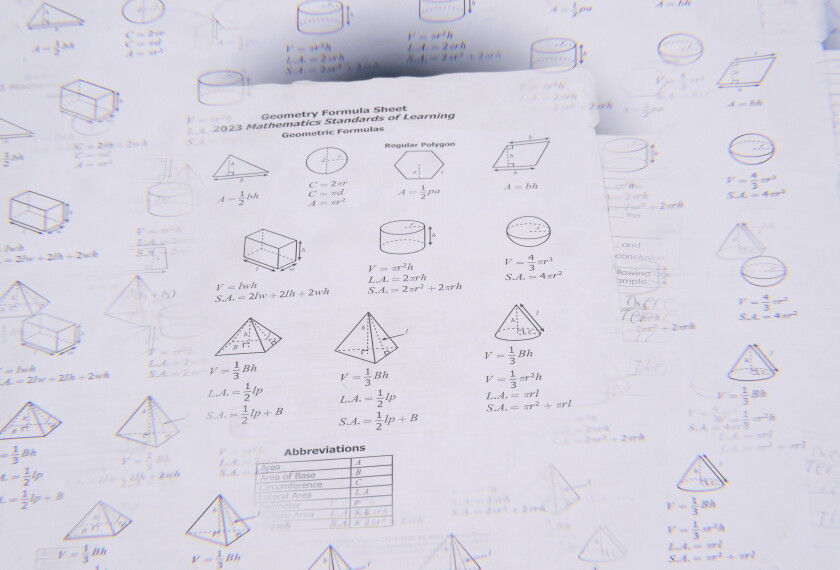
Education Week Math Mini-Course, Announcement Article, Illustration by Eglė Plytnikaitė for Education Week, 1720 x 1150
  • Save to favorites
  • Print

Dear Educators,

We know the struggle with mathematics—for both teachers and students—all too well. Students’ math scores, as per the “Nation’s Report Card,” have plunged to record lows. Misconceptions in early grades can mushroom into large knowledge gaps in later ones, which can barricade students from higher-level math courses. And the very subject can trigger anxiety and negative feelings.

As schools spend millions of dollars remediating math learning, they need to help teachers find useful ways to tackle the common problems that crop up, year after year, in teaching fundamental math concepts.

Here’s where Education Week’s latest offering comes in. We’ve curated the best evidence-backed teaching strategies into a five-week email mini-course that you can take anytime, anywhere. Through extensive research and expert consultations, we’ve identified five key areas of math instruction, which include strategies to teach tricky concepts like fractions, and tips on how to quell math anxiety in students.

The course is called Teaching Math, and it officially begins Oct. 1.

Over five weeks, participants get one easy-to-digest lesson a week on key aspects of assessing and addressing the learning gaps on crucial math topics. Learn why word problems are especially tricky for some students and what to do about it; how students build procedural fluency as they move from concrete to abstract mathematics; how to effectively deal with student anxiety about math; and which teaching methods best address misconceptions about fractions.

Each edition is written, curated, and edited by two Education Week staffers: Sarah D. Sparks, an assistant editor and writer who has covered education research for nearly 20 years, and Olina Banerji (that’s me), a staff writer who covers school leadership, education technology, and curriculum.

Here’s what you can expect from Education Week’s mini-course on teaching math:

  • Concise, straightforward explanations from EdWeek journalists on the best practices for teaching math across grade levels.
  • Lessons from leading-edge research on how to help students make sense of tricky math concepts and feel more confident in the subject.
  • Informative videos with tips and strategies to boost student learning.
  • Advice from experts in the field on how to address common math challenges.
  • A deeper, more nuanced understanding of how to teach math so that students learn.
  • A certificate of completion for three hours of professional development.

Signing up is free and easy. Just click here!

Once the course begins, you will get an edition of the course every week, but you’re free to digest the material at your own pace. A pre- and post-course quiz will help you solidify your learning, and you can even get your colleagues to sign up to turn this into a professional development opportunity.

The mini-course is underwritten by a grant from the Spencer Foundation, a Chicago-based philanthropy that supports research in education. But the content has been solely crafted by Education Week writers and editors.

We hope this sneak-peek has piqued your interest to sign up for Teaching Math, designed specifically for busy professionals like you who need just-in-time professional development and quick access to information that can help solve teaching problems in the classroom.

I’m look forward to meeting again, as Sarah and I take you on this math mini-sojourn!

Best,

Olina Banerji
Editor, Teaching Math

Related Tags:

Events

Jobs Regional K-12 Virtual Career Fair: DMV
Find teaching jobs and K-12 education jubs at the EdWeek Top School Jobs virtual career fair.
This content is provided by our sponsor. It is not written by and does not necessarily reflect the views of Education Week's editorial staff.
Sponsor
College & Workforce Readiness Webinar
Blueprints for the Future: Engineering Classrooms That Prepare Students for Careers
Explore how to build career-ready engineering programs in your high school with hands-on, real-world learning strategies.
Content provided by Project Lead The Way
This content is provided by our sponsor. It is not written by and does not necessarily reflect the views of Education Week's editorial staff.
Sponsor
School Climate & Safety Webinar
Cardiac Emergency Response Plans: What Schools Need Now
Sudden cardiac arrest can happen at school. Learn why CERPs matter, what’srequired, and how districts can prepare to save lives.
Content provided by American Heart Association

EdWeek Top School Jobs

Teacher Jobs
Search over ten thousand teaching jobs nationwide — elementary, middle, high school and more.
View Jobs
Principal Jobs
Find hundreds of jobs for principals, assistant principals, and other school leadership roles.
View Jobs
Administrator Jobs
Over a thousand district-level jobs: superintendents, directors, more.
View Jobs
Support Staff Jobs
Search thousands of jobs, from paraprofessionals to counselors and more.
View Jobs

Read Next

Mathematics Reports Student Achievement in Math: 5 Trends in K-12 Education
Based on a 2026 survey, this report highlights challenges that students have in math as they move from early grades to secondary schools.
Mathematics What Schools Should Do to Pump Up the Deflated Math Skills of Older Students
Research offers guidance on supporting teenagers who struggle with foundational skills.
9 min read
041726 Older Math Learner South Bend 8
A student learns to plot a matrix in an introductory algebra class at John Adams High School in South Bend, Ind., on April 17, 2026. Nationally, teachers say many students reach middle and high school with gaps in their foundational math skills.
Arthur Maiorella for Education Week
Mathematics From Our Research Center Elementary Math Has Been in Focus. But Middle and High School Students' Struggles Are Daunting
An EdWeek Research Center survey finds that educators see older students' lack of progress in the subject as an acute problem.
4 min read
McNeal Stewart, one of the math teachers at Algebra Lab at Adams High School, was teaching an Algebra class on Friday, April 17, 2026 at South Bend, IN.
McNeal Stewart, one of the math teachers at Algebra Lab at Adams High School, teaches an Algebra class on April 17, 2026 at South Bend, Ind.
Arthur Maiorella for Education Week
Mathematics How Two Schools Are Rethinking Math for English Learners
Schools in Oregon and Virginia are trying to build students' vocabulary in the subject—and their confidence.
5 min read
Tenth grader Thinh Vuong Phung works on a math problem at Annandale (Va.) High School on April 8, 2026. The class reflects the school’s approach of combining group work, language supports, and progress monitoring to help multilingual learners build confidence and mastery in math.
Marvin Joseph for Education Week