

Decades of research show that students who speak a language other than English develop English-language proficiency best by also building on their home language.
That is why researchers look to dual-language immersion programs—where instruction happens in both English and another world language—as the best learning model for English learners. It’s also why, for years, early childhood Head Start programs have encouraged bilingualism in instruction.
But a proposed rule change to Head Start would mandate English-only instruction and services. The proposal says the current rule requiring programs to support bilingual instruction is at odds with President Donald Trump’s executive order declaring English the country’s official language.

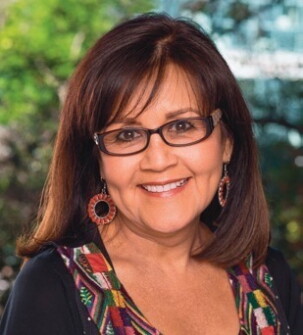
Martha Hernandez, the executive director of the advocacy coalition Californians Together, which focuses on multilingual learner education, spoke with Education Week about the effects of such a rule change, and what California learned from when it mandated English-only instruction in K-12 schools from 1998 to 2016.
This interview has been edited for length and clarity.
What is the current rule regarding instructional language in Head Start classrooms?
In Head Start programs, there are supports for multilingual learners, and there is a commitment to bilingualism in general. It’s built upon decades of research. Programs that have the most long-lasting effectiveness for dual language learners, for multilingual learners, are those that incorporate the student’s home language into instruction or provide some sort of home language support.
Now, the [proposed] rule would mandate English-only instruction, removing those particular supports.
How would the proposed rule requiring English-only instruction affect students and families?
Home language is not a deficit to remediate. It is actually an asset to build upon. We’re looking for an assets-based system that asks what are those resources that a child already possesses, and then how do we build English proficiency upon those assets?
Now, we’re being asked to embrace a deficit-based approach that focuses primarily on what the child does not yet know in English.
This is a major change, and families are left to think that perhaps they should encourage their child not to speak their home language. Families are children’s first teachers. And for many multilingual families, the [home] language is the language in which parents can most naturally tell stories, explain complicated ideas, build vocabulary, sing songs, share traditions, and teach family and cultural knowledge.
We believe that we should never create a policy that leaves parents believing that the language they speak best, the language in which they can have the richest conversations with their child, is harmful to their child’s education.
Doing everything in English only would definitely hamper the effectiveness of this early childhood education.
More English exposure does not automatically equal stronger English proficiency."
How would the proposed rule affect the future English-learner population?
Simply attending an English-only preschool does not guarantee that a child will enter kindergarten proficient in English. More English exposure does not automatically equal stronger English proficiency. A better question is whether children are receiving high-quality language development and whether their entire linguistic repertoire, what they know in English and what they know in their home language, is being used to support learning.
I wouldn’t be too concerned whether we’ll have more children identified as English learners. But a more important question is what linguistic accommodation children will bring with them into kindergarten, and whether we have strengthened or diminished the assets upon which their teachers can build stronger and better English proficiency.
English is absolutely important, and preparing children for kindergarten includes intentionally developing English. But preparation for kindergarten doesn’t require abandoning what children already know in another language.
California once mandated English-only instruction in K-12 schools. What was learned from that?
In a subtractive system, as we had in California, the question was always, “How quickly can we move this child away from the language they bring toward English?” A measure of success, and we’ve learned this, should not be how quickly a child’s first language disappears. Success should mean that children develop strong English, strong literacy, academic success, bilingualism, biliteracy, and whatever possible connection to family, culture, and identity.
We should reject the false choice between English proficiency and home language development. Supporting a child’s home language does not mean delaying English proficiency. Good educational systems build on the knowledge that children bring to school.


