Miles of unpaved dirt and gravel roads wind through rural Pennsylvania’s Bradford and Tioga counties, both located in the state’s north-central area. Many families here don’t own cars, and vehicles with four-wheel drive are often needed to navigate safely over much of the terrain.
In remote, low-income areas like Bradford, where the poverty rate is more than double the national average, access to early education tends to be rare or nonexistent. Most children in poverty do not attend a preschool program. Services like dental care and developmental screenings may be out of reach. Many women also go without pre- and postnatal education. Over 35% of U.S. counties are considered “maternity care deserts,” most in rural areas, and the problem is growing. In Pennsylvania, 46% of its rural counties lack hospitals with labor and delivery services.
Since its launch in 1978, Bradford-Tioga Head Start has worked to fill these and related gaps for mothers and children ages birth to 5.
“In remote areas such as those in Pennsylvania, oftentimes Head Start may be the only early care and education program in that rural community,” said Kara McFalls, executive director of the Pennsylvania Head Start Association. “It’s really setting up children and families for success.”
That’s what President Lyndon B. Johnson had in mind when, in 1964, he declared a “war on poverty” that led to the launch of Head Start the following year.
What began as a pilot eight-week summer program now serves more than 700,000 children under age 5 under the Administration for Children and Families in the U.S. Department of Health and Human Services. As it has expanded, Head Start has evolved to develop detailed standards that include an evidence-based curriculum, teacher-student ratios, specific staff qualifications, multiple developmental screenings, and parent engagement.
However, the Trump administration recently announced plans to dismantle many of the federal regulations that have come to define Head Start. On August 6, Health and Human Services Secretary Robert F. Kennedy, Jr. announced a proposed rule that would eliminate several of its current standards—such as those related to student-teacher ratios, family support services, and comprehensive health screenings—and would cap programs’ administrative expenses at 5%, down from 15%.
“We built this rule around trusting local leaders to make the decisions that are best for their local communities,” said Alex Adams, HHS’s assistant secretary at the Administration for Children and Families, when announcing the proposed rule. He also noted that, while the rules would loosen federal requirements, Head Start centers could still have the option to keep operating the way they currently do.
Head Start administrators, including those on the ground at Bradford-Tioga, are skeptical.
“My assessment is that when standards requirements are removed, the likelihood is that they’re also when that high quality is no longer expected or required,” said McFalls, of the Pennsylvania Head Start Association. “Undoing regulations feels like a step in the direction of not fully and adequately funding Head Start to be successful.”

Head Start empowers parents
Katie Place, who is entering her 48th year as an employee of the Bradford-Tioga Head Start program, 43 of those as a preschool teacher, has had a first-hand look at the program’s benefits.
“I always wanted to be a teacher,” said Place, who was living in a mobile home on her in-laws’ property in Bradford County with her 3-year-old son and her late husband, working as an on-call substitute at a local daycare, when a Head Start family advocate visited her. Shortly after, her son enrolled in the preschool program. That same day, the program hired Place as a driver and lunch aide.
Over the years, through a mixture of scholarships, Head Start’s college coursework funds-reimbursement program, and sheer determination, Place earned her bachelor’s degree and teaching certificate in early childhood education. She’s now the longest-tenured employee of the Bradford-Tioga Head Start program.
Place is also among an estimated 35% of Bradford-Tioga Head Start employees whose children are, or were, enrolled in the program.
“This is something we are very proud of because it reflects the value we place on the experience and perspective that parents bring to our program,” said Wendy Swingle, the executive director of Bradford-Tioga Head Start, Inc.
It’s also part of Head Start’s current performance standards, which require programs to consider qualified program parents for employment vacancies. “This is a foundation, and the proposal to remove this standard would eliminate all the work and time dedicated to assist parents in reaching their full potential,” Swingle said, referring to the HHS’s proposed rule change.

The threat to salaries and staff retention
Head Start’s requirement to consider eligible parents for employment positions helped change the trajectory of Place’s career. So too did the current Head Start standards, which require lead preschool teachers to hold at least a bachelor’s degree in early childhood education or a related field with appropriate coursework, according to Swingle.
A federal rule finalized in 2024 requires Head Start programs to pay their educators salaries comparable to those of local public preschool teachers. Bradford-Tioga Head Start’s lead teachers earn between $50,000 and $60,000 annually, Swingle said. ACF’s proposed rule would rescind these staff wage and benefit requirements.
Eliminating wage requirements could make it more challenging for Head Start to expect its educators to possess specific education or other requirements. The reauthorization of Head Start in 2007, which sought to improve program quality, called for 50% of all Head Start teachers nationally to possess bachelor’s degrees by 2013.
“Our program has spent decades building a highly qualified workforce with certified early childhood education teachers, because research consistently shows that well-prepared teachers are one of the strongest predictors of positive outcomes for young children,” Swingle said.
Bradford-Tioga’s Head Start program also boasts a turnover rate among staff of less than 2%. Swingle attributes the high retention rate to a positive and supportive culture. Historically, low salaries have long been a leading factor in educators’ disgruntlement and decisions to leave the teaching profession.
As for Place, she remains committed to the Bradford-TiogaHead Start program and her place in it. “It’s just a well-oiled machine. It runs so well, and everybody works together,” said Place, who reflects on in-service training sessions when dozens of employees meet for professional learning. “It’s just a really, really good support system”
The critical role of teaching social-emotional skills
The same was true for her son’s experience at Head Start preschool.
“Where we live, there weren’t any children close by, so it was really beneficial for him to learn socialization skills—how to play with other kids and learn from other kids and learn how to get along with them. Head Start is really good at that,” Place said.
A strong emphasis on students’ social-emotional development has long been a core tenet of the program’s standards and curriculum.
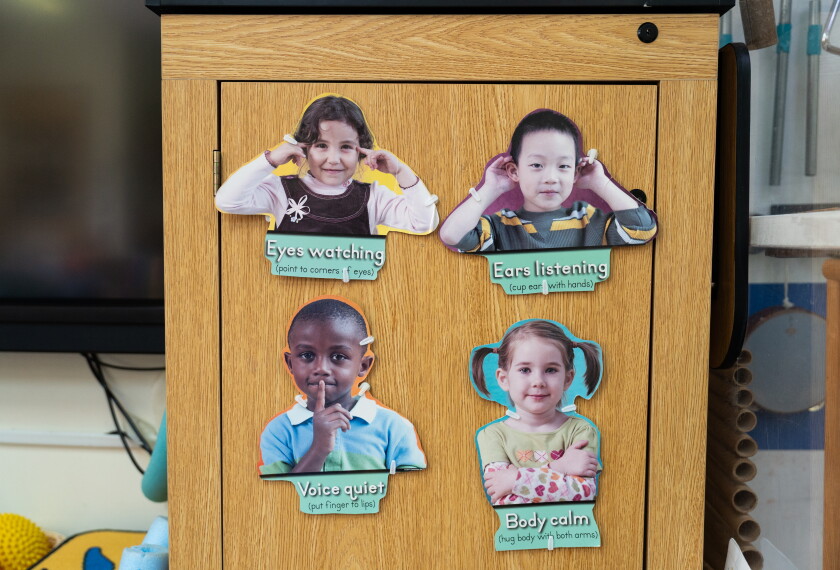
“We intentionally teach social and emotional skills so that children learn how to self-regulate, learn friendship skills, problem-solving skills, and other necessary skills to increase school readiness,” Swingle said.
Head Start programs have an added incentive to promote students’ positive behaviors: Current performance standards prohibit or severely limit the use of suspension due to a child’s behavior, and such suspensions may only be temporary. Expulsions are prohibited.
Meeting this standard, Swingle said, entails extensive staff training, the expertise of internal experts and those in outside agencies, and, when children present with challenging behaviors, input from mental health consultants to implement appropriate interventions and action plans.

Current standards limit suspensions, prohibit expulsions
The ACF’s proposed rule would remove the current limits on suspension and the prohibition on expulsion, which could flow down unevenly to kids.
“If the performance standard about expulsion was eliminated, children with behavioral concerns and disabilities may not have the opportunity to attend an inclusive preschool setting. Programs would not have to support children with challenging behavior, leading to many expulsions,” Swingle said. “If a child is not permitted to attend a preschool program, they will enter kindergarten with those same behaviors and will not be ready to learn.”
Nationwide, an estimated 250 children are expelled from preschool daily, according to data from the U.S. Department of Education. Research shows that getting expelled from preschool has repercussions far beyond reducing their likelihood of kindergarten readiness. These children also are more likely to experience academic failure and to be involved in the juvenile justice system.
Nationwide, early elementary educators are reporting an uptick in negative behaviors among the youngest students. Earlier in 2026, the EdWeek Research Center conducted an online survey of 1,163 early educators and administrators who work with children in pre-K through 3rd grade.
Nearly half of educators surveyed said that student misbehavior disrupts instruction multiple times a day; 59% said students’ behavior has worsened over the past two years. Swingle believes that the extensive staff training, access to expertise of mental health experts, behavior action plans, and other resources that are part of Head Start standards allow its educators to manage student behavior so that it doesn’t escalate.
“Many preschool programs are not equipped to handle students’ challenging behaviors, which are the leading cause of expulsion,” Swingle said.

How proposed changes could affect children with disabilities
Children with disabilities are expelled at a rate that far exceeds their typically developing peers. One estimate says that children with disabilities account for 75% of all preschool suspensions and expulsions.
The ACF rule proposal would remove the current Head Start requirement that reserves at least 10% of enrollment for children with disabilities. While children with disabilities generally make up about 12% of a preschool class, more than 35% of students in Bradford-Tioga’s Head Start program last year were diagnosed with a disability.
Swingle credits early diagnosis as the reason their program serves a higher-than-average rate of children with disabilities. “Our required screenings help us to identify children that may be in need of an evaluation for special education services,” she said.
Current Head Start standards require all incoming children to be screened to identify concerns regarding a child’s developmental, behavioral, motor, language, social, cognitive, and emotional skills within 45 calendar days of when the child first attends the program. These standards are among many at risk of being dismantled.
If the proposed ACF rule goes into effect, children with disabilities would still have rights under the Individuals with Disabilities Education Act, explained Swingle, but they could lose access to relevant services and resources, especially in rural areas. Further, she said, few other preschool options exist that provide the same combination of education, developmental supports, family services, and transportation.
She believes the ACF proposal, which recommends loosening staff-to-student ratios, would likely harm children with disabilities more than most children, as they tend to require more individualized attention.
For now, the Bradford-Tioga Head Start program plans to operate as usual this coming school year. On August 19, some parents will walk their children to preschool for the first time. Other students will climb aboard the program’s buses—each equipped with a bus driver who holds a commercial driver’s license, a paid aide, and a five-point harness seat for every child—and wind through the back roads of Pennsylvania’s Bradford and Tioga counties to reach their classrooms.
The ACF’s proposed cap on administrative costs would require the program to make some tough choices, not just about safety features like those that its buses provide, but on transportation itself. Currently, 15 of its 19 classrooms receive bus service.
“If we need to pull funds,” Swingle said, “that [transportation] will be something we will need to eliminate.”