
Educators seeking clarification on what is permissible under Florida’s law banning instruction on topics of sexual orientation and gender identity got official answers, thanks to a lawsuit settlement filed on March 11.
Among what is allowed according to the settlement: Teachers and students can discuss their own LGBTQ+ identities and families, safe space stickers can stay up in classrooms, and students can participate in extracurricular activities, such as Gay-Straight Alliance clubs, and wear clothing inconsistent with “students’ gender assigned at birth.”
Plaintiffs, including advocacy organizations such as Equality Florida and families, filed a lawsuit against the Florida department of education, the state board of education, and its members two years ago challenging the constitutionality of the Parental Rights in Education Act, also known by critics as the “Don’t Say Gay” law.
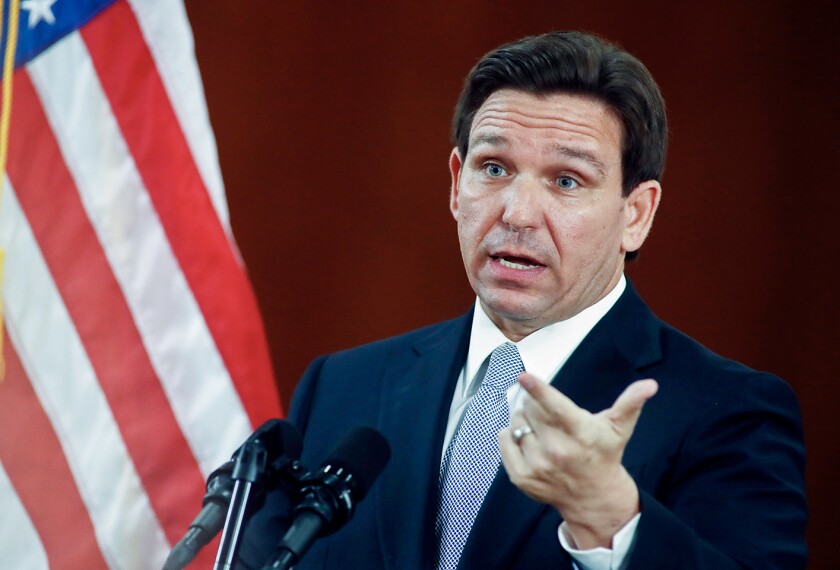
The law, signed by Gov. Ron DeSantis, a former Republican presidential candidate, prohibits “classroom instruction by school personnel or third parties on sexual orientation or gender identity” in grades K-3 or “in a manner that is not age-appropriate or developmentally appropriate for students in accordance with state standards.”
Last year, the state board of education voted to expand the ban through high school. Dozens of states have followed suit with their own similar legislative efforts.
“For nearly two years, Florida’s notorious ‘Don’t Say Gay’ law has spawned a disturbing wave of fear, anxiety, and confusion,” says lead counsel for the plaintiffs Roberta Kaplan in a statement. “By providing much-needed clarity, this settlement represents a major victory for the many thousands of LGBTQ+ students, teachers, parents, and their allies throughout Florida,” she added.
As part of the settlement, Andrew King, the Florida department of education’s general counsel, sent out an emailed copy of the agreement to superintendents and school board chairs in the state, encouraging them to share the agreement with principals in schools within their districts.
“Recital F (pages 2 through 6) sets forth considered positions the State has taken in court about the scope and meaning of the challenged statute,” King wrote.
What the settlement says
While the state’s law specifically refers to bans on “instruction” on sexual orientation and gender identity, educators have been decrying the law’s ambiguity over what is considered instruction and spoke of a resulting chilling effect across the state.
In a national survey from the RAND Corp. two-thirds of teachers say they self-censor when it comes to teaching about topics of race and gender even when no state laws restrict such work.
The settlement attempts to make clear the parameters of instruction with several concrete examples. It notes, for instance that:
- Teachers are free to respond if students discuss their identities or family life and provide grades and feedback if a student chooses “LGBTQ identity” as an essay topic.
- The law “would not prohibit incidental references in literature to a gay or transgender person or to a same-sex couple. Such references, without more, are not ‘instruction on’ those topics.”
- The law “does not restrict gay and transgender teachers from putting a family photo on their desk or referring to themselves and their spouse (and their own children).”
- The law “does not prohibit intervention against LGBTQ bullying” nor does it require the “removal of ‘safe space’ stickers.”
- The law “does not prohibit participation in extracurricular activities (such as ‘Gay-Straight Alliances’ or book fairs) or after-hours tutoring” nor does it restrict “lines referring to LGBTQ issues in musicals, dancing between persons of the same gender at a school dance, or wearing clothing inconsistent with students’ gender assigned at birth.”
Before such clarifications, educators wondered whether expressing their own LGBTQ+ identities would break the law and, in at least one case last year, the law was behind state officials intervening in an LGBTQ+ student club’s after-school event featuring a guest who performs in drag.
Last year, the law also caused confusion on whether schools could offer the College Board’s Advanced Placement Psychology course, which requires instruction on gender identity and sexual orientation. After some back-and-forth close to school year starting dates, the state officially said schools could proceed with the course.
Where things stand
The governor’s office issued a press release calling the settlement a success.
“Thanks to the leadership of Governor DeSantis, the law remains in effect, and children will be protected from radical gender and sexual ideology in the classroom,” the statement said.
The agreement resolves any further proceedings in the lawsuit.
A press release from the plaintiffs and their legal teams said: “The agreement effectively nullifies the most dangerous and discriminatory impacts of Florida’s controversial ‘Don’t Say Gay’ law, and makes clear that the law must be applied neutrally and is no license to discriminate against or erase LGBTQ+ families.”
Review the full settlement here (educators are encouraged to review pages 2-6 in particular):


