
Student Achievement

What Teachers Say Is the Biggest Barrier to Learning Recovery

By Lauraine Langreo — July 26, 2022 3 min read
Pre-K teacher Vera Csizmadia teaches 3-and 4-year-old students in her classroom at the Dr. Charles Smith Early Childhood Center in Palisades Park, N.J., on Sept. 16, 2021.
  • Save to favorites
  • Print

Dealing with student behavioral and mental health issues has been many teachers’ biggest barrier to addressing unfinished learning, according to a Khan Academy survey published July 26.

Nearly 7 in 10 teachers who participated in the survey chose “student behavioral issues” as a barrier to addressing unfinished learning, and 57 percent of teachers chose “student mental health.”

The nationally representative survey of 639 teachers, conducted last month by market research and data analytics firm YouGov for Khan Academy, explores teachers’ views on addressing unfinished learning, the use of mastery learning, providing feedback to students, and the grading system. It comes as schools prepare to continue the work of helping students catch up on unfinished learning that developed during the COVID-19 pandemic.

Another theme on the list of barriers to addressing unfinished learning is teachers’ finite time. Sixty-one percent of teachers said there are “too many demands on my time,” 53 percent said there’s “not enough flexibility or time in the school year to pause and address issues,” 41 percent said “lack of time in the school day,” and 38 percent said “lack of planning time.”

But even with all these hindrances, the survey found that during the 2021-22 school year, more than 9 in 10 teachers said they were able to identify the learning gaps that need to be addressed among their students. And 59 percent of teachers said their students mastered the content they needed to during the 2021-22 school year.

The method that is most helpful in identifying learning gaps is “working individually with students during class,” according to 78 percent of surveyed teachers. That strategy is followed closely by “classroom assessment” (74 percent), “asking students questions in class” (70 percent), and “student classwork/homework” (70 percent).

Teachers also said that the most important changes in school needed to help students catch up don’t directly deal with academics: Sixty percent said there needs to be more emotional and behavioral support and 56 percent said there needs to be more family engagement. The third most popular option is tied between having “less rigid district pacing guidelines” and “consistent small group instruction,” both supported by 52 percent of respondents.

See Also

Teenage boy laying on the floor in a living room watching a video on his handheld device, tablet.
iStock/Getty

The importance of mastery learning

The survey also found that an overwhelming majority (84 percent) of teachers agree that mastery learning can help address unfinished learning, but only a small majority (53 percent) use mastery learning in their classrooms. Mastery learning means knowing which skills a student has mastered and not mastered, providing feedback on what students got wrong and why, offering as many opportunities as needed for students to demonstrate mastery, and continuing to provide instruction until a skill is mastered.

More than 90 percent of respondents said it was “very” or “extremely” important to do that.

The same issues that are barriers to addressing unfinished learning are also obstacles to implementing mastery learning, according to the survey. Sixty-five percent of teachers said “lack of time” and 55 percent said “student behavioral issues.” But 49 percent of teachers also said having large class sizes is a barrier to implementing mastery learning.

Teachers want more time to give feedback to students

More than 6 in 10 teachers said they feel like they don’t spend enough time providing feedback to students. On average, teachers spend 8.6 hours providing feedback, but the survey found that teachers would like to spend 12.2 hours on average on providing feedback.
See Also

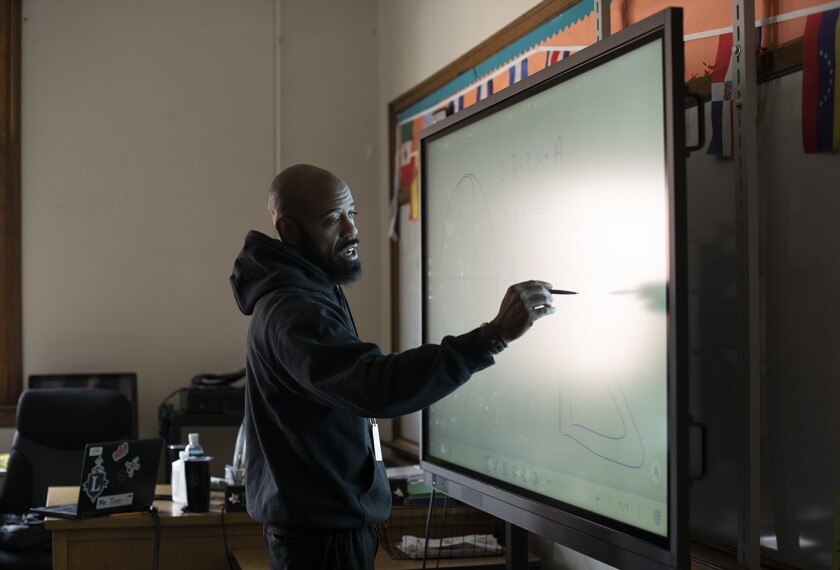
Patrick Jiner, a seventh grade math teacher at Lake Middle School in Denver, writes on a smart board as he talks to his class on April 13, 2022.
<b>Patrick Jiner, a 7th grade math teacher at Lake Middle School in Denver, talks through a lesson earlier this month.</b>
Rachel Woolf for Education Week

The survey found that 84 percent of teachers use the traditional grading system, but 66 percent of teachers agree that a standards-based grading system would be better than traditional letter grades. A standards-based grading system breaks down the subject into smaller learning targets and grades students based on their mastery of those targets, instead of having an overall letter grade for the subject based on many assignments. More than 6 in 10 teachers said Ds and Fs cause students to lose motivation, and half of the respondents said that Ds and Fs discourage students from working to catch up.

Despite liking the concept of standards-based grading, 71 percent of teachers said letter grades provide an incentive for students to succeed. But students shouldn’t be receiving only letter grades, they said. About 3 in 4 teachers agreed that it’s important to provide behavioral feedback in letter grades, and 71 percent said including behavioral feedback in letter grades teaches important life skills.

Events

This content is provided by our sponsor. It is not written by and does not necessarily reflect the views of Education Week's editorial staff.
Sponsor
College & Workforce Readiness Webinar
Smarter Tools, Stronger Outcomes: Empowering CTE Educators With Future-Ready Solutions
Open doors to meaningful, hands-on careers with research-backed insights, ideas, and examples of successful CTE programs.
Content provided by Pearson
Reading & Literacy Webinar Supporting Older Struggling Readers: Tips From Research and Practice
Reading problems are widespread among adolescent learners. Find out how to help students with gaps in foundational reading skills.
This content is provided by our sponsor. It is not written by and does not necessarily reflect the views of Education Week's editorial staff.
Sponsor
Reading & Literacy Webinar
Improve Reading Comprehension: Three Tools for Working Memory Challenges
Discover three working memory workarounds to help your students improve reading comprehension and empower them on their reading journey.
Content provided by Solution Tree

EdWeek Top School Jobs

Teacher Jobs
Search over ten thousand teaching jobs nationwide — elementary, middle, high school and more.
View Jobs
Principal Jobs
Find hundreds of jobs for principals, assistant principals, and other school leadership roles.
View Jobs
Administrator Jobs
Over a thousand district-level jobs: superintendents, directors, more.
View Jobs
Support Staff Jobs
Search thousands of jobs, from paraprofessionals to counselors and more.
View Jobs

Read Next

Student Achievement What the Research Says Why Hasn't Tutoring Been More Effective?
Recent studies of tutoring programs show small or no effects. Why?
6 min read
Vector illustration of a yellow pencil on a cyan blue background. Blowing in the wind is a red, tattered flag attached to the tip of the pencil.
iStock/Getty
Student Achievement When ICE Arrests Rise, Student Test Scores Fall, New Study Suggests
The working paper focused on a Florida district where both foreign-born and U.S. born students saw test scores drop.
4 min read
Governor Ron DeSantis speaks at a press conference at FHP Troop D Headquarters on International Drive in Orlando on Aug. 1, 2025. During the press conference, DeSantis addressed law enforcement and the Florida Highway Patrol's efforts and responsibility to apprehend illegal immigrants in the state.
Gov. Ron DeSantis speaks at a press conference at FHP Troop D Headquarters in Orlando on Aug. 1, 2025, where he discussed law enforcement and the Florida Highway Patrol’s role in apprehending undocumented immigrants in the state. A new study links increased immigration enforcement in Florida to declines in student test scores.
Rich Pope/Orlando Sentinel via TNS
Student Achievement Spotlight Spotlight on Unlocking Potential: How Interventions Transform Learning
This Spotlight explores how interventions can shape student outcomes, with a focus on supporting older students who struggle with reading.
Student Achievement Mounting Evidence Shows National Reading Scores Stuck at Historic Lows
Math performance has risen, but reading remains at pandemic-era levels, a new analysis shows.
3 min read
Third-grader Fallon Rawlinson reads a book at Good Springs Elementary School in Good Springs, Nev., on March 30, 2022. For decades, there has been a clash between two schools of thought on how to best teach children to read, with passionate backers on each side of the so-called reading wars. But the approach gaining momentum lately in American classrooms is the so-called science of reading.
Third-grader Fallon Rawlinson reads a book at Good Springs Elementary School in Good Springs, Nev., on March 30, 2022. Reading scores remain flat after the pandemic, even as scores grow in math—a subject in which performance was initially more affected.
Steve Marcus/Las Vegas Sun via AP
