Federal

How Would Typical Teachers Fare Under the GOP’s Tax Bill?

By Andrew Ujifusa — November 07, 2017 3 min read
  • Save to favorites
  • Print

Republican lawmakers’ proposed changes to the federal tax code are causing a stir in the education community. Teachers and others are zeroing in on the bill’s repeal of the $250 tax deduction teachers and principals can take for spending their own money on classroom supplies. But, aside from that, how could the bill impact an individual teacher’s tax bill?

Let’s examine how a couple of hypothetical teachers would fare under the legislation introduced in the U.S. House of Representatives last week and try to tease out an answer.

The following scenarios are in a world where the GOP tax bill is approved as released. Will it pass? Will lawmakers amend it? If so, how? Nobody knows the answers to those questions. Right now, House lawmakers are vigorously debating it. But let’s figure things out based on what we know is in the bill.
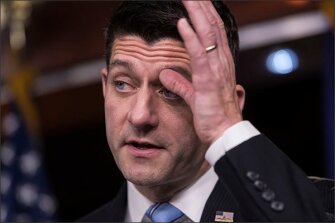
Speaker of the House Paul Ryan, R-Wis., defends the GOP tax reform plan during a news conference on Nov. 7 in Washington.

For this analysis, we’re leaving out a lot of factors that could affect these hypothetical teachers’ taxes. We’ve also tried to keep it relatively simple, in order to get a basic idea of how the proposed tax changes could work for many teachers.

The Average Teacher

We reported in August that the average public school teacher makes a base salary of $55,100 annually, and that this average teacher works 53 hours a week and has 14 years of teaching experience, according to the U.S. Department of Education’s School and Staffing Survey.

The Joint Committee on Taxation in Congress reported last week that under the GOP legislation, the average tax rate for individuals—not specifically teachers—making between $50,000 and $75,000 annually would on average fall from 14.8 percent to 13.6 percent in 2019. That means a $660 tax cut on average for that teacher, from $8,154 to $7,494. However, by 2027, the average tax rate would rise under the tax proposal to 14 percent for individuals in that income bracket. That would leave the average teacher with a $275 tax cut in 2027, compared to 2017.

Here’s another, somewhat broader view: The Institute on Taxation and Economic Policy, a nonprofit research group that’s independent from Congress, reported that in 2018, under the GOP tax proposal, 87 percent of households making between $40,750 and $65,150 annually—a range that includes the average teacher in terms of salary—would get a tax cut, and that the average tax cut would be $930. Meanwhile, 8 percent of taxpayers in that income range would see an increase, with the average tax increase totaling $810.

However, in the list of factors the Institute on Taxation and Economic Policy used to reach its conclusion, the repeal of the $250 deduction for classroom expenses is not included. That repeal would be a relatively small change to the tax code, but it’s the one that deals with teachers’ taxes in the most direct way.

The First-Year Teacher

As of 2012-13, the average salary for a first-year educator is $36,141 according to 2012-13 data from the National Education Association.

We don’t have a more recent national average than that. The average teacher’s salary went up by 3.7 percent from 2011-12 to 2015-16, so the average first-year teacher’s salary has likely gone up as well. But in terms of the tax bill’s impact on these new teachers, what’s important is that the average rookie teacher’s salary is still between $30,000 to $40,000, based on the Joint Tax Committee’s report. So let’s use the $36,141 figure for our calculations.

For those rookie teachers who are single, their average tax rate would fall from 7.9 to 7.2 percent. That would be an average tax cut of $253 for first-year teachers. However, by 2027, those teachers’ average rate would climb back to 7.6 percent. That would leave those teachers with an average tax cut of $109 in 2027, compared to 2017.

Again, those calculations assume the person is filing as an individual, as many first-year teachers are, and not jointly with a spouse.

Keep in mind that this bill still has a long way to go through the House and Senate.

Related Tags:

Assistant Editor Liana Heitin Loewus contributed to this article.

Events

Jobs Regional K-12 Virtual Career Fair: DMV
Find teaching jobs and K-12 education jubs at the EdWeek Top School Jobs virtual career fair.
This content is provided by our sponsor. It is not written by and does not necessarily reflect the views of Education Week's editorial staff.
Sponsor
Artificial Intelligence Webinar
Making AI Work in Schools: From Experimentation to Purposeful Practice
AI use is expanding in schools. Learn how district leaders can move from experimentation to coordinated, systemwide impact.
Content provided by Frontline Education
This content is provided by our sponsor. It is not written by and does not necessarily reflect the views of Education Week's editorial staff.
Sponsor
Student Well-Being & Movement Webinar
Building Resilient Students: Leadership Beyond the Classroom
How can schools build resilient, confident students? Join education leaders to explore new strategies for leadership and well-being.
Content provided by IMG Academy

EdWeek Top School Jobs

Teacher Jobs
Search over ten thousand teaching jobs nationwide — elementary, middle, high school and more.
View Jobs
Principal Jobs
Find hundreds of jobs for principals, assistant principals, and other school leadership roles.
View Jobs
Administrator Jobs
Over a thousand district-level jobs: superintendents, directors, more.
View Jobs
Support Staff Jobs
Search thousands of jobs, from paraprofessionals to counselors and more.
View Jobs

Read Next

Federal McMahon Still Wants to Relocate Special Ed.—And Other Budget Hearing Takeaways
The education secretary also told skeptical lawmakers that Ed. Dept. program transfers are working.
6 min read
LindaMcMahon03B
Secretary of Education Linda McMahon prepares to testify before a Senate appropriations subcommittee on the U.S. Department of Education's fiscal 2027 budget proposal in Washington on April 28, 2026.
Marvin Joseph for Education Week
Federal Part-Time Tutor, Game Developer Charged With Attempted Assassination of Trump
Cole Tomas Allen apologized to friends and former students, according to a criminal complaint.
The Associated Press & Education Week Staff
4 min read
A courtroom sketch depicts Cole Tomas Allen, left, the California man arrested in the shooting incident at the correspondents dinner in Washington, appearing before Magistrate Judge Matthew J. Sharbaugh, in federal court, Monday, April 27, 2026 in Washington. Allen worked as a part-time tutor, according to an online resume.
A courtroom sketch depicts Cole Tomas Allen appearing before Magistrate Judge Matthew J. Sharbaugh, in federal court on April 27, 2026 in Washington. Allen worked as a part-time tutor, according to an online resume.
Dana Verkouteren via AP
Federal Man Accused of Firing Weapon at Event With Trump Has Background as Tutor and Programmer
Social media posts said the individual has worked for company that has provided test-prep and academic support.
2 min read
U.S. Secret Service agents surround President Donald Trump before he was taken from the stage after a shooting incident outside the ballroom during the White House Correspondents Dinner, Saturday, April 25, 2026, in Washington.
U.S. Secret Service agents surround President Donald Trump before he was taken from the stage after a shooting incident outside the ballroom during the White House Correspondents Dinner, Saturday, April 25, 2026, in Washington. The alleged assailant's online resume said he worked for a private tutoring company.
Alex Brandon/AP
Federal A Federal School Cellphone Policy? Big Barriers Stand in the Way
Other countries have nationwide restrictions, but in the U.S., states and districts have set the agenda.
6 min read
Students use their cellphones as they leave for the day the Ramon C. Cortines School of Visual and Performing Arts High School in downtown Los Angeles on Aug. 13, 2024.
Damian Dovarganes/AP
