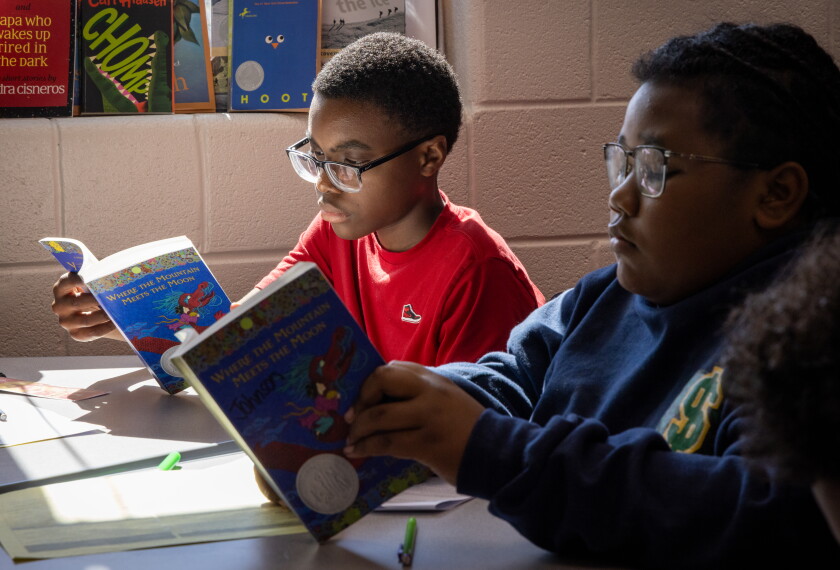
What is the most important thing you do to help your students become strong readers? Teach phonics? Do guided reading every day? Make read-aloud time with the whole class a magical space filled with laughter and silly voices?
All these activities are important. But I have realized over the past few years that for young children, the foundation of literacy is the classroom library. This year, I became a lot more purposeful about building that foundation.
An educator I respect said, “I can’t teach a child to read. What I can do is create the conditions for her to learn to read.” The most important of these conditions is an abundance of great books. The kinds of books kids can’t wait to get their hands on.
One of the many things I love about my principal is that she knows how important books are and allocates school funding accordingly. Last fall, each teacher at our school received $500 to stock our classroom library. This year, we’ll receive between $1,000 and $1,500. Before we buy new books, we teachers take stock of the titles we already have. I developed the chart below to help teachers take a close look at the range of reading levels, diversity, identities, experiences, and genres in their classroom libraries.

As you shape your classroom library, you should:
1. Increase diversity.
Literature should be a window into possibilities beyond our own experiences. But it should also be a clear and vibrant mirror. As things are, a talking rabbit stands a better chance of seeing herself reflected in children’s literature than a child of color does. Roughly 73 percent of the characters in children’s books published in 2015 were white, according to researchers at the University of Wisconsin-Madison’s Cooperative Children’s Book Center. This appalling statistic should make every one of us angry.
What can we do about that profound problem? First, we need to find books that reflect the identities and experiences of our African-American, Latino and Latina, Asian-American, and Native American students. There aren’t enough of those books being published by the industry, but they do exist.
If you have even one student of color in your class, she needs to see herself reflected in the books you put in her hands. White students need to read books about characters of color, too—in a world where neighborhoods, churches, and schools tend to be largely segregated, books can be a portal into the experiences of children whose lives are very different from those of the reader.

Scholastic’s monthly We Need Diverse Books flyers are a good place to start (if you’re not getting that Book Clubs catalog delivered to your school mailbox, call 1-800-Scholastic and ask for it). There are plenty of good lists that pop up if you Google “diverse children’s literature,” too, like the 2018 Ultimate List of Diverse Children’s Books.
Placing some of these books in your classroom library is the first step. You can create excitement around the diverse books you choose by using them at read-aloud time, in guided-reading groups, and for shared reading.
2. Match the books to students’ ability.
Along with reflecting your students’ identities, your classroom library should provide plenty of books on their independent reading level. What I found when I surveyed my own class library was kind of alarming. I knew that most of my incoming 1st graders would read on levels between 1 and 8 on the Developmental Reading Assessment system or between A and E on the Fountas and Pinnell system.
Yet, most of the books in my class library were much harder than that. While leveling books with a teacher at another school, we discovered the same thing: Picture books that look easy are often intended for reading aloud and are far above the independent reading level of most students in the classroom.

Leveling a library takes time. The fastest way I have found is to look for the title first on Scholastic’s Book Wizard website. If the title doesn’t pop up there, I try an advanced search on the Lexile Framework for Reading with a correlation chart handy. If the book isn’t showing up in that database either, I just eyeball the first few pages and make my best guess at the level.
Once you know the approximate level of a particular series, like Mo Willems’ Piggie and Elephant books or The Magic Treehouse series by Mary Pope Osborne, you can label all the books in that series the same level without looking up each individual title.
I organize my books in baskets by genre: nonfiction, fantasy, and realistic fiction. I have a separate basket of books that are bilingual or in Spanish, so my Latino and Latina students can develop literacy in both languages.
This year, I started writing the level on the sticker that color-codes the books by genre. I wasn’t sure about that change, because I don’t always want to restrict my students to a narrow band of levels. But my 1st graders, all 25 of whom are English-language learners who live in poverty, made more progress than any other class I’ve had. They grew an average of seven levels—well above a year’s typical growth.
I attribute part of their growth to having provided them the level for every book in the class library. They can quickly find books that are just right and spend most of their time reading within that “Goldilocks” zone—not too hard, not too easy.
My students also have 10 books in an individual Ziploc bag with their name and a range of two to four levels. They do a “book shop” at least once a week to swap for new titles. And they get time each week to read books above or below their level, too, when they browse the class library and our basket of read-aloud books for any titles that look interesting to them.
3. Make time to read.

I have thought a lot about author Malcolm Gladwell’s notion that it takes 10,000 hours of practice to become an expert at something (though some researchers have challenged this theory). Kids need focused mini lessons for reading and strategies other than simply sounding out unknown words. The foundation of strong literacy programs like the Reading Units of Study, developed by author Lucy Calkins and her colleagues, is simple: Children also need the right books at the right time, in sufficient quantities and with plenty of time to read them.
My 1st graders have between 30 and 45 minutes each day to read books they choose. Every morning, they check out a book to read at home, which can be on any level since they have the option to ask a parent or sibling to read it to them.
The book gap between income levels is staggering—the most affluent children in America have an average of 200 books at home, while low-income children have about three. Home libraries are a powerful way to address that gap, but having kids check out a book to take home from the class library each day is critical, too.
4. Build a love of reading.
During a meeting last month, a talented first-year teacher mentioned that she had witnessed a surge in her students’ reading abilities late in the year. When I asked if she was seeing a parallel surge in their excitement about reading, she was quiet for a moment. Then she admitted, “You know, I don’t even have time to notice that.”

Many of us find ourselves so distracted by the pressure of tests and the rush to get kids to “grade level” that we don’t pay enough attention to whether or not our students enjoy reading. We have to make that time.
Our job isn’t just to teach kids how to read, but to do whatever we can to make sure they love to read. We have to give them plenty of choices, an abundance of funny and fascinating books, and cozy reading spots like bean bags, bungee chairs, or little tents. We also need to put great books into their hands and homes, including windows into unimagined realms and mirrors where they can see themselves clearly reflected.
That mighty work begins by creating a magnificent classroom library.