Special Report
Classroom Technology

Report Summary: Breaking Down Barriers to Blended Learning

By The Editors — April 13, 2015 1 min read
  • Save to favorites
  • Print

“Blended Learning: Breaking Down Barriers” examines some of the most intractable challenges schools face in trying to use technology to improve teaching and learning—and how K-12 systems are attempting to clear those hurdles.

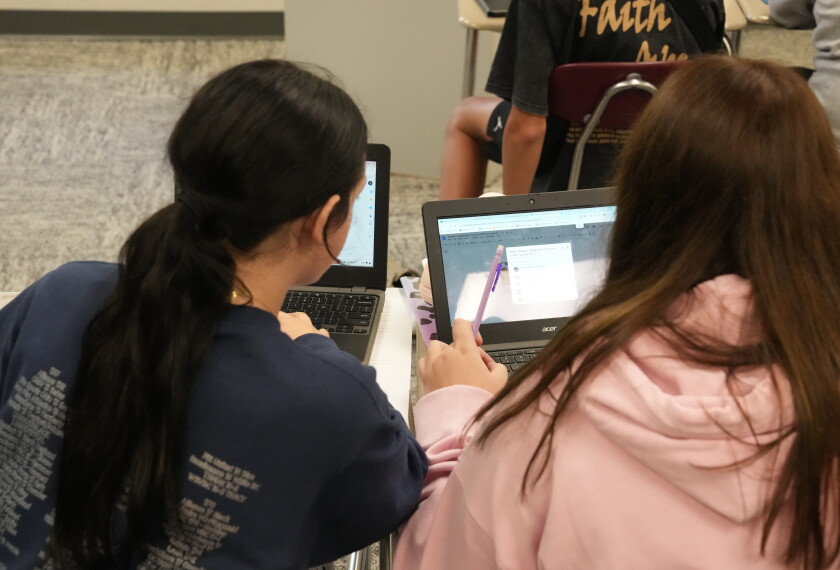
In simple terms, blended learning is a strategy to combine technology-based instruction with traditional, teacher-to-student lessons. And it exists everywhere in school districts these days.

Yet many schools find there’s a gap between what they aspire to accomplish with technology and what they can actually make happen. It’s a disconnect fueled by myriad factors, including students’ lack of Internet access away from school, teachers’ lack of confidence in using digital tools, and a murky research base for blended learning. The stories in this report explore schools’ efforts to find a way forward.

The report profiles districts’ attempts to extend Web access to students’ homes and communities. It offers examples of schools helping teachers master technology through peer coaching, and efforts to change the roles of librarians to meet schools’ digital needs.

Other stories debate the merits of giving individual schools greater autonomy to make their own ed-tech purchasing decisions—or leaving that power in the hands of districts’ central offices. The report examines a Chicago charter school designed from the ground up with blended learning in mind. And it dissects what the research says about blended learning—and the prevailing uncertainty about how to interpret the evidence that does exist.

Education Week’s hope is that these stories inform readers’ understanding of the vision and reality of blended learning, and offer ideas on how to resolve the questions schools confront every day.

Coverage of “deeper learning” that will prepare students with the skills and knowledge needed to succeed in a rapidly changing world is supported in part by a grant from the William and Flora Hewlett Foundation, at www.hewlett.org. Education Week retains sole editorial control over the content of this coverage.
A version of this article appeared in the April 15, 2015 edition of Education Week as About This Report

Events

Jobs Regional K-12 Virtual Career Fair: DMV
Find teaching jobs and K-12 education jubs at the EdWeek Top School Jobs virtual career fair.
This content is provided by our sponsor. It is not written by and does not necessarily reflect the views of Education Week's editorial staff.
Sponsor
School Climate & Safety Webinar
Cardiac Emergency Response Plans: What Schools Need Now
Sudden cardiac arrest can happen at school. Learn why CERPs matter, what’srequired, and how districts can prepare to save lives.
Content provided by American Heart Association
Teaching Profession Webinar Effective Strategies to Lift and Sustain Teacher Morale: Lessons from Texas
Learn about the state of teacher morale in Texas and strategies that could lift educators' satisfaction there and around the country.

EdWeek Top School Jobs

Teacher Jobs
Search over ten thousand teaching jobs nationwide — elementary, middle, high school and more.
View Jobs
Principal Jobs
Find hundreds of jobs for principals, assistant principals, and other school leadership roles.
View Jobs
Administrator Jobs
Over a thousand district-level jobs: superintendents, directors, more.
View Jobs
Support Staff Jobs
Search thousands of jobs, from paraprofessionals to counselors and more.
View Jobs

Read Next

Classroom Technology Opinion What If Ed Tech Does More Harm Than Good?
An influential new book delves into the research on how ed tech affects learning.
10 min read
The United States Capitol building as a bookcase filled with red, white, and blue policy books in a Washington DC landscape.
Luca D'Urbino for Education Week
Classroom Technology Do Student Cellphone Bans Improve Academic Achievement?
Researchers recommend continued examination of cellphone policies, which are still relatively new.
4 min read
Students at Washington Junior High School use the unlocking mechanism to open the bags their cell phone were sealed in during the school day as they leave school for the day on Oct. 27, 2022, in Washington, Pa. Citing mental health, behavior and engagement as the impetus, many educators are updating cellphone policies, with a number turning to magnetically sealing pouches.
Students at Washington Junior High School use the unlocking mechanism to open the bags their cellphones were sealed in during the school day as they leave school on Oct. 27, 2022, in Washington, Pa. A new study suggests that cellphone restrictions in school don't seem to boost student achievement or attendance.
Keith Srakocic/AP
Classroom Technology From Our Research Center What Happens When Schools Restrict Cellphone Use
New survey sheds light on how cellphone restrictions are improving student behavior and engagement.
5 min read
A student takes notes on their cell phone during class at Bel Air High School in Bel Air, Md., on Jan. 25, 2024.
A student takes notes on a cellphone during class at a high school in Bel Air, Md., on Jan. 25, 2024. The vast majority of educators say their school districts now have policies that restrict cellphone use during school hours.
Jaclyn Borowski/Education Week
Classroom Technology Screen Time Dos and Don'ts: A Downloadable Guide to Healthier Tech Habits
This guide outlines how schools and educators can build heathier student screen habits.
1 min read
Collage of digital devices with an overlay of a clock.
Liz Yap/Education Week via Canva