Holly Carter is the founder and executive director, and Zoë Barnstone-Clark is summer 2019 intern at BYkids.
Documentary films created by kids have the power to facilitate discussions in classrooms, at family dinner tables, and promote global competency, empathy, and compassion.
Through the medium of documentary film, kids are able to speak across experiences and lines of class, race, and nationality, rather than being talked down to. Kids are transformed from subjects to narrators and from victims to activists with agency to tell their own stories. Documentaries facilitate opportunities for cross-cultural exchanges that teach global citizenship starting at a young age.
Benefits of Teaching with Documentaries

Children are growing up in an increasingly globalized world plagued with daunting social problems such as climate change and an ever-growing refugee population. It is vital that educators provide their students with the tools to think critically and speak with authority about these large and complex issues. It is also important to embrace the wealth of diversity in opinion and experience within any one classroom and to recognize the power dynamics that exist as a result of these differences. Beginning these kinds of difficult discussions by engaging students in the story of another child serves to increase their awareness of life experiences and values that may differ from theirs. This strategy also empowers students to share their own stories, acknowledges a child’s ability to understand complex issues, and recognizes the value of a child’s perspective.
The mainstream media tell stories of global inequalities and human injustices through mind-boggling numbers and heart-wrenching images but often fail to include the perspectives of those who are most personally impacted by tragedy and systems of oppression. Luckily, there are various organizations working to teach tolerance and give children the ability to share their stories and viewpoints with the rest of the world. These programs amplify the voices of those who often go unheard, giving voice to all people across cultures. They also avoid speaking down to those who differ in experience, opinion, or values. Giving children the agency to share their stories with others makes it more possible to inspire, empower, and enact social change.
Platforms, Tools, and Resources
BYkids
BYkids provides a platform to young people across the globe to share their experiences, in their own words and on their own terms, via the power of visual storytelling. Kids from all over the world are given a mentor and equipment to make a short documentary film about their lives. Films have approached topics such as criminal-justice reform in the United States, climate justice for agricultural communities in Nicaragua, and refugee and migrant rights shown from a deeply personal level. Students create these films with an audience of educators, students, and other nonprofit organizations in mind. Each film is accompanied by free educational resources and ideas to assist students in taking action.
New York International Children’s Film Festival
The New York International Children’s Film Festival advances the creation and promotion of films that instill thoughtful viewership and provoke discussions both among children, as well as with their teachers and families. For schools in New York City, the festival has various resources allowing educators to integrate documentary film into their curricula. The festival partners with over 100 schools every year and facilitates field trips and film camps for kids. If you are outside the New York City area, the festival also offers the Kid’s Flicks Tour, which allows you to bring these award-winning films to your town.
Media Literacy Now
Teaching global citizenship to children through documentary films advances media literacy, a skill that continues to grow in importance in our digital world and is included in the Common Core standards. Media literacy is defined as the ability to think critically about the messages and influences of various kinds of media and to create thoughtful media. Media Literacy Now is a national advocacy organization for media literacy education policy.
PenPal Schools
Rather than merely discussing the concept of empathy with students, educators must create opportunities to practice it. PenPal Schools is an online learning platform that allows students to collaborate with other kids across the globe. This global project-based-learning program allows students to develop essential skills such as reading, writing, digital citizenship, and building social and emotional intelligence.
Online Libraries
There are a number of other organizations that work to teach children (and everyone) the power of storytelling to inform, empower, and teach tolerance. StoryCorps, which aims to collect and preserve humanity’s stories in order to teach compassionate listening and build cross-cultural understanding, has its own educational programming. It offers training and resources for educators to teach their students the value of their own stories and how to tell them in an impactful way. Additionally, it has spearheaded a movement called “The Great Thanksgiving Listen” that encourages kids to record a conversation with one of their elders on Thanksgiving Day. Similarly, Global Oneness Project offers a free and expansive library of multimedia stories and free lesson plans that take on big issues, teach universal themes, and carry the goal of imparting the existence of our common humanity on young minds. PBS LearningMedia also offers a large library of free educational videos and resources on a wide variety of subjects for students and teachers.
One of BYkids’ films, Out of Aleppo, was made by Mohammad Shasho, a young man from Aleppo, Syria, and tells his story of displacement in the midst of the Syrian Civil War. To hear about the millions of displaced individuals across the globe may evoke a temporary empathy within us, but in the end, we dehumanize real people into facts and figures. When we are told the personal stories of heartbreak and strife by Mohammad, his parents, and his friends, we begin to truly contemplate the devastation of being forced to leave one’s homeland, as well as the renewed hope of being offered a new life by a welcoming community. By exposing kids to the stories of other young people who have faced immense difficulty and strife, it becomes more possible to start important conversations about broad issues and spread empathy.
Follow BYkids and Center for Global Education on Twitter.
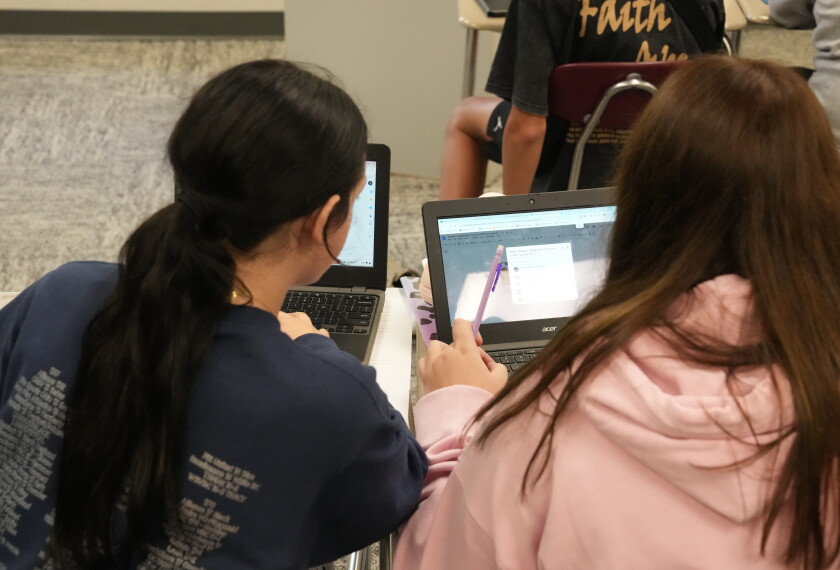
Photo courtesy of BYkids. Caption: 12-year-old Edelsin Linette Mendez works with mentor Joyce Chopra on her “My Beautiful Nicaragua” film about climate change.