
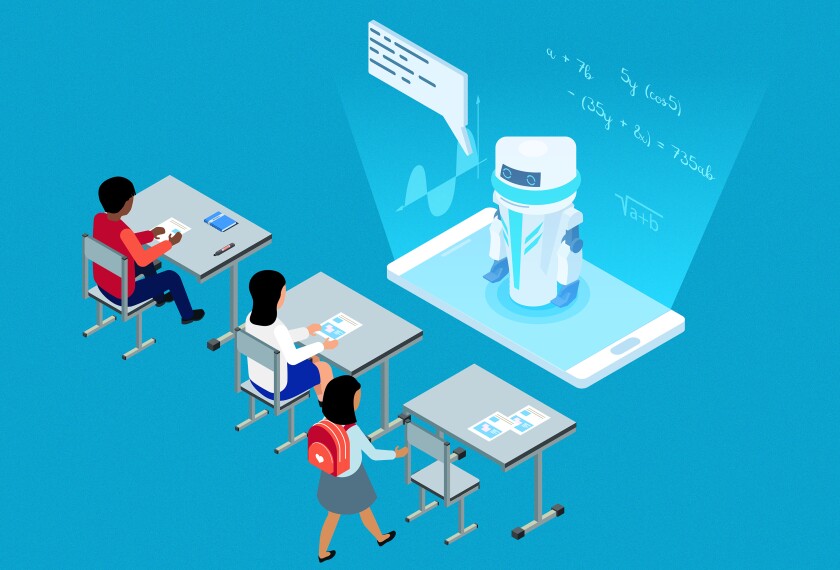
While there’s lots of chatter that artificial intelligence is going to transform K-12 education, many teachers still haven’t jumped on board because they don’t know how to use AI-powered tools or don’t understand how the technology works.
That’s according to recent survey data of teachers by the EdWeek Research Center. But that survey also found that nearly a third of teachers say they plan to start using AI-powered tech in the classroom either this year or in the future.
But how should teachers get started? Getting over that initial hump can be hard, especially when there are so many demands on teachers’ time; limited—if any—formal professional development or guidance on the topic; and unclear payoff for any time teachers do invest in getting familiar with AI.
Whether feeling skeptical of the technology, overwhelmed, or just unsure of how to begin, here are three tips teachers shared at SXSWEDU on how to get started.
Start when school stops
Wait until you have a break from work—a long holiday or the summer break— to start trying to figure out how to use ChatGPT or the AI tools available in your district, recommends Kelly Gibson, a high school English language arts teacher in the Rogue River Schools in Oregon.
“Do not add it to your mental load right now,” she said. “It’s such a big thing to wrap your head around it. Wait until spring break, summer, and you’re rested.”
Gibson, who frequently shares her insights about education and AI on TikTok where she has a large following, said she first learned about ChatGPT over Thanksgiving break in 2022. After an initial panic over how she would ever assign essays again, she gave herself the time to start experimenting with the technology. That allowed her to familiarize herself with it and spark ideas about how she could use it in her classes, she said.
Play first, teach later
Instead of jumping in and using ChatGPT to create a grading rubric, try playing around with the technology and using it for non-education-related purposes first, suggests Erika Sandström, a middle school digital media teacher and digital learning coach at Peabody Public Schools in Massachusetts.
“To get a teacher to open their mind up, give them a small win, usually not related to school,” said Sandström, who is also known as the “Green Screen Gal” to her social media following.
For example, tell ChatGPT what food is in the refrigerator and ask it to craft recipes using that food, she said, or ask it to plan a weekend getaway.

Gibson suggested using a generative AI image generator (like Midjourney or DALL-E) to create pictures of the characters in books, using details from the book in the prompts and tweaking them until the picture matches what the reader imagined from reading the text. (This is also an exercise she uses with her 12th grade English students.)
“Even that just takes a little edge off,” said Gibson. “Understand how to open it and put information into it.”
Try AI as a personal assistant
There are a lot of ways AI-powered tools can be used to teach students, and there are new AI-powered education tools entering the market every day.
For skeptical educators, it’s helpful to see how AI can make their lives easier—for instance, by releasing them from some of the heavy workloads they are experiencing, said Gibson.
(Forty-six percent of teachers said in the EdWeek Research Center survey they aren’t using AI in the classroom, yet, because they have other priorities.)
AI tools such as ChatGPT can help teachers with a lot of administrative tasks, whether it’s composing a diplomatic email to an angry parent to developing a list of topics students need some background knowledge about before tackling a new novel in their English class.
“I very much hope that as educators, as much as we are struggling to be everything to our students, I hope we allow ourselves [to use] this tool to feel a bit saner,” Gibson said.


