Blog

Your Education Road Map

Politics K-12

Politics K-12 kept watch on education policy and politics in the nation’s capital and in the states. This blog is no longer being updated, but you can continue to explore these issues on edweek.org by visiting our related topic pages: Federal, States.

Federal Video

Watch: The CDC’s New COVID-19 Guidance for Schools, Explained

By Evie Blad — February 16, 2021 3 min read
  • Save to favorites
  • Print

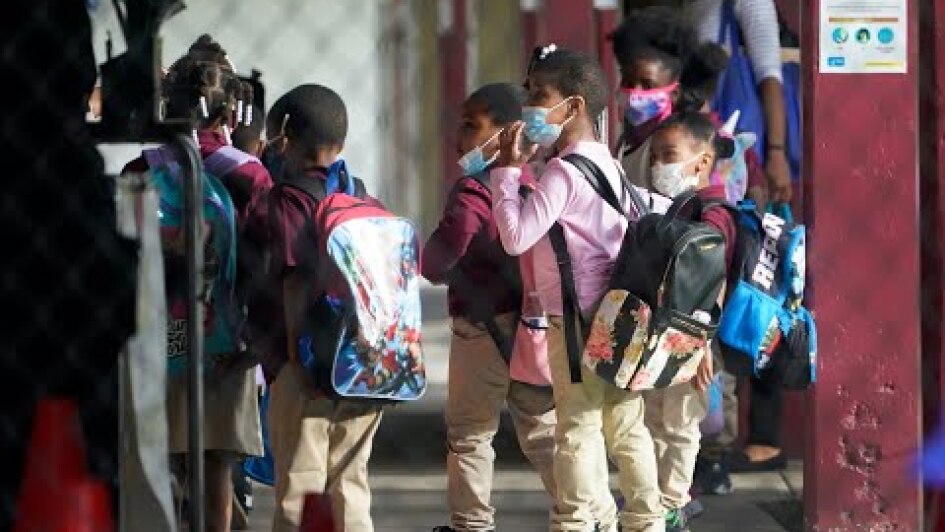
The Centers for Disease Control and Prevention released new guidance for schools last week, detailing the precautions they should take to conduct in-person learning during the COVID-19 pandemic.

Amid ongoing debates around the country about how to keep students and educators safe, the guidance is part of the Biden administration’s efforts to bring a new tone to the federal response.

The big takeaway: Most schools are in communities with high rates of the virus. Under the new recommendations, they would not be able to bring all of their students back to campuses full-time.

Here are a few key details.

What did the CDC tell schools?

It’s ultimately up to local school districts, working under state directives, to determine when and how to reopen. And we’ve seen widely varying approaches across the country.

The new CDC guidance seeks to inform those decisions, building on research that suggests some closed schools may be able to reopen if they take careful precautions. It uses rates of COVID-19 in a community as the basis for four, color-coded risk levels, matching those metrics with recommendations. In the highest risk areas, middle and high schools may need to remain closed unless they can take careful precautions, like using routine testing to determine if their efforts to slow the spread are working.

When she announced the guidance, CDC director Rochelle Walensky said 90 percent of U.S. counties fall into that high-risk zone. And, as more contagious variants of the virus spread, she left the door open for revising the recommendations in the future.

How is this different from previous guidance?

Under the Trump administration, the CDC released guidance in many areas, but some school leaders and education groups said those documents were confusing to read and, at times contradictory.

The new guidance is updated with the latest science, the CDC says. It includes some of the same recommendations, but is more direct about how schools should put them into place.

For example, it says face masks should be required, rather than encouraged. And, unless schools are in low-risk areas, which few are, it says six feet of social distancing is a must. It also says schools should group students in cohorts to reduce interactions throughout the building, making it easier to trace and isolate people who’ve been exposed to the virus.

What does the guidance say about vaccines?

The CDC says states should prioritize teachers and school employees for vaccines, as a separate federal panel has called for, and many states have already done so. But it also says schools can reopen with appropriate precautions, even before all teachers vaccinated.

Will this help reopen schools?

Some education groups hoped that clearer metrics would lend credibility to the recommendations, helping schools chart a course through tense debates over reopening and student safety.

Many of those groups, including teachers unions and associations representing school administrators, praised the new guidance for being clear and concise. But some, including some public health experts, said the administration set too high a bar for full reopening. Some who’ve resisted school reopenings also said the guidance doesn’t do enough to address factors like school ventilation.

President Joe Biden has called Congress to pass a relief bill that includes an additional $130 billion in aid for schools to help deal with the crisis. Meanwhile, debates about how schools should respond to the pandemic are likely to continue.

And state leaders in many areas have taken steps on their own to encourage them to reopen and stay open, including pushing legislation to require in-person instruction.

Related Tags:

A version of this news article first appeared in the Politics K-12 blog.

Events

Teaching Profession K-12 Essentials Forum Supporting the New K-12 Workforce: What Teachers Need to Stay at School
 Join this free virtual event to discover what teachers say they need to feel supported to stay in classrooms for the long haul.
College & Workforce Readiness K-12 Essentials Forum Career and Technical Education Takes Its Next Big Step
Join this free virtual event to hear creative approaches to modernize CTE programs and navigate the shift away from a near-exclusive focus on "college preparedness."

EdWeek Top School Jobs

Teacher Jobs
Search over ten thousand teaching jobs nationwide — elementary, middle, high school and more.
View Jobs
Principal Jobs
Find hundreds of jobs for principals, assistant principals, and other school leadership roles.
View Jobs
Administrator Jobs
Over a thousand district-level jobs: superintendents, directors, more.
View Jobs
Support Staff Jobs
Search thousands of jobs, from paraprofessionals to counselors and more.
View Jobs

Read Next

Federal Opinion The Ed. Dept.'s Civil Rights and Special Ed. Offices Are Moving. Here's What That Means
Short-term changes are unlikely to be noticeable. Longer term, they may be consequential.
9 min read
The United States Capitol building as a bookcase filled with red, white, and blue policy books in a Washington DC landscape.
Luca D'Urbino for Education Week
Federal Opinion ‘None of This Is Abstract’: The Real Harm of Trump’s Ed. Dept. Civil Rights Move
Here’s why families will feel it when student civil rights enforcement moves to the Justice Dept.
Alumni Collective of the U.S. Dept. of Ed., Office for Civil Rights
4 min read
Image of a box of files
Laura Baker/Education Week + Getty
Federal Special Ed. and Civil Rights: What We Know About the Ed. Dept.'s Latest Moves
Special education is moving to HHS, and civil rights enforcement is moving to DOJ.
6 min read
Letters on the Department of Education building are missing after removal of America 250 banners, which included those of Booker T. Washington, Catharine Beecher and Charlie Kirk, March 18, 2026, in Washington.
Letters on the U.S. Department of Education building are missing in this March 18, 2026, photo in Washington. The agency last week announced it's transferring day-to-day management of special education and civil rights enforcement to different Cabinet agencies, the latest push by the Trump administration to dismantle the Education Department.
Allison Robbert/AP Photo
Federal Trump's Justice Dept. Investigates Dozens of Districts Over LGBTQ+ Curricula
The investigations target how schools discuss sexuality and gender identity and whether parents can opt their children out of lessons.
8 min read
The U.S. Department of Justice is investigating how 43 school districts in three states teach about sexuality and gender identity and whether they give parents the opportunity to opt their children out of lessons that conflict with their religious beliefs on June 16, 2026.PICTURED, Protesters gather outside the Glendale Unified School District headquarters in Glendale, California, on June 20, 2023. Over 300 people gathered outside the Glendale Unified School District headquarters, as protests continued over the issue of teaching children about same-sex parents and queer issues.
Protesters gather outside the Glendale school district in Glendale, California, on June 20, 2023 over the issue of teaching children about same-sex parents and queer issues. The U.S. Department of Justice is now investigating three other school districts over LGBTQ+ themes in sex ed. and beyond. (The Glendale district is not one of them.)
DAVID SWANSON / AFP via Getty Images
