At the Republican National Convention in St. Paul this week, President Bush was expected to anoint Sen. John McCain as his successor and the new leader of the party.
But it remains far from clear whether Sen. McCain—and other top Republicans—will continue to embrace the federal mandates on school accountability at the center of the No Child Left Behind Act, Mr. Bush’s signature domestic-policy initiative, or whether the GOP will return to its role as a champion of limited government and local control of schools.
“The biggest challenge within the Republican Party is really how much of a role should Washington continue to play,” said Eugene W. Hickok, who served as deputy secretary in the U.S. Department of Education earlier in President Bush’s tenure.

For the latest developments from the Republican National Convention, read Campaign K-12.
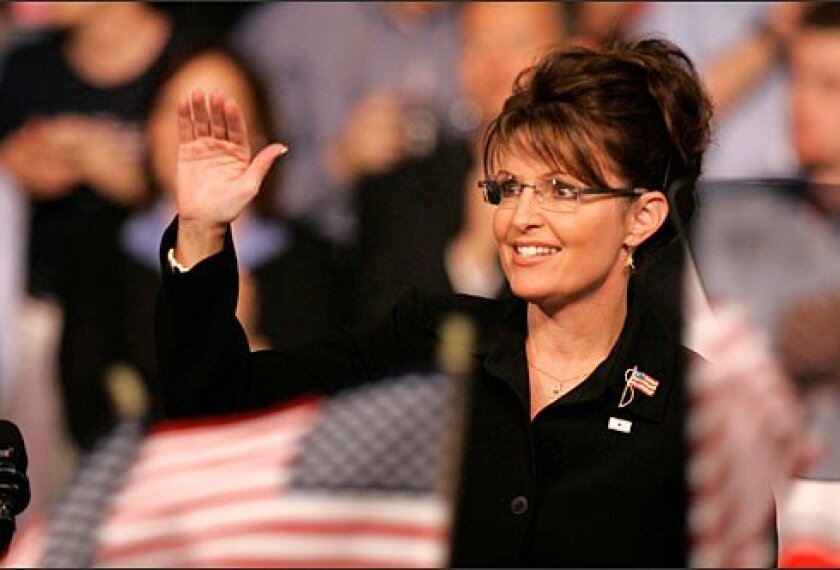
Sen. McCain outlined his education priorities in a speech to the NAACP in July, but as of last week he had not put forth a proposal explaining how he would revamp the No Child Left Behind law. Late last week, he tapped as his running mate Gov. Sarah Palin of Alaska, who brings to the ticket at least some experience with education issues.
Mr. Hickok, who is informally advising the McCain campaign, said he suspects that the Arizona Republican and his policy aides haven’t discussed the specifics of the NCLB law on the campaign trail in part because of its unpopularity, both within the party and with much of the public.
“It’s a somewhat politically difficult thing to talk about,” Mr. Hickok said. He said Sen. McCain does not want to walk away from the law completely but cannot embrace it wholeheartedly because it has become “a damaged brand.”
“It’s an awkward dance one has to go through,” Mr. Hickok said.
The law had been scheduled for reauthorization in 2007, but isn’t likely to be renewed until after a new president takes office.
The No Child Left Behind Act, which was passed in late 2001 with broad, bipartisan support, holds schools responsible for making progress toward academic proficiency for all students, as measured by state tests.
Hoekstra Bill
Republican leaders were important champions of the NCLB law in Congress. Among its architects was Rep. John A. Boehner of Ohio, now the House minority leader, who was the chairman of the House education committee when the measure was crafted.
But the GOP most typically has viewed education strictly as a state and local matter. And while some Republicans favor the strong federal presence in education that NCLB exemplifies, others in the party reject such a role as violating federalism principles.
Last March, the local-control contingent of the Republican caucus in Congress reasserted itself.
Rep. Peter Hoekstra, R-Mich., a member of the House Education and Labor Committee, introduced a bill that would permit states to craft their own accountability systems. Sixty-six House Republicans, including several members of the House education panel, are co-sponsors of the bill.
Sen. Jim DeMint, R-S.C., introduced a similar bill in the Senate, which has seven co-sponsors.
Sen. McCain, who voted for the NCLB law seven years ago but hasn’t been closely identified with education issues during his quarter-century-long congressional career, hasn’t become a co-sponsor of Sen. DeMint’s legislation.
On the campaign trail, Sen. McCain has essentially said that he wants to “strengthen the good parts” of the law, a stance that is “pleasantly ambiguous,” said Frederick M. Hess, the director of education policy studies at the American Enterprise Institute, a free-market-oriented think tank.
‘Leeway’ Preserved
By indicating that he generally supports the NCLB law but not getting into specifics, he’s “reassuring the various components of the party that he’s sympathetic to their agenda without planting any flags,” Mr. Hess said.
“If he were to win, he’d have a lot of leeway in terms of what direction he wanted to move in,” Mr. Hess added.
Mr. Hickok and Jeanne Allen, the president of the Center for Education Reform, a nonpartisan organization that advocates expanded school choice, said they believe Sen. McCain does not fit neatly into either contingent of the party on education issues.
The senator “has his own camp,” Ms. Allen said. He appears to support a “continued connection between federal funds and accountability,” but seems likely to give more latitude to states and school districts than the Bush administration has, she said.
Sen. McCain “has a lighter touch in terms of Washington carrot and stick” than Bush administration officials do, Ms. Allen said.
Sen. McCain’s education agenda focuses on bolstering alternative-certification programs for teachers, giving principals more control over school budgets, and encouraging districts to explore alternative-pay programs for teachers.
His running mate brings more executive experience with education programs.
Gov. Palin, elected in 2006, helped champion an overhaul of the state’s school finance system, which supporters said channeled more money to rural districts outside Anchorage and helped stabilize school districts’ budgets. The measure, approved by the Alaska legislature this year, also hiked spending for students with special needs.
Ms. Palin has also become known for juggling her duties as Alaska’s chief executive with those of a parent. In April, she gave birth to a son, Trig Paxson Van Palin, who was diagnosed with Down syndrome. She and her husband, Todd, have four other children.
“My mom and dad both worked at the local elementary school,” Gov. Palin said last Friday. “I got involved in the pta and then was elected to the city council. My agenda was to stop wasteful spending and cut property taxes.”
She also served as mayor of Wasilla, Alaska.
The Republican convention comes just a few weeks after a poll by Phi Delta Kappa International and the Gallup Organization found that Americans believe that the Democrats are more likely than the Republicans to improve schools. (“Survey Gives Obama Edge on Education,” Aug. 27, 2008.)
During the 2000 and 2004 elections, the same polls showed President Bush running roughly evenly with his Democratic opponents on school issues.
“No Child Left Behind gave [President Bush] an edge for a bit, but that is no longer working to the Republican advantage,” said Paul E. Peterson, the director of the program on education policy and governance at Harvard University’s Kennedy School of Government. “I think the Republican Party has to come up with some new approaches if they’re going to become the dominant party on education policy again.”
No Need to Defend
President Bush’s departure will almost certainly open the door for some Republicans who voted for the No Child Left Behind Act to return to their roots and push for leaving school policy authority firmly in state and local hands.
“You will see more Republicans come out against some of the core tenets of NCLB,” said Michael J. Petrilli, a vice president at the Washington-based Thomas B. Fordham Institute, who was an Education Department official during Mr. Bush’s first term. “The Republicans, in particular on [Capitol] Hill, will no longer feel beholden to defend the Bush administration.”
The No Child Left Behind law and education issues generally appear likely to take a back seat at the Republican convention this week. Secretary of Education Margaret Spellings, one of the key architects of the law as a domestic-policy adviser in the Bush White House in 2001, had not been scheduled to address the convention as of late last week.
By contrast, at the party’s 2000 convention in Philadelphia, Ms. Spellings, a campaign aide to then-Texas Gov. Bush, spoke to each state’s delegation about the candidate’s plans for improving schools.
“I suspect the entire convention will go by without anyone mentioning NCLB,” Mr. Petrilli said. “If you do hear the words ‘No Child Left Behind,’ they will come from the mouth of President Bush.”