

School districts will have a busy summer as they work to comply with the Biden administration’s revised Title IX regulation.
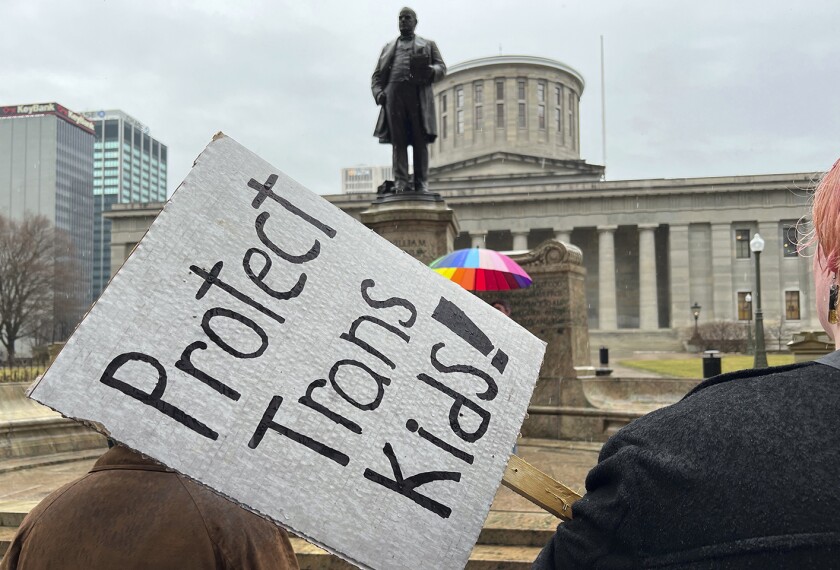
The regulation, which the U.S. Department of Education released April 19, has become the subject of political outcry because of the protections it provides to LGBTQ+ students and staff. At least 15 Republican-led states have joined lawsuits challenging the regulation, and governors and state education chiefs in Florida, Louisiana, Montana, and South Carolina have directed districts to defy the rule.
Those lawsuits could result in court orders halting the rule’s implementation. But for now, districts everywhere in the United States will need to prepare to comply with the federal rule. The Education Department has set an Aug. 1 deadline for districts to revise local Title IX policies and procedures, get school board members up to speed, and train staff on the new regulation.
The way districts process Title IX complaints won’t change much, but they could see an uptick in the number, and they need to be prepared to handle that. For the most part, it builds upon the process required in the Trump administration’s 2020 regulation, which overhauled grievance processes. But the new rule simplifies Title IX-related staffing requirements for districts, and could allow districts to handle more complaints under a uniform process.
“What I keep saying to folks in K-12 … is take a deep breath,” said Jackie Gharapour Wernz, a lawyer with ECR Solutions who chairs the School District Attorney Committee for AASA, the School Superintendents Association. “This is not as bad as you think, particularly if you take out the most contentious parts of the rule, which are, in my mind, the gender identity provisions, and you really just focus on, how are we going to respond to complaints of sex discrimination moving forward? It’s more manageable than some K-12 administrators may fear.”
A wider range of coverage
Since the new rule broadens the scope of what is considered harassment and discrimination, schools should prepare to contend with more Title IX complaints under the new regulation.
In addition to explicitly naming gender identity and sexuality in definitions of sex-based discrimination and harassment, the rule expands definitions of those terms to include “unwelcome sex-based conduct that creates a hostile environment” by limiting or preventing a person from participating in or benefiting from a school program or activity.
It’s more manageable than some K-12 administrators may fear.
Under the Trump-era rule, schools were only required to investigate harassment that was considered “severe and pervasive,” meaning incidents had meet a certain level of intensity and happen more than once to warrant an investigation.
In the Biden administration’s regulation, schools can use the Title IX grievance process for harassment that is either “severe” or “pervasive,” which allows many more complaints to fall within Title IX’s purview, said Kim Pacelli, a strategic risk management consultant and lawyer who works with the Association of Title IX Administrators to help schools comply with Title IX.
“What’s going to end up happening is we have a lot more situations that fall within that definition,” Pacelli said. “So a lot of reports of sex-based bullying, cyberbullying, a lot of behaviors that school administrators deal with on a daily basis are now going to fall within the catchment of following the Title IX process that the school district has specified.”
That process likely involves a determination of whether the issue is worth investigating, followed by an investigation that involves a review of evidence.
Districts should prepare to update training for staff, including principals, teachers, and district-level administrators, with the scope of the definitions so people know what to look out for when it comes to sex-based harassment and discrimination, said Holly McIntush, a lawyer with Thompson & Horton LLP who specializes in Title IX compliance.
Many districts already train staff on Title IX but the new definitions will likely warrant another round of training to get districts up to speed.
“The big thing is going to be really focusing on training your employees and making them realize they all have to report all forms of sex discrimination and know how to recognize it so they can report it,” McIntush said. “I would say, when in doubt, report.”
Rule provides more flexibility
In the long run, the broader scope of coverage under Title IX should make things easier on districts, McIntush and Pacelli said.
Under the revised regulation, districts will be able to streamline their complaint processes so that all complaints of sex-based harassment and discrimination fall under Title IX rather than having to respond to some complaints under a general student or staff conduct code and other complaints under Title IX.
The revised rule also allows districts to develop grievance processes that work best for their schools. For example, a district might decide to apply more rigor to investigations of more severe cases of harassment and discrimination than it would to less severe cases.
“The saving grace here is that it can be a much more simple process than it was under the old rules,” McIntush said.
Rather than having three separate people serve roles as Title IX coordinators, investigators, and decisionmakers, which was the expectation under the Trump-era rule, the new rule allows schools to assign all of those roles to one person. Such a model should make it much easier for school districts, especially those with fewer staff and other resources, to respond to complaints in a timely manner, Wernz said.
Districts should pull together stakeholders—including Title IX coordinators, principals, district-level leaders, school board members, and teacher representatives—to develop policies that work best locally, Wernz said.

They should also be wary of automatically adopting model policies developed by school board associations, she said.
“You need to sit down and think about, who’s doing the evaluations of our complaints, and how much time do they need in order to determine if something that falls under Title IX needs to be dismissed?” Wernz said.
“How much time do we think we’re going to need for investigations? Are we going to use a single-investigator decisionmaking model? … Those are the high-level things that I say, go ahead and sit down, get your group together of your people who need to make these big-level decisions, and start to brainstorm on that.”
Navigating lawsuits
School districts in states where lawsuits have been filed challenging the rule, or where state officials have instructed districts not to follow it, will likely have a trickier time deciding how to move forward, but that doesn’t mean they should ignore the federal regulation altogether, lawyers say.
One lawsuit, involving Idaho, Louisiana, Mississippi, and Montana, argues that the regulation is an “affront to the dignity of families and school administrators everywhere” because of its inclusion of “gender identity” in the definitions of sex-based discrimination and harassment. Another, filed by Alabama, Florida, Georgia, and South Carolina claims the regulation will increase costs and burdens on states.
The lawsuits shouldn’t inhibit districts from working to comply with the federal rule, however.
Until there is an injunction, a judicial order that prevents the federal government from enforcing the revised regulation in those states, districts should prepare to comply by the Aug. 1 deadline.

“Federal regulations trump state law, and they certainly trump state orders from an administrative agency saying ‘just don’t implement it,’” McIntush said. “[Districts] need to remember that if they follow their state law, or if they follow that administrative directive without a court injunction in place, they are running the risk of a complaint” to the federal office for civil rights at the Education Department, which enforces Title IX.
Even if there’s an injunction, districts should be ready to comply with the federal law in case the injunction is lifted on or after Aug. 1, McIntush added. Otherwise, districts risk losing federal funding because of Title IX violations.
“OCR is not going to be sympathetic to the response, ‘well, my state told me not to,’” follow the regulation, she said.
Federal regulations trump state law, and they certainly trump state orders from an administrative agency saying ‘just don’t implement it.
It’s also hard to predict how the rule might shake out in the courts. In some states, districts may be able to follow parts of the rule, such as the flexibility around the grievance process, but not others, such as protections against discrimination based on gender identity.
Overall, schools should be ready for anything and consult their legal counsel every step of the way, lawyers said.


