California, the state where policy trends often begin, is finally catching up to the rest of the country in how it counts absent students.
On July 1, California relinquished its status as the only state to pay school districts for every daily excused absence by a student.
In making the change, state leaders hope they have found a fiscal carrot to help raise student attendance. Now, in most cases, only those students who are in their desks will count toward the $35 billion in state payments to districts, which are based on average daily attendance.
But the policy, which is also aimed at lowering daytime juvenile-crime rates and reducing paperwork, poses some new challenges for school administrators.
“It will be a real job changing the school culture so that it’s not OK to be gone all day for a one-hour appointment,” Rolf Janssen, the assistant principal of the 4,500-student Bell High School in Los Angeles, conceded. “But now, over the long haul, absences will cost districts money.”
John Gilroy, a deputy counsel for the California Department of Education, said the policy of paying schools for excused absences started about 40 years ago as a “politically expedient” way to raise school spending.
Over the years, critics voiced concern that the policy seemed to encourage a greater emphasis on gathering excuses from parents than on getting students into school.
‘A Monster’
But “it turned into a monster because no one could get rid of it gracefully,” Mr. Gilroy said.
No one, that is, until Democratic state Sen. Herschel Rosenthal successfully sponsored a bill last year to reverse the policy. He helped win support by adding provisions that prevented sudden drops in local school aid and rewarded districts that increase attendance.
The new policy will be reflected in the first monthly payments from the state for the 1998-99 school year, which go out July 31. The payments will be based on daily attendance rates from 1996-97. Schools will not lose funding based on their excused absences that year, thanks to a new formula that raises per-pupil allotments to the districts.
Districts could see payments adjusted downward next February, however, when the state begins factoring in actual attendance for the first half of the new school year.
On the other hand, districts can raise their state aid by lowering absentee rates and putting more students in their seats. Proponents say that attendance could rise as much as 3 percentage points statewide under the policy. State officials could not provide a current average daily attendance percentage.
“It could cost [the state] more if schools get more students in school,” said Don Flynn, a consultant to Sen. Rosenthal. “But people could live with that.”
Even so, the transition raises concerns for some.
Gary Marx, a spokesman for the American Association of School Administrators in Washington, worries that districts could become over-zealous about attendance.
“Yes, we want every child who is enrolled in school in class,” he said. “But if a child has a communicable disease, is it in everyone’s interest if that child is in school?”
New Incentive
Nearly two dozen of the approximately 1,000 districts in California have tried the new formula on a pilot basis since 1993.
The Elk Grove Unified district 10 miles south of Sacramento added about $1.2 million in revenue by raising average daily attendance by 362 students during the 1996-97 school year.
The improvement was no accident. Four years ago, after joining the pilot effort, the district promised to create an “incentive pot” with any new state aid from the program. Money was to be divided between schools whose attendance rates improve, or which exceed district attendance averages.
Schools became more interested, and even competitive, in addressing attendance. Principals and teachers began calling absent students. As absentee rates fell, the pot more than quadrupled from $35,000 in 1994-95 to $105,000 in 1996-97.
|
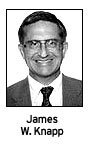
“It’s amazing in a nonprofit environment how money still talks,” said James W. Knapp, the finance director for the 45,000-student district.
Similarly, the Fresno Unified schools in south-central California raised an extra $1 million in the 1996-97 school year as a pilot district. Fresno administrators estimate that the 78,000-student system could generate another $2.7 million by raising average daily attendance just 1 percentage point.
To meet that goal, several ideas are being considered to lower absentee rates, said Jacquie Canfield, the district’s director of fiscal services. One is to pair frequently absent students with teachers who call them when they miss school. The personal touch, Ms. Canfield said, might help avoid unnecessary absences.
Teachers could also visit homebound or hospitalized students for an hour a day--not only helping the students keep up with their schoolwork, but also qualifying them for district attendance rolls.
Such steps are sound educational strategies and would have been considered without the new policy, Ms. Canfield said. But, she added, “now, people will know that when a student is not in school, the school is not getting funds. The school has an incentive to get Johnny into school.”
Purging Files
Nationwide, the focus on attendance is intensifying because of higher academic expectations and the need to quickly master new technology skills, Mr. Marx of the AASA said.
“You can allocate 180 days a year for school, but what really matters is academic learning time,” he said.
For example, Texas closely tracks attendance rates as part of its state accountability and accreditation system. Other schools and school systems rely on counselors to call parents as soon as students fail to show up for class, or have programs that reward schools for improving attendance.
Meanwhile, at Bell High School in Los Angeles, Mr. Janssen said it would be hard to raise the school’s current 95 percent attendance rate--a spectacular improvement from 82 percent five years ago.
Bell High students now sign contracts in which they agree to forfeit attendance at school functions if they have more than five excused absences in a semester. Teachers are also more vigilant about attendance.
“I guess we’ll just have to do more in terms of bird-dogging kids and getting them back in school,” Mr. Janssen added.
Then again, local school-attendance workers should have a little more time on their hands. Under the new California policy, written records of excused absences no longer have to be organized and filed for three years, a time-consuming process that had been required by the state for audits.
“This is going to clean up filing cabinets all over the state,” Mr. Knapp of the Elk Grove schools predicted.


