School Climate & Safety

Repair Funds Jettisoned From Stimulus Package

By Erik W. Robelen — November 21, 2001 4 min read
  • Save to favorites
  • Print

Looking for a way to bulk up the Department of Education’s budget, some education lobbyists and congressional Democrats had eyed an economic-stimulus plan in Congress as a prime vehicle. But the wheels came off that idea last week when Senate Democrats opted to downsize the spending side of their stimulus proposal, including excising about $1 billion that was to have gone for school repair.

“It’s about a $15 billion [spending] package that deals only with homeland security,” Senate Majority Leader Tom Daschle, D-S.D., told reporters early last week. “We have taken out any of those pieces that would not neatly fit in homeland security.”

The Senate Democrats’ overall $73 billion stimulus plan also contains a range of tax-relief measures and assistance for the unemployed. But whatever is in the plan, it will likely be subject to a major rewrite. And Senate Republicans blocked the legislation from even coming to a vote last week.

While both Congress and the White House agree on the need to give the faltering economy a boost, disagreements on how to do so abound. The Republican- controlled House approved a stimulus bill last month that is dominated by tax- related measures. And the White House has made clear that it also wants the stimulus to focus on tax relief.

Harkin’s View Rebuffed

Even without tapping the stimulus plan, the Education Department’s budget is likely to see a big—possibly a record-breaking—increase for fiscal 2002, which began Oct. 1.

The Senate spending bill for the department, approved Nov. 6, would provide an additional $6.5 billion in discretionary funding, for a total of $48.7 billion. The House version includes slightly more, about $49.3 billion in total.

But many Democrats have argued that with Congress close to final action on a separate bill, the reauthorization of the Elementary and Secondary Education Act, that would step up federal demands on states and districts to improve student achievement, more money still is needed for education.

So when members of Congress began to talk about passing an economic-stimulus package, it was viewed as another chance to bolster education spending. In particular, proponents of federal aid for school repair argued they had a good match: Spending on school renovation would not only help schools, but also create jobs and give the economy a needed kick.

Piggybacking school repair onto the stimulus package would potentially have freed up more money in the Senate’s education spending bill for other programs, such as Title I, since that bill already earmarked $925 million for school repair. President Bush opposes the repair program; the House spending bill provides no money for it.

Last week, it became clear that Senate Democrats, aside from substantial unemployment assistance, wanted to devote additional spending in the stimulus package solely to homeland security, a prime concern since the Sept. 11 terrorist assaults. Sen. Tom Harkin, D-Iowa, made a pitch that school repair was still relevant.

“I made a strenuous argument [to Democrats] that we should put it back in,” said Mr. Harkin, who has been a leading Senate advocate for federal school repair aid. “Our kids are vulnerable. On homeland security, we need to secure all the heating and ventilation systems in our public schools. They’re all wide open.

“If you think the terrorist attack on the World Trade Center upset America,” Mr. Harkin declared, “wait until one school, one school, is terrorized with anthrax or something like that.” But his arguments did not appear to hold sway, and Democrats dropped the item from their plan.

“Though we all support [the school repair funding], it’s hard to directly relate it to homeland security,” said Sen. Joseph I. Lieberman, D-Conn., shortly after a Democratic caucus meeting where the issue was discussed.

Meanwhile, the stimulus legislation in both chambers appears likely to renew a modest measure that has directly benefited schools: qualified-zone academy bonds, known as QZABs.

In 1997, Congress first approved tax legislation creating QZABs, which support up to $400 million in school improvements each year. The bonds are designed to help schools raise money to renovate and repair school buildings, purchase equipment, develop challenging curricula, or train teachers.

The program substantially reduces or even eliminates interest payments that school districts would have to pay on such bonds by instead giving the bond-holder a federal tax credit approximately equal to the interest owed. Each state is allotted an amount of money that high-poverty schools may borrow using QZABs.

Joel Packer, a lobbyist for the National Education Association, said he was disappointed by Senate Democrats move to strip repair funding from their stimulus package, but he said the QZAB program has become a fairly popular way of helping schools.

He also said lawmakers could ultimately agree to add more tax benefits for schools. He pointed out that Rep. Charles B. Rangel of New York, the ranking Democrat on the House Ways and Means Committee and longtime advocate of a much broader program of federal subsidies for school construction bonds, will be part of any final negotiations on the stimulus plan.

“I would not completely rule that out in the final package,” Mr. Packer said.

A version of this article appeared in the November 21, 2001 edition of Education Week as Repair Funds Jettisoned From Stimulus Package

Events

This content is provided by our sponsor. It is not written by and does not necessarily reflect the views of Education Week's editorial staff.
Sponsor
Assessment Webinar
Measuring What Matters: How District Leaders Are Redefining Student Assessment
In this panel discussion, district leaders and systems experts will examine the gap between the outcomes we want and the systems in place.
Content provided by Otus
Early Childhood Webinar Selling Into Early Learning: New Survey Data and Strategies for Marketers
Selling into PreK? Get fresh EdWeek Research Center data and strategies to position your products and reach the right early learning buyers.
Artificial Intelligence Webinar AI and 'Techlash' Are on a Collision Course. How Should Schools Respond?
Learn what strategies and tactics schools can develop to encourage smart and responsible AI use, while also enforcing tech guardrails.

EdWeek Top School Jobs

Teacher Jobs
Search over ten thousand teaching jobs nationwide — elementary, middle, high school and more.
View Jobs
Principal Jobs
Find hundreds of jobs for principals, assistant principals, and other school leadership roles.
View Jobs
Administrator Jobs
Over a thousand district-level jobs: superintendents, directors, more.
View Jobs
Support Staff Jobs
Search thousands of jobs, from paraprofessionals to counselors and more.
View Jobs

Read Next

School Climate & Safety A Shooting Strikes an Elementary School. Some Doubt Policy Change Will Follow
Tragedies like the one in Bend, Ore., draw public outcry, but typically not swift change on school safety.
5 min read
Children place flowers at a makeshift memorial outside Silver Rail Elementary in Bend, Ore., Friday, Oct. 16, 2026, a day after a deadly shooting.
Children place flowers at a makeshift memorial outside Silver Rail Elementary in Bend, Ore., Friday, Oct. 16, 2026, a day after a deadly shooting. The child victims, ages 5, 8, and 11, include the youngest person killed in a school shooting since Education Week began<a href="https://www.edweek.org/leadership/school-shootings-this-year-how-many-and-where/2026/01" target="_blank" link-data="{&quot;cms.site.owner&quot;:{&quot;_ref&quot;:&quot;00000173-0561-d1f0-a17f-adef4bee0000&quot;,&quot;_type&quot;:&quot;ae3387cc-b875-31b7-b82d-63fd8d758c20&quot;},&quot;cms.content.publishDate&quot;:1792177418426,&quot;cms.content.publishUser&quot;:{&quot;_ref&quot;:&quot;00000180-d7b2-d193-a1b2-dfbba3aa0001&quot;,&quot;_type&quot;:&quot;6aa69ae1-35be-30dc-87e9-410da9e1cdcc&quot;},&quot;cms.content.updateDate&quot;:1792177418426,&quot;cms.content.updateUser&quot;:{&quot;_ref&quot;:&quot;00000180-d7b2-d193-a1b2-dfbba3aa0001&quot;,&quot;_type&quot;:&quot;6aa69ae1-35be-30dc-87e9-410da9e1cdcc&quot;},&quot;link&quot;:{&quot;disableUtmTracking&quot;:false,&quot;target&quot;:&quot;NEW&quot;,&quot;attributes&quot;:[],&quot;url&quot;:&quot;https://www.edweek.org/leadership/school-shootings-this-year-how-many-and-where/2026/01&quot;,&quot;_id&quot;:&quot;000001a1-4619-d1d1-a3f3-f77b151b0000&quot;,&quot;_type&quot;:&quot;ff658216-e70f-39d0-b660-bdfe57a5599a&quot;},&quot;linkText&quot;:&quot; tracking these incidents&quot;,&quot;theme.brightspot-theme-default.:core:enhancement:Enhancement.hbs.enhancementAlignment&quot;:null,&quot;theme.brightspot-theme-default.:core:link:Link.hbs._template&quot;:null,&quot;theme.brightspot-theme-default.:core:link:Link.hbs.type&quot;:null,&quot;theme.brightspot-theme-default.:core:link:Link.hbs._preset&quot;:null,&quot;theme.brightspot-theme-default.:core:enhancement:Enhancement.hbs._preset&quot;:null,&quot;_id&quot;:&quot;000001a1-4619-d1d1-a3f3-f77b14b10001&quot;,&quot;_type&quot;:&quot;809caec9-30e2-3666-8b71-b32ddbffc288&quot;}"> </a>tracking those incidents eight years ago.
Joe Kline/AP
School Climate & Safety Three Children and Teacher Killed in Oregon Elementary School Shooting
Authorities in Bend, Ore., said the attacker gained entry by shooting through locked doors.
2 min read
Police tape is placed outside Silver Rail Elementary school following a shooting, on Oct. 15, 2026 in Bend, Ore.
Police tape is placed outside Silver Rail Elementary School following a shooting, on Oct. 15, 2026 in Bend, Ore. Authorities said an attacker shot through locked school doors to enter the building.
Joe Kline/AP
School Climate & Safety 4 Ways AI Data Centers Can Affect Schools
From health to productivity and finances, data centers could pose risks for students and schools.
3 min read
Carroll
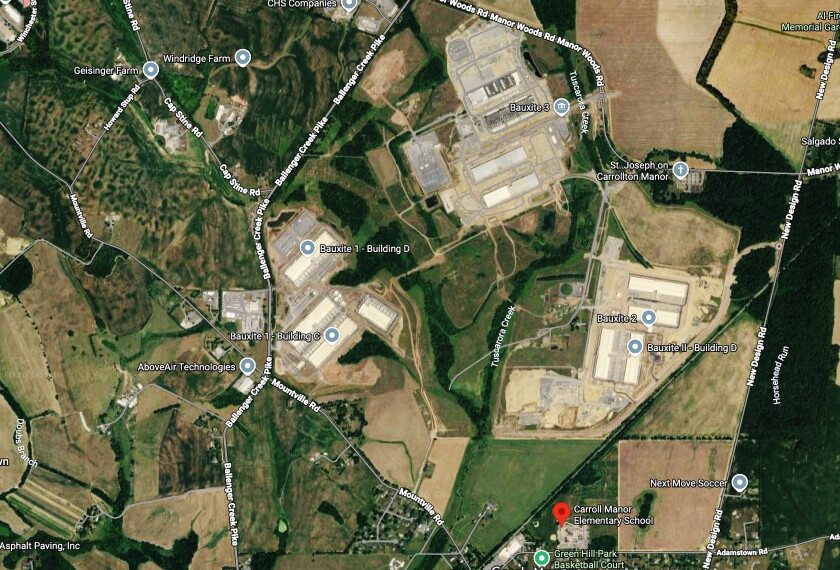
The Quantum Frederick Data Center Campus near the Carroll Manor Elementary School.
Map data ©2026 Google, Imagery ©2026
School Climate & Safety For Students Walking to School, the Route Can Be Deadly. What Can Make It Safer?
School districts, including New York City, have rolled out a number of strategies to reduce risks.
5 min read
A student leaving Greenspun Junior High School in Henderson, Nev., enters a car in the travel lane of Valle Verde Drive on Sept. 14, 2022. Pedestrian fatalities near schools are most likely to occur in the early morning and early evening hours, federal data show.
Rachel Aston/Las Vegas Review-Journal via TNS