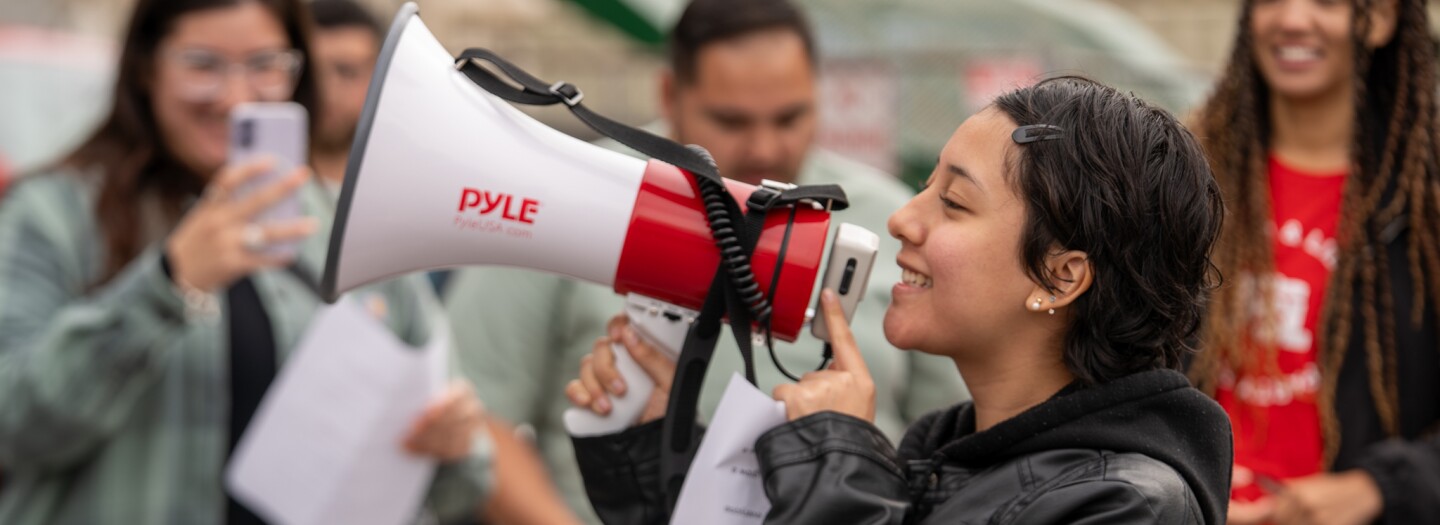
Students across the country, from Los Angeles to Washington, DC, Milwaukee, and Texas, have organized mass school walkouts to protest the violence and terror that federal immigration officers have inflicted on their families, neighbors and community members. The Trump-Vance administration has made mass deportation the cornerstone of their term in office, with devastating effects.
As educators entrusted with preparing young people to lead and to participate fully in our democracy, school leaders have a responsibility not just to teach civic values, but to practice them. Civic engagement is not a lesson confined to textbooks but rather, it is lived, often bravely, by students who speak out against injustice. The time is now for school leaders to protect young people who are organizing and participating in school walkouts, and to affirm that their voices matter.
Since January 2025, Americans have witnessed federal officers kidnapping and disappearing community members and killing neighbors with no remorse or consequence. School systems have been severely disrupted by ICE activity with many reporting enrollment declines and fear of ICE raids permeating tried-and-true rites of passage for youth.
Students Protests Have Historically Been Powerful
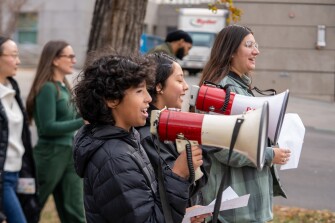
Student-led demonstrations have always been critical to social change in the United States. This country has a rich history of youth protests: young people leading coordinated sit-ins that confronted racial violence and demanded an end to segregation, wearing armbands in mass demonstrations calling for an end to the Vietnam War, and in more recent years, organizing marches to call for gun reform.
Yet, students have increasingly limited avenues to civic engagement. Most students are not yet eligible to vote in elections that can shape what laws government officials pass and enforce. Participating in economic protests such as boycotts is often difficult due to limited spending power. This makes participating in a student walkout one of the most powerful actions that students can take to bring attention to their demands for those in power.
Civil disobedience is a critical tool in racial and social justice movements. Protest is meant to disrupt and challenge the status quo. That is the righteous thing to do when federal agents have invaded your neighborhood and killed with impunity. That is the brave thing to do when half of your class is too scared to come to school because they worry that they will be disappeared to another country. And it is the bold thing to do when those in power—whether that’s elected or school leaders—stay silent or do nothing to work with parents and communities to ensure that all students feel safe in school.
Actions School Leaders Have Already Taken
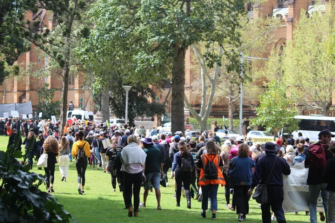
Some district leaders are already doing the right thing by exercising discretion to not penalize students participating in protests and implementing protocols to ensure student safety during walkouts. These measures are especially important as police officers have reportedly assaulted students at anti-ICE protests in Oklahoma, Pennsylvania, and Illinois. Notably, the student walkouts have been effective—so effective that some politicians have introduced overly broad state bills that limit students’ protest rights and threatened arrests or other sanctions against those who participate or assist student walkouts.
Of course, in the 1960s, those who participated in lunch counter sit-ins, freedom rides, and other civil rights protests knew they would be met with a stiff and possibly violent response from law enforcement and segregationists for violating racist Jim Crow laws. But visibility of these protests was critical in exposing the injustice of, and eventually the undoing of, these laws.
School Leaders, You Have a Choice
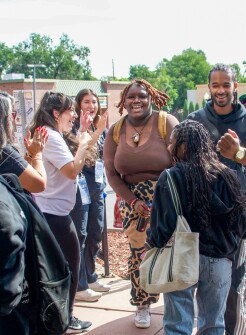
School leaders have a choice: Will you stand on the side of those who would threaten young people for practicing meaningful and effective civic engagement in the name of unjust government action? Or will you support your students using their voice to protect their communities and make schools safe and inclusive for all? We urge you as educators shaping the minds of tomorrow to choose the safety and dignity of all your students.
We also invite school leaders to reflect on the role they are willing to play in this moment. What would it look like for schools to fully align with the safety and dignity of their students, even when that requires taking a stand against harmful or unjust federal actions? How might you support fellow educators and leaders who share these concerns but feel constrained or fearful of the consequences of acting? And what systems—legal, community based, and political—must be built or strengthened to ensure that students are protected not only during moments of protest, but in the everyday fabric of school life?
The answers to these questions will shape not only how schools respond today, but what kind of educational and civic future we are building together. Together, Advancement Project, Alliance for Educational Justice, and Black Alliance for Just Immigration believe that future must be one where student voices are protected, not punished — where dissent is recognized as a cornerstone of democracy, not a threat to order. As we continue to bring our vision of a multiracial democracy to life, it is our duty to remind the next generation that the power to protest is not a privilege to be granted by those in authority, it is a right that has always been won and defended in the streets.
We are working alongside students, parents, and school leaders to defend the right to protest and build the legal, community-based, and political systems that make that protection real and lasting. We invite you to share our open letter with your community, and use the resources we have gathered for students, parents, and school leaders who are ready to take action.
Carmen Daugherty is the Interim Executive Director at Advancement Project. She joined Advancement Project in 2022 as Deputy Executive Director, bringing more than two decades of advocacy, legal expertise, and movement-building experience to the role. As Deputy, Carmen leads and supports directors across the Opportunity to Learn, Justice Project, and Power and Democracy programs, and steers Advancement Project’s cross-programmatic strategy, helping to knit together legal, policy, and organizing efforts into a unified vision for racial justice.
Carmen has contributed her expertise to the American Bar Association’s Section on Civil Rights and Social Justice and has served for several years for a D.C.-based youth justice advisory group. She is a proud graduate of Vassar College and earned her Juris Doctor from Tulane University School of Law. Born and raised in Louisville, Kentucky, Carmen now calls Maryland home even as her heart forever remains in New Orleans.