School & District Management

PCBs in Schools: A Timeline

By Mark Lieberman — October 27, 2022 | Updated: December 22, 2022 3 min read
In this Jan. 4, 2019 photo, workers and other officials walk outside the Sky Valley Education Center school in Monroe, Wash., before going inside to collect samples for testing. The samples were tested for PCBs, or polychlorinated biphenyls, as well as dioxins and furans. A lawsuit filed on behalf of several families and teachers claims that officials failed to adequately respond to PCBs, or polychlorinated biphenyls, in the school.
  • Save to favorites
  • Print

1930

PCBs emerge in the world of construction as an attractive and efficient tool for ensuring that caulking and other processes are long-lasting. These chemicals were particularly appealing for builders of structures for public government facilities, which are designed to withstand many decades of wear and tear.

1950-1980

To keep up with the growing population of K-12 students during the post-war Baby Boom, school construction ramps up considerably. Many of those buildings still operate today, and quite a few haven’t been substantially upgraded since then.

Image of a timeline. 1929: PCBs emerge. 1979: PCBs are banned. The period between represents a time when school construction was high to meet growing demands of post-World War II birth rate.

1979

Congress amends the Toxic Substance Control Act of 1976 to ban the manufacture of PCBs, but not the abatement of existing PCBs in buildings. The U.S. Environmental Protection Agency has since offered guidance to schools on how to remediate PCBs, but no federal requirements or dedicated funding have emerged.

2004

Daniel Lefkowitz, parent of an elementary schooler in New York state, stumbles on the existence of PCBs while planning to renovate the drywall in his bathroom. He embarks on a mission to test his son’s school and then other schools in the state, sparking a firestorm of controversy that culminated in legislation and lawsuits.

In this Feb. 4, 2019, photo, Steven Harris, a grandfather and former city council member, looks inside the abandoned John C. Clark Elementary and Middle School in Hartford, Conn. The school was closed in 2015 after toxic PCBs were found during a renovation. It is one of several Hartford public schools built during the era when PCBs were commonly used in school construction in caulk, floor adhesive and certain types of fluorescent light ballasts.

2015

The city of Hartford, Conn., sues Monsanto, the conglomerate that was essentially the sole manufacturer of PCBs for decades, alleging that the company was responsible for the multimillion dollar closure of a high school building after harmful levels of PCBs were discovered. Monsanto argues that the school district didn’t need to tear down the building to abate the existing PCBs, and that other construction contractors played a role in the spread of PCBs in the building. The lawsuit remains in the hands of a judge; Monsanto is considering appealing any verdict from a judge that doesn’t entirely dismiss the case against the company, a spokesperson for the company said.

2016

U.S. Sen. Ed Markey, D-Mass., office releases a 40-page report on PCBs in schools, highlighting prior research showing that thousands of contaminated school buildings may pose a threat to people inside them for long periods of time. Five years later, Markey proposes legislation that would mandate federal spending to address these concerns. That legislation remains pending.

Sen. Ed Markey, D-Mass., speaks during a committee hearing in Washington, on April 26, 2022. (Al Drago/Pool Photo via AP)

2019

The Malibu school board in Southern California received a court mandate in 2016 to eliminate all PCBs from older buildings at two school campuses, after parents protested that the district had not promised to adequately resolve health concerns related to PCBs. In 2019, the district receives a five-year extension, with a 2024 deadline. That work remains unfinished.

2021

Vermont passes first-in-the-nation legislation to test all school buildings constructed or renovated before 1980 for PCBs and provide funding for some remediation. Burlington High School reopens in a former Macy’s department store after PCB findings lead district leaders to shut down the old campus and develop plans for a new one.

February 2022

The Monroe school district in Washington state awards $34 million in settlement funds to parents and students affected by exposure to PCBs in the Sky Valley Education Center building. Washington state lawmakers approve $1.5 million for schools to remove potentially contaminated light ballasts, and they order a University of Washington study outlining strategies for remediating PCBs.

In this Jan. 4, 2019 photo, workers and other officials gather outside the Sky Valley Education Center school in Monroe, Wash., before going inside to collect samples for testing. The samples were tested for PCBs, or polychlorinated biphenyls, as well as dioxins and furans. A lawsuit filed on behalf of several families and teachers claims that officials failed to adequately respond to PCBs, or polychlorinated biphenyls, in the school.

May 2022

Four former teachers at Sky Valley Educational Center in Monroe, Wash., convince a jury to award them millions of dollars in a lawsuit against Monsanto. The teachers argued they were exposed for years in their school building, causing myriad health problems. Monsanto is contesting the verdict. A spokesperson for Monsanto said the school district should have heeded repeated warnings from the U.S. Environmental Protection Agency to remove aging fluorescent light ballasts that may have been contaminated.

October 2022

A jury in Washington state rules that Monsanto owes $275 million to parents and students who experienced illnesses as a result of PCB exposure at Sky Valley Education Center. The school district separately settled with 200 parents and students for $34 million. Monsanto plans to appeal, and says the school district and manufacturers of the products that contained PCBs should bear responsibility.

The Burlington, Vt., school district and two former special education teachers from Burlington High School separately sue Monsanto, alleging harmful effects of PCBs at the BHS campus on their finances and health, respectively. Monsanto says the school district is responsible and plans to fight the lawsuit in court.

Dive Into The Project

How PCBs Disrupt School Districts: A Vermont high school shut down and sent students and staff to a former Macy’s after high levels of PCBs were discovered. Here’s what unfolded.
Rural Schools Should Expect Confusion: Administrators at a rural Vermont school were flummoxed on how to move forward—and how to pay—after the state told them they’d need to remediate PCBs.
A PCB Primer: What you need to know about polychlorinated biphenyls, where they’re found, the threats they pose, and what can be done about them.
A Visual Guide to PCBs: How do these chemicals move from one part of a school building to another? How does exposure affect humans? An animated guide.
What Schools Can Do Now: Schools are often reluctant to test for PCBs because they’re afraid of what they might find. These proactive steps can make a difference.
The Human Toll of PCBs: A former teacher in Washington state shares the illnesses that ended her full-time teaching career and the lawsuit she pursued as a result.
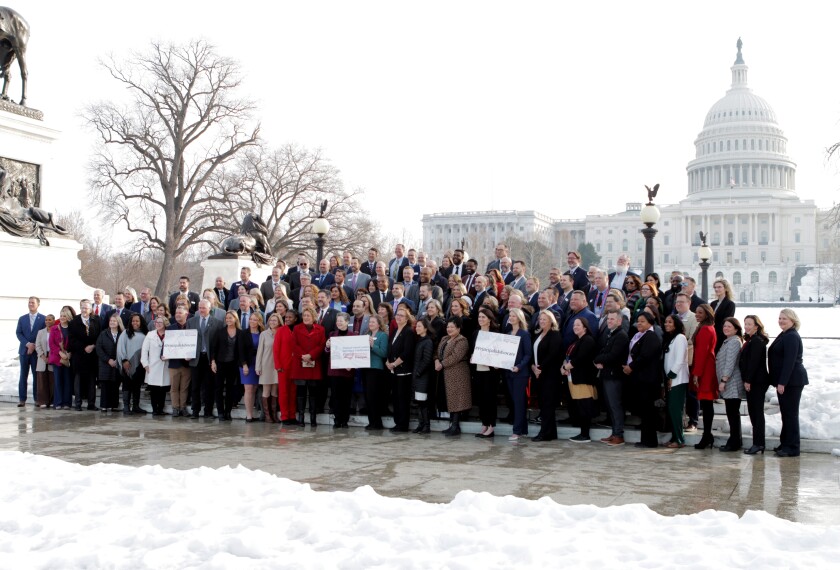
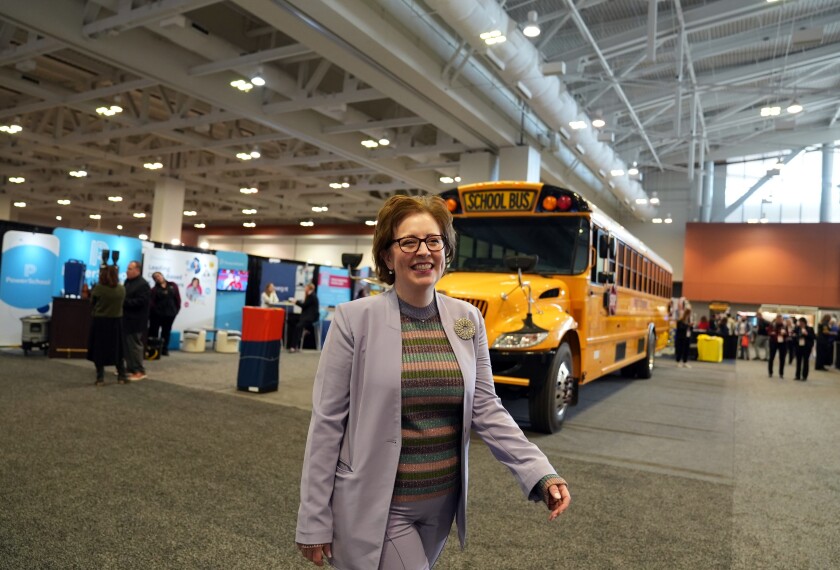
Table from NIH showing EPA’s recommended levels for action when determining the level of PCBs in building materials (this guidance is NOT a mandate or requirement): https://www.ncbi.nlm.nih.gov/pmc/articles/PMC4635108/table/T3/?report=objectonly

Events

This content is provided by our sponsor. It is not written by and does not necessarily reflect the views of Education Week's editorial staff.
Sponsor
Special Education Webinar
Bridging the Math Gap: What’s New in Dyscalculia Identification, Instruction & State Action
Discover the latest dyscalculia research insights, state-level policy trends, and classroom strategies to make math more accessible for all.
Content provided by TouchMath
This content is provided by our sponsor. It is not written by and does not necessarily reflect the views of Education Week's editorial staff.
Sponsor
School Climate & Safety Webinar
Belonging as a Leadership Strategy for Today’s Schools
Belongingisn’ta slogan—it’sa leadership strategy. Learn what research shows actually works to improve attendance, culture, and learning.
Content provided by Harmony Academy
This content is provided by our sponsor. It is not written by and does not necessarily reflect the views of Education Week's editorial staff.
Sponsor
School & District Management Webinar
Too Many Initiatives, Not Enough Alignment: A Change Management Playbook for Leaders
Learn how leadership teams can increase alignment and evaluate every program, practice, and purchase against a clear strategic plan.
Content provided by Otus

EdWeek Top School Jobs

Teacher Jobs
Search over ten thousand teaching jobs nationwide — elementary, middle, high school and more.
View Jobs
Principal Jobs
Find hundreds of jobs for principals, assistant principals, and other school leadership roles.
View Jobs
Administrator Jobs
Over a thousand district-level jobs: superintendents, directors, more.
View Jobs
Support Staff Jobs
Search thousands of jobs, from paraprofessionals to counselors and more.
View Jobs

Read Next

School & District Management On Capitol Hill, Relieved Principals Press for Even More Federal Support
With the fiscal 2026 budget maintaining level K-12 funding, principals look to the future.
7 min read
In this image provided by NAESP, elementary school principals gathered on Capitol Hill recently to meet with their state's congressional delegations in Washington
Elementary school principals gathered on Capitol Hill on Feb. 11, 2026,<ins data-user-label="Madeline Will" data-time="02/12/2026 11:53:27 AM" data-user-id="00000175-2522-d295-a175-a7366b840000" data-target-id=""> </ins>to meet with their state's congressional delegations in Washington. They advocated for lawmakers to protect federal K-12 investments.
John Simms/NAESP
School & District Management Q&A Solving Chronic Absenteeism Isn't 'One-Size-Fits-All,' This Leader Says
Proactive, sensitive communication with families can make a big difference.
7 min read
Superintendent Mary Catherine Reljac walks around the exhibition hall of the National Conference on Education in Nashville, on Feb. 12, 2026. Reljac is the superintendent for Fox Chapel Area School District in Pennsylvania.
Mary Catherine Reljac walks around the exhibition hall of the National Conference on Education in Nashville on Feb. 12, 2026. Reljac, the superintendent for Fox Chapel Area school district in Pennsylvania, is working to combat chronic absenteeism through data analysis and tailored student support.
Kaylee Domzalski/Education Week
School & District Management Opinion The News Headlines Are Draining Educators. 5 Things That Can Help
School leaders can take concrete steps to manage the impact of the political upheaval.
5 min read
Screen Shot 2026 02 01 at 8.23.47 AM
Canva
School & District Management Q&A When Should a School District Speak Out on Thorny Issues? One Leader's Approach
A superintendent created a matrix for his district to prevent rash decisions.
5 min read
Matthew Montgomery, the superintendent of Lake Forest schools in Ill., during the AASA conference in Nashville on Feb. 11, 2026.
Matthew Montgomery, the superintendent of Lake Forest schools in Illinois, is pictured at the AASA's 2026 National Conference on Education in Nashville, Tenn., on Feb. 11, 2026. The Lake Forest schools established a decisionmaking matrix that informs when the district speaks out on potentially thorny topics.
Kaylee Domzalski/Education Week
