

Corrected: A previous version of this article misspelled the name of Kristy Rauch.
Parents are significantly concerned about the poor behavior of today’s school-age kids and are looking to schools for help nurturing better character traits, according to a recent survey.
A majority of parents said that, in general, children today don’t treat others with respect, are dishonest, don’t show gratitude, and are lazy, according to the nationally representative survey of 1,034 parents of children ages 6-18 conducted by market research company Ipsos between Aug. 31 and Sept. 16. The survey was conducted for nonprofit Character.org.
While nearly 90 percent of parents acknowledged that they have the most influence on their children’s character development, 69 percent of parents said they depend on teachers to reinforce the core values they’re teaching at home, the survey found.
The survey results come as schools have been putting a much greater emphasis on social-emotional learning as a core part of their strategy to help students recover from the hardships brought on by the pandemic. Social-emotional learning emphasizes the development of skills such as resilience, emotional regulation, empathy, and collaboration.
“Social-emotional skills are incredibly important,” said Arthur Schwartz, the president of Character.org. “Understanding your emotions, managing those emotions, the skills of getting along with others—those are necessary building blocks to becoming a good person.”
There has been some pushback against teaching SEL skills in schools in some parts of the country because parents say those lessons are in direct conflict with their own values. But the survey results show that there’s “more common ground” among parents and educators than some might think there is in the current political climate, said Kristy Rauch, the manager of educational partnerships for the Center for the Collaborative Classroom, a nonprofit that develops literacy and SEL programs.
“Whether you call it character education or social-emotional learning, these findings show that the work is something that matters, not just within the school day, but obviously parents are supportive of it,” Rauch said.

Even though three-quarters of parents who responded to the survey said they feel that character building is emphasized less today in schools and at home than when they were growing up, experts emphasized that many schools are already nurturing these skills in students.
“Maybe it’s just a disconnect [between parents and schools] that could be remedied by more intentional communication,” Rauch said.
What can schools do to help nurture these skills in students?
One of the most important actions schools can take to help nurture good character traits in students is to “articulate what our expectations are,” said Philip Rossetti, an assistant principal for Windham High School in Windham, Maine.
Educators need to work with students to learn and practice those skills, Rossetti said, which could be done through a built-in advisory class where students have time to foster SEL skills that support the school culture, or by bringing in adults who are practicing those skills in their workplaces.
Schools could also add SEL skills as part of their “portrait of a graduate,” the skills that students need to have before graduating from high school so that they can be successful in college, careers, and life, Schwartz said.
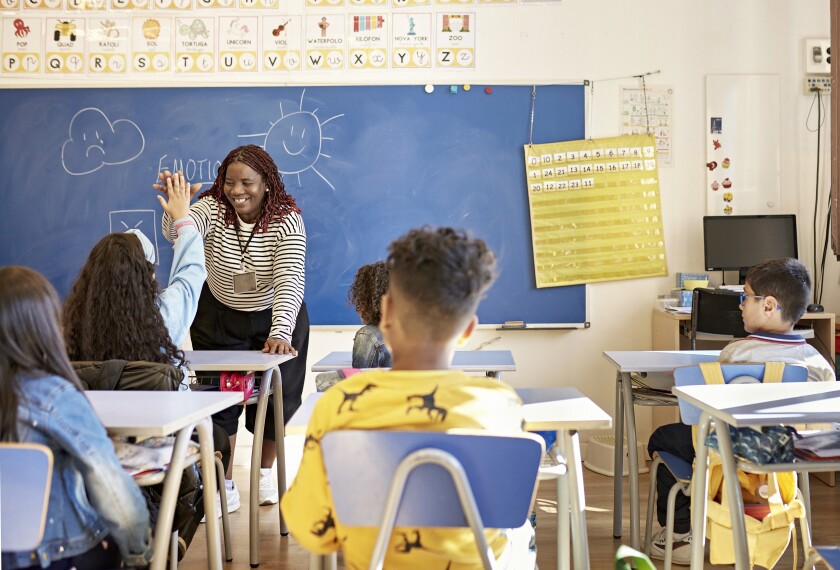
Schools could also actively solicit feedback from students and staff to find out what they think is going well and what else the school needs to do to support them, Rauch said.
“Those kinds of things help not only generate a good understanding of what the needs are, but also buy-in so that they feel like [they’ve] had a say in what’s happening at the school,” she added.
“Proactive communication” is especially important, Rauch said.
For example, educators could send out emails to parents at the end of the week detailing what students learned, along with resources or tips on how to reinforce the SEL skills or character traits they’ve discussed.
Schools and parents should be willing to have conversations about what’s happening and how they can partner with each other as they work toward the same goal of making sure students are successful, Rauch said.


