
For most principals, summertime doesn’t always mean a clean break from school. Most find themselves deep in planning for the new school year, shortlisting hires, deciding which training their teachers most need, and catching up with tasks they’ve long put off in the bustle of the school term—like cleaning out their desks.
That’s how Tony Cattani, principal of Lenape High School in Medford County, N.J., spent his first day of summer break. But he has bigger plans, which include sending a postcard to each of his 1,900-plus students over the summer to let them know their educators are thinking of them. It’s all part of an effort to boost their sense of belonging and connection with the school.
Over the summer, Cattani, along with a team of counselors and 48 student leaders, will call students who consistently showed up late to class or missed instructional time the past school year to find out why. The calls will also screen for the activities these students are most interested in—such as sports, drama, or art—so staff can connect them to those extracurriculars and clubs when school starts again.

“To have a connection to this building, we felt like that’s the biggest draw. Students know there’s a landing spot for them when they come in, a safe spot for them. We need to do a better job with that in the new school year,” Cattani said.
Cattani is one of the three finalists for the 2025-26 National High School Principal of the Year award, organized by the National Association of Secondary School Principals. Three other principals are nominated for the same honor in the middle school category—it’s the first time the association has split its top award into two grade-level categories.
The two winners will be named in July. Education Week spoke with all six finalists about the challenges—from bolstering parent engagement to growing as an instructional leader—they want to tackle in the new school year.
How these top principals work to be better instructional leaders
A couple of years into her principalship at Schoenbar Middle School in Ketchikan, Alaska, Sherilynn Boehlert realized the school needed to develop a new instructional model. She began researching the qualities of highly effective middle schools.
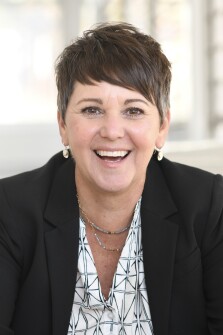
One takeaway from her research: Students need a trusted adult in the building and equitable classes.
“Once I kind of caught wind of what the research was showing, [what] best practices in middle school were—that really moved us toward a really purposeful and intentional school improvement model,” said Boehlert, who has now been principal for a decade.
One change that’s paid off is assigning students to teams made up of a math teacher, a science teacher, a social studies teacher, an English teacher, an instructional specialist, and some elective teachers.
This interdisciplinary “teaming” model provides students with “wrap-around support” and grows teachers’ knowledge about individual students, said Boehlert.
It was also a support for teachers. “Teachers were no longer siloed in their room. ... Now they’re actively talking about [things happening in their classroom] every day,” she said.
In Ogden, Utah, Shauna Haney took over as principal of Ogden High School just as the pandemic hit, and quickly realized that her No. 1 priority was to retain teachers. Teachers didn’t want to come back after remote instruction, a challenge that Haney said shaped the first few months of her principalship.
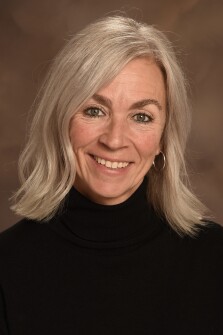
“My goal, as a principal, is to be supportive in any way I can with my teachers, and to listen to them and to listen to their needs,” Haney said.
One of the ways in which Haney wants to support teachers, especially the newer ones, is to communicate student achievement goals at the beginning of the year, and plan professional development tailored to teachers’ experience levels—newer teachers, for instance, may need more help with classroom management.
Haney is also trying to put in place a new system where if an administrator walks into a classroom to talk to a student, they can fill out a quick form about what they observe in the classroom.
“We want to highlight teachers to remember the good things that we’ve seen or talk to teachers about giving them feedback about small things they can do to get better,” she said.
How school leaders are working to engage parents and guardians
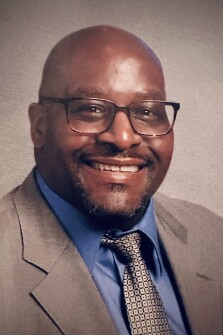
Damon Lewis, the principal of Ponus Ridge STEAM Academy in Norwalk, Conn., has followed a cardinal rule over the last 10 years in his role—to be an avid listener to the community.
To engage parents and guardians, the school hosts “Walkthrough Wednesdays” every third Wednesday of the month. The school opens for an hour, between 9 and 10 a.m., and families can walk through campus with Lewis and the administrative team to visit classrooms and learn more about what the school offers.
Lewis said “Walkthrough Wednesdays” has had a large turnout with about 15 to 20 families showing up every month.
In the past year, the school shrunk its chronic absenteeism rate from 31% to 8%. Lewis credits this to the 25 after-school clubs and other electives “that other schools just don’t offer.” For example, his school offers coding, robotics, computer science, music technology, and digital literacy.
Despite the improvement, chronic absenteeism will always remain a focus for Lewis: “Students and scholars can’t learn if they’re not here,” he said.
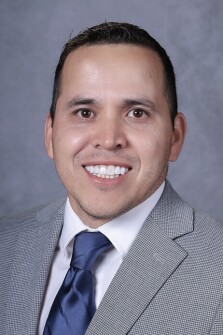
In small-town Texas, Miguel Salazar, the principal of Sundown Middle School, walked the same halls of his school as a teenager. He routinely got into trouble until a teacher saw and tapped into his potential. As a leader, he now wants to do the same for his students.
Salazar uses social media to publish videos that celebrate his students and teachers.
“I want other principals to reach out to me this time of year and say, ‘Hey, what is it that you’re doing that’s so magical?’” he said.
Salazar said he’s attended workshops for principals to connect with others in his area and learn their best practices in engagement.
How this finalist for the Principal of the Year award plans to boost teacher morale
Terita Walker, a fourth-year principal at East High School in Denver, said it was important for leaders to recognize that their own experience as educators differs significantly from the teachers in classrooms today—principals like her don’t have the experience of teaching during or after the pandemic.
That self-awareness “pushed me to be more reflective of the challenges that teachers currently face,” she said. “It pushed me to listen better.”
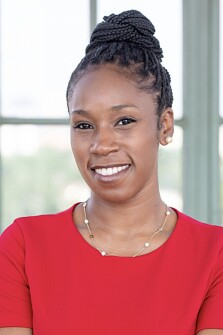
Another difference: Walker said there were no destructive TikTok challenges being shared on social media when she was in the classroom.
This past year, Walker spoke with a group of teachers about parts of the school’s culture that makes them feel seen and appreciated. One-on-one, individualized sessions with Walker came up on top. Walker said she plans to expand on the time she spends talking to teachers—in addition to walks, she wants to have more lunch hours and coffee chats.
Creating a positive school climate isn’t just about happier teachers, Walker added. At East High School, nurses, librarians, paraprofessionals, and executive assistants are also celebrated.
“Usually, the minute you see nurses or paraprofessionals, you’re asking them to do something for you,” she said. “But it’s important to remember that those who look after people also need to be looked after. They also want to feel valued and celebrated.”


