
A student’s sense of belonging at school is important to academic achievement, say educators who responded to an Education Week Research Center survey.
While most educators who took the survey use routines to help students feel welcome and safe at school—like greeting them at the classroom door each morning—many respondents say they struggle to help address some barriers to belonging.
The survey, administered by the Education Week Research Center, drew input from 528 educators who are registered users of edweek.org.
Among those respondents, 41 percent say it’s challenging or very challenging for them to address “the concerns of students who feel that they might be judged negatively based on their identity (e.g., disability status, gender, race/ethnicity).”
Forty-nine percent of respondents identify “finding strategies to help students who are concerned about fitting in because they are struggling academically” as challenging or very challenging.
Respondents work in a variety of school environments, but the sample is not nationally representative. Results were not weighted to represent national demographics.
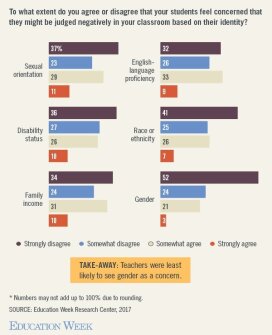
The Education Week Research Center worked with educators and researchers who study students’ academic mindsets to formulate survey questions.

The findings come as researchers emphasize the importance of students’ perceptions of their school culture and how those perceptions affect their motivation.
A student who feels like the school environment is unjust or designed for someone from a different cultural background may become disengaged or not recognize his or her own potential, researchers say. That feeling can be reinforced by factors like a lack of diversity in school reading materials, unfair dress codes, or the sense that, for example, a mostly white, female teaching staff relates to some students differently than others.

Researchers recommend a range of practices, including encouraging teachers to be “warm demanders” who call out the strengths of individual students, actively challenging stereotypes that students may internalize, strengthening connections between a school and its surrounding community, and taking students on college visits at early ages to help them visualize themselves there.
In an open-ended question, the Education Week Research Center asked respondents to identify the most significant challenges they face in building a sense of belonging for their students. The research center then categorized responses to look for trends.The most common type of barrier identified was student attitudes and lack of self-confidence. Thirty-one percent of responses fell into this category.
“Most significant challenges: Getting the student past a negative self perception,” one respondent wrote. “I find this to be the toughest thing to do when we have a jam-packed class period where I have limited opportunity to work just 1:1.”

Twenty-three percent of responses related to students’ past experiences or instability at home.
“It’s very hard day in and day out to convince them that they are loved, valued, and respected when they go home every night to a dysfunctional home,” one respondent said.
Educators also say a lack of resources and time, bullying or difficult interactions among classmates, and academic priorities are barriers to helping students belong.
They also single out extra challenges faced by some student groups, like those in special education programs, and a lack of support from administrators and colleagues.




