At least one state legislator elsewhere is looking at Kansas as a model for how to treat the theory of evolution in public schools.
Indiana Rep. Dennis K. Kruse, a Republican, said last week that he would introduce a bill to end the teaching of evolution in the state’s schools. He said he would use the Kansas state school board’s new curriculum standards--which virtually eliminate any mention of evolution-- as a model when crafting legislation for lawmakers to consider when they convene in January.
“That’s given me encouragement,” Mr. Kruse, who represents the northeast corner of Indiana, said of the Kansas document approved last month. “I’ll use it as a starting point.”
But he acknowledged that it was “totally unknown” whether such a bill would make it through the legislature. In the 1970s, he said, conservatives failed in their attempt to require that Indiana schools teach evolution and creationism side by side.
Similar efforts by evolution’s critics have failed in recent years in states around the country. But even the threat of controversy can scare educators away from giving evolution the extensive treatment it deserves, according to many scientists and educators.
States such as Mississippi and Tennessee “ignore evolution completely,” the Thomas B. Fordham Foundation said in a 1998 report grading all states’ science standards. The Washington- based policy-research organization promotes standards-based education and market-based school reforms.
Others, such as Florida and South Carolina, “treat the subject lightly,” while Georgia and Kentucky avoid mentioning evolution and use euphemisms such as “change” or “organic variation,” the report added.
The introduction to Alabama’s standards includes a disclaimer saying that “explanations of the origin of life ... shall be treated as theory and not as fact.” Still, the standards themselves “deal with evolution in a light but almost satisfactory fashion,” according to the Fordham Foundation.
|
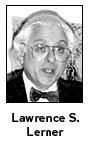
“Generally, Northern states treat evolution properly, and Southern states don’t,” said Lawrence S. Lerner, the report’s author and a professor emeritus of physics at California State University-Long Beach.
Standards Lack Teeth
Even in states where evolution receives full treatment in the state standards, some science educators doubt whether it’s being taught in classrooms.
In Texas, for example, the standards give an adequate review of evolution, but the state accountability system doesn’t include results from its science tests, said Gerald Skoog, a professor of education at Texas Tech University in Lubbock. That gives teachers little incentive to broach a subject that might ignite controversy in a conservative town, he said.

|
“In many states, you have the standards, but they may not be backed up with anything that makes them mandatory,” said Mr. Skoog, who recently reviewed every state’s standards.
But Mr. Skoog added that he recently reviewed state standards and found that they covered evolution to an “unprecedented” degree.
The evolution vs. creationism debate is virtually as old as the theory itself. A high-water mark came in 1925, when John T. Scopes, a high school teacher in Dayton, Tenn., was convicted under a state law banning the teaching of evolution in one of the most dramatic trials of the century.
But evolution’s’ advocates won the war of words in the battle between the legal titan Clarence Darrow and the populist politician William Jennings Bryan. Since then, the theory first expounded by Charles Darwin has gradually become a standard unit in biology courses.
Topic Survives Challenges
As the century closes, though, the debate still pops up, especially when a state revises its standards or a district adopts a new textbook. In some places, it forces an extended debate, while in others it escapes notice.
North Carolina, for example, recently reworked its science curriculum to add specificity to what should be taught.
Despite an extensive campaign by the state education department to involve the public, only one person wrote the state to complain about the presence of evolution in the curriculum, said William J. Tucci, the department’s consultant for science education.
Nebraska, on the other hand, didn’t avoid the debate when it adopted science standards for the first time this summer. The state board of education discussed for two months whether to include Darwin’s theory, according to John Clark, the spokesman for the Nebraska education department.
The debate spilled out of the public hearings and into the news media, he said. The Republican-dominated board eventually voted 5-3 to include evolution in the new standards.
Until last year, Arizona omitted evolution from its standards. But the state school board added references to natural selection to its standards under pressure from professional scientists and science teachers.
The board thought it would avoid controversy by sidestepping evolution, but it underestimated the importance that educators afford the topic, said Bob Box, the president of the Arizona Science Teachers Association.
“I wouldn’t say they give [evolution] exemplary treatment,” Mr. Lerner said of the standards, “but they give it an honest effort.”


