As a nation, we need to begin approaching STEM as a culture, not as content. As a larger community of educators, industry leaders, and government leaders, we need to examine how we are currently supporting a cultural change and stop focusing on the just the individual “content” letters of STEM (Science, Technology, Engineering, Mathematics).
Over the past decade, we have been banging the drums of STEM and developing a hyper-focus on the idea that our country needs more engineers, scientists, mathematicians, and doctors. These highly regarded careers are critical to our growth as society; however, they represent a sliver of industries of our current and future needs. Brookings Institution reported in 2013 about the “Hidden STEM Economy”, stating that 50 percent of STEM jobs needed now and in the future actually require sub-bachelor levels of education. This critical need and the idea of promoting students to pursue a sub-bachelor’s education have been extremely unpopular. Regardless, we need to change “College and Career Ready” to “Career and College Ready.”
Within the education field, we latch onto the idea that only the most gifted students are meant for STEM programs because of the underlying belief that only those students can achieve the Doctorates, Masters, and Bachelor degrees needed for STEM careers. STEM needs to be for all students, as the skills needed for all STEM careers are almost identical. We need to begin to shift our thinking when it comes to STEM in our schools.
Shift One: A Transdisciplinary Approach
Educators need to begin to approach STEM as pedagogy and not as isolated content areas. The idea of approaching STEM from a transdisciplinary learning approach—where connections are made to a larger idea instead of forcing the marriage of content that many times doesn’t organically fit together—has begun to resonate with educators and leaders across the country. We live in a world that is not “disciplinary:” It involves making connections across multiple areas of study authentically brought together through the circumstance of every day life. The majority of Americans do not stop at 9:30 a.m. to do mathematics, and then at 10:45 a.m. switch to social studies.
Shift Two: Developing Thinkers
Students who join the current and future workforce are estimated to hold 15-20 jobs during their professional career. This statistic is directly related to the exponential changes in the job market and a workforce we have developed without the flexibility and critical skills to adapt. STEM should be about building a culture focused on developing the skills our students will need for success in the future economy. There are hundreds of studies and surveys completed asking CEOs what skills they believe students need to be successful in the future. Continually at the top of the lists: Communication, critical thinking, flexibility, collaboration, and creativity. We need to stop developing learners and start developing thinkers. Learners rely on directions while thinkers problem solve and develop solutions.
Shift Three: Start in Early Grades
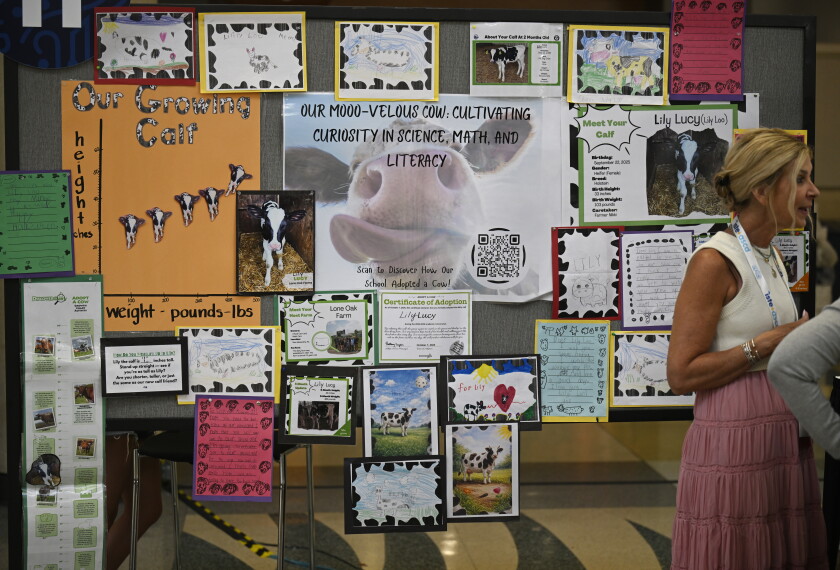
STEM culture cannot begin halfway through a student’s educational career. By the time our students reach 6th grade, they have made a conscious decision whether or not they will be “good” at math and science. The majority of these students have the potential for greatness; however, they were not engaged in authentic learning early enough in their education. The majority of STEM programs, initiatives, and resources begin with a focus on 6th grade and higher. We are missing the opportunity to expose students to STEM because we are missing all the students whom already decided on their own that STEM isn’t for them without truly understanding the possibilities.
Shift Four: Curriculum Integration
STEM cannot be something “extra:” It has to be embedded in everyday instruction. Our education system is focused on standards and accountability to these standards. If we relegate STEM to only after school, summer, electives, and those few days after testing season, we are missing the opportunity given to us as educators to provide a better tomorrow. In addition to missing the opportunity, many teachers won’t embrace this shift as it is not “tested.”
Developing educators’ instructional practices tied to critical skills, authentic connections, standards, career possibilities, and transdisciplinary learning will begin to create the environment needed for our students’ development as the thinkers our future needs. We need to shift the focus of STEM and help teachers see that all teachers are STEM teachers.