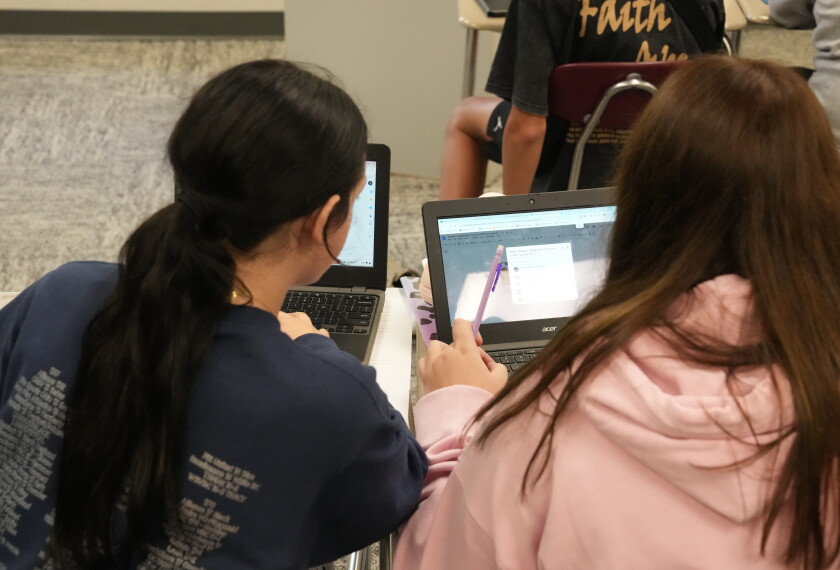
Video content—whether viewed on cellphones, laptops, or interactive whiteboards—has become so ubiquitous both inside and outside classrooms that educators may not stop to think about the effects on their students, particularly adolescents.
While there’s much discussion around screen time, this particular offshoot of that issue is one educators should pay special attention to, recommends a recent report from the American Psychological Association.
The report summarizes the major research to date on how watching video affects youth and offers valuable information for educators as they shape their classroom practices and school policies, said Richard Culatta, the CEO of the International Society for Technology in Education and the Association for Supervision and Curriculum Development, or ISTE+ASCD. Teaching students the skills to use video content and other digital media when it’s helpful—and recognize when it’s not—is crucial, he said.
“It would be hard to find any skill, other than reading, that would be more important to make sure that our students have when they graduate than a grounded understanding of how to thrive in a digital world,” he said.
There are many ways that video content—which includes everything from movies on streaming services to video clips on social media—can both harm and help teens, the report emphasizes. Even though far more research has been done into how watching film and television affect youth, current research shows that what we know about the effects of viewing videos on those more traditional formats applies to new platforms, such as watching video clips on TikTok on a cellphone. It’s the content that appears to matter in terms of harms and benefits, the report says, not so much the medium.
That said, emerging research is finding some platform design features that encourage engagement—such as auto-playing another video after one has ended—may exacerbate the effects of watching videos, for good or ill.
What should schools do with this information? Here are three key takeaways for educators:
1. Leverage videos for educational purposes, but teach caution
Video content, and digital media more broadly, can be both powerful educational tools and sources of misinformation, so adolescents must learn how to be savvy consumers of all digital media, the report says.
Social media influencers are a good example of this dichotomy. Kids are far more likely than adults to form parasocial relationships with influencers, seeing them as trusted role models or even friends, research finds. This can be helpful for schools when they use an influencer in an anti-bullying campaign to drive home a message. But influencers are not helpful at all when they are spreading conspiracy theories, expressing hateful rhetoric, or promoting unrealistic beauty and lifestyle standards.
“There are cases where it can be very damaging if there is an influencer who is sharing something that isn’t true or healthy,” Culatta said. “The response from schools should be a conversation with kids about what do you look for in influencers that you follow and trust? What are the things that should give you a red flag? If we just have that conversation with every kid, they would be so much better prepared to thrive in an online world.”
Teens are also more susceptible to viewing paid product placements in influencer content as personal recommendations, the APA report said, rather than what it actually is: advertisements.
2. Not all video content is equal, and not all teens are affected the same way
While there is a lot of problematic video content out there—such as media that encourages violence or eating disorders—there’s also plenty that promotes students’ well-being and good behavior, the report said. Students can use educational videos to get help with their homework, develop new hobbies, and learn about other cultures. Content that sparks happiness, amusement, and satisfaction can improve adolescents’ well-being.
“Research reveals that exposure to humorous videos, stories of kindness, and uplifting news can increase positive affect, increase optimism, and foster a sense of hopefulness,” the APA report notes.

Adolescents also respond differently to video media based on the unique factors that make them individuals, such as their personality, age, experiences, and neurodiversity, to name just a few possible variables. Adolescents mature at different rates, so the APA report doesn’t outline specific ages for viewing certain types of video content.
What this means for schools, Culatta said, is that school leaders should consider creating policies and guidelines for digital media use in the classroom that are more nuanced than, say, just blocking students and teachers from using certain platforms wholesale. Policies should focus on the quality of the content, not the platform, he said.
“A lot of educators are really quite good at this, but they’re trying to do this in almost opposition to policies in schools that make these big, sweeping categorizations” about what platforms students and teachers have access to, he said. “We need to be creating healthy learning experiences in schools to help [students] recognize when media is useful and when it’s not. That’s the responsibility of schools and parents.”
3. Technology is constantly introducing new challenges. Parents need help
Artificial intelligence-generated videos and other media are quickly altering the digital landscape, and research on the effects of AI-generated content on adolescents is only just emerging, the report said.
AI-generated or altered content can exacerbate adolescents’ negative body images, and AI can be used to create “deepfake” videos targeting other students and school staff—to name just two of the potential issues discussed in the report. These emerging problems underscore the importance of teaching students AI literacy, the report said.
But beyond AI, many of the challenges outlined in the APA report are unique to this generation of kids, and parents often don’t know how to navigate this new normal, said Culatta. Schools need to share the burden with parents of teaching students healthy technology habits, he said.
But schools also have an important role to play in being a source of evidence-based information for families, he said.
“If you look where parents go to get trusted information about how to create healthy tech-use conditions at home, they turn to their schools,” he said. “If you help parents create real, good healthy tech use at home, your job at school is going to be a lot easier.”