Special Report
Classroom Technology From Our Research Center

How Educators Feel About the Impact of Technology, in Charts

By Arianna Prothero — March 27, 2023 1 min read
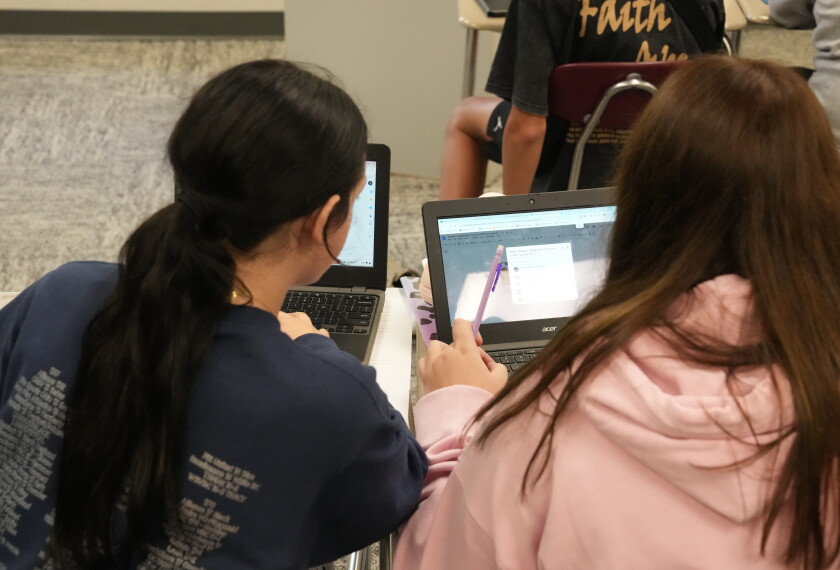
Students attend a coding class at Mineola Middle School in Mineola, New York, March 13, 2023.
  • Save to favorites
  • Print

Most teachers, principals, and district leaders believe that their schools’ recent investments in technology are—at least to some extent—paying off in terms of student academic gains, according to an EdWeek Research Center survey conducted in February.

And well over half of the teachers surveyed say that 1-to-1 computing has allowed them to some extent to focus more on students’ individual academic needs.

But despite those promising data points, the proportion of educators rating the benefits of new education technology as game changing is much smaller. And growing pains remain as education technology hits an inflection point three years after the pandemic kicked off unprecedented investments in new digital learning tools.

Chief among those challenges: Many ed-tech tools are not aligned with federal education requirements, technology’s potential to truly accelerate student learning remains underutilized, and, as the data below show, tech fatigue remains an ongoing concern.

While most teachers, principals, and district leaders say that teachers in their schools or districts are invigorated by technology—it’s a slim majority of 51 percent. Nearly half feel just the opposite—they are worn out by all the tech use in schools.

Below is a more detailed look at some findings about technology use in education from the EdWeek Research Center survey:

education week logo subbrand logo RC RGB

Data analysis for this article was provided by the EdWeek Research Center. Learn more about the center’s work.

A version of this article appeared in the April 05, 2023 edition of Education Week as How Educators Feel About the Impact Of Technology, in Charts

Events

This content is provided by our sponsor. It is not written by and does not necessarily reflect the views of Education Week's editorial staff.
Sponsor
Reading & Literacy Webinar
Unlocking Success for Struggling Adolescent Readers
The Science of Reading transformed K-3 literacy. Now it's time to extend that focus to students in grades 6 through 12.
Content provided by STARI
Jobs Virtual Career Fair for Teachers and K-12 Staff
Find teaching jobs and K-12 education jubs at the EdWeek Top School Jobs virtual career fair.
This content is provided by our sponsor. It is not written by and does not necessarily reflect the views of Education Week's editorial staff.
Sponsor
College & Workforce Readiness Webinar
Portrait of a Learner: From Vision to Districtwide Practice
Learn how one district turned Portrait of a Learner into an aligned, systemwide practice that sticks.
Content provided by Otus

EdWeek Top School Jobs

Teacher Jobs
Search over ten thousand teaching jobs nationwide — elementary, middle, high school and more.
View Jobs
Principal Jobs
Find hundreds of jobs for principals, assistant principals, and other school leadership roles.
View Jobs
Administrator Jobs
Over a thousand district-level jobs: superintendents, directors, more.
View Jobs
Support Staff Jobs
Search thousands of jobs, from paraprofessionals to counselors and more.
View Jobs

Read Next

Classroom Technology The Good, Bad, and Ugly of Screen Time: An Explainer
Too much screen time is bad for kids. But what does that mean for schools?
9 min read
EdWeek Screen Time
Taylor Callery for Education Week
Classroom Technology How to Lessen Screen Time in Schools—and Make It More Effective
Districts have tried monitoring software, tech-free days, and parent education to curb screen time.
7 min read
Open laptops, or tablets for younger students, are a common sight during class time post-Covid, as in this 6th grade class period during a "What I Need" period at Cedar Park Middle School in Beaverton, Ore., on April 3, 2026. Cedar Park is experimenting with storing Chromebooks on a classroom cart, instead of assigning them directly to each student, to try to reduce the amount of time students spend on screens during instructional time.
Sixth-graders work on laptops during a class at Cedar Park Middle School in Beaverton, Ore., on April 3, 2026. The school is experimenting with storing Chromebooks on a classroom cart, rather than assigning them directly to each student, to try to reduce the amount of time students spend on screens. Teachers and parents say the pilot program is working.
Mark Graves/The Oregonian via TNS
Classroom Technology What Educators Really Think About the Overuse of Tech in Schools
Teachers and administrators express strong opinions about the downsides of tech use in school.
1 min read
EdWeek What Educators Say - Drawbacks
Taylor Callery for Education Week
Classroom Technology What Educators Really Think About the Benefits of Tech Use in Schools
We asked educators why they think technology can help students learn.
1 min read
EdWeek What Educators Say - Benefits
Taylor Callery for Education Week