A student surfing the Internet for information on the Rev. Martin Luther King Jr. might expect that a site bearing his name—and one of the top matches in a Google search—would contain accurate historical data about the most famous leader of the American civil rights movement.
Instead, www.martinlutherking.org is a site hosted by a white supremacist organization calling for the repeal of the holiday named for King and discrediting his achievements. The site bills itself as “a valuable resource for teachers and students alike.”
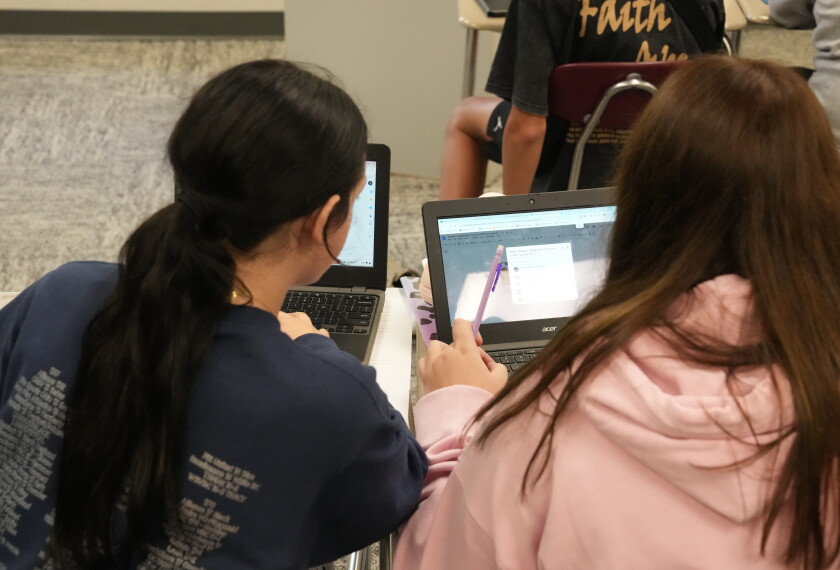
As the Internet has evolved into a major source of information for students researching history and social studies, it also has become a place where hidden agendas and false information can trip up both students new to a topic and teachers searching for credible sources of historical data.
“One of the key problems teachers face in the social studies classroom and on the Web is that students don’t know how to discriminate when doing research online,” says Kelly Schrum, the director of educational projects at the Center for History and New Media, based at George Mason University in Fairfax, Va. “They don’t know how to evaluate a Web site. They do a Google search, and whatever comes up is reality.”
Both students and teachers need to be able to filter the research they come across online, and most teachers see the importance of providing trusted sources of information. The greatest benefit of the Web—the vast amount of information readily available—can sometimes be its greatest drawback.
Sitting at a computer, students can browse collections such as the photographer Mathew Brady’s classic pictures from the Civil War, or watch Thomas Edison’s early films through the Library of Congress’ site. But elsewhere on the Web, they may stumble across sites that deny the Holocaust took place or that propound other wild and inaccurate claims.
“You type in certain things to do a search, and Holocaust-denial sites jump to the top. That’s kind of scary,” says Robert B. Townsend, the assistant director for research and publications at the American Historical Association, based in Washington. “There’s an enormous amount of content out there. We’ve gone from scarcity to this moment of abundance.”
‘Key Skill in Digital Age’
One tactic for steering students in the right direction is for teachers to recommend reliable sites, where information is vetted and filtered, suggests Elizabeth Ridgway, the director of educational outreach at the Library of Congress. The federal site has digitized more than 11 million items from its own collections, she says, and wants people to access primary sources to use them “as a spark for critical thinking.”
Digital History
www.digitalhistory.uh.edu
History Matters
http://historymatters.gmu.edu
Library of Congress
www.loc.gov
National Archives
(Student and Teacher Section)
www.archives.gov/education
National History Education Clearinghouse
http://teachinghistory.org
The Gilder Lehrman Institute of American History
www.gilderlehrman.org
SOURCE: Education Week‘s Digital Directions
But Ridgway says she doesn’t view the existence of less reputable sites as all bad. “There are always going to be facts in history that are going to be gray,” she points out. “If we can get students involved in the discovery process, we can help them to discover what these debates are and how to sift through the information.”
The Library of Congress provides about 90 teacher-training sessions a year, and part of that training includes strategies for helping students examine Web sites to determine if information is authentic, Ridgway says. About a third of the training sessions are held across the country at national conferences; the rest are in Washington. The training is free, and Ridgway says groups of teachers visiting the nation’s capital can schedule half-day or daylong professional-development sessions when they’re in town.
Another way teachers can direct students to reputable sites for information is through a new Web site scheduled to go live this month and sponsored by the National History Education Clearinghouse through a grant from the U.S. Department of Education.
Not only will the site provide best practices, teaching materials, lesson plans, policy and research, and professional development for instructors, but it will also offer a filtered way to do searches, says Schrum of the Center for History and New Media, which has helped build the Web site. The customized Google search through the site will provide primary sources and places to get primary sources that have been checked for authenticity.
Being able to discriminate good from bad material when it comes to research online is crucial in history and social studies, and it’s a skill today’s teachers of those subjects must be able to pass on to their students.
“It’s a key skill in a digital age,” Schrum says.