

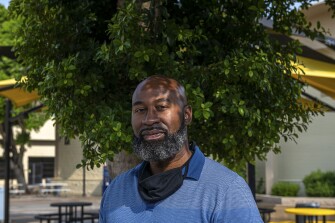
Kareem Neal, a 24-year veteran educator, noticed something surprising when his school went all virtual last year: Not only did most of the students in his self-contained, special education class navigate the change better than he expected, three of them blossomed academically.
All three are on the autism spectrum and have a tough time navigating the social aspects of school. But during virtual instruction, “they were fine with just hours of academic instruction happening at home,” said Neal, who works at Maryvale High School in Phoenix and was an Arizona teacher of the year in 2019. “All of those other things were off their plates, and there was just their work, and they loved it.”
Most students didn’t make much progress—or flailed—in online learning during the pandemic. But a subset who may have struggled with in-person learning in the past—like Neal’s trio of kids—actually thrived. Now many of those students, some of whom have learning and thinking differences or mental health conditions like social anxiety, must return to the traditional classroom, an environment that did not work for them before COVID.
So Neal and other educators around the country are thinking about how they can adjust their practice, or their approach with individual kids, to help these students retain the success they experienced online now that they are back in school.
As educators and parents think through how to best serve students who thrived in virtual learning, they should turn to the obvious experts: the kids themselves, said Claire Schu, the manager of implementation support at the Collaborative for Academic, Social, and Emotional Learning, a nonprofit that supports educators in social-and-emotional learning.
“That’s where a district or school should start this, by actually asking students what worked for them,” she said. Schools could either survey all students, or target kids who did demonstratively better during virtual learning, she added.
“You might find they really benefited from the freedom to use their time more flexibly or focus without interruption,” Schu said. “If that’s what you’re hearing, you might consider changing up the way that the in-person class period is structured, [or] giving options for how and even where students can learn within the school.”
Teachers can keep up with what worked
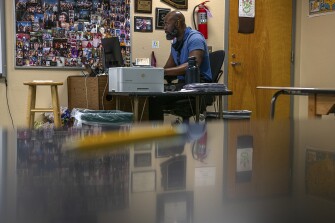
Neal, for one, is giving the three students who seemed to relish the solitude of online instruction the option of spending lunch and other free time in the classroom doing some enrichment work, rather than having to face unstructured social time.
Neal also noticed that many of his students, who are typically on the autism spectrum, have Down syndrome, or have other significant cognitive differences, liked that he tended to structure his online lessons more or less the same way every day, kicking off with a video, moving onto some teaching, then a writing activity.
Now he’s hoping to find ways to offer “rich and varied lessons, but still give [students] the kind of consistency that they want in class,” said Neal, who is also a teaching fellow at Understood, an organization that works on behalf of students with learning and thinking differences.
And Neal is planning to offer his students more opportunities for one-on-one teaching, something that many of them seemed to embrace online.
Technology may have motivated students
Some students who thrived in a virtual setting appreciated the autonomy they had, said Amanda Morin, the director of thought leadership and expertise at Understood. They liked the ability to choose their own schedule, go back over lessons at their own pace, or take a break when they needed one.
They also liked being able to prioritize their list of tasks—perhaps getting difficult work out of the way early, or saving it for later in the day, Morin said.
What’s more, many kids had the opportunity to take in content in whatever way worked best for them. In a traditional setting, “it’s really easy [for teachers to forget to provide multiple means of access, to provide visuals, to provide, videos, to provide written instructions,” Morin said. “If you’re in a classroom, we often just default to talking.”
Online learning also allowed for more personalized interaction. Students, particularly those with learning differences, appreciated the opportunity to get some individualized attention, either through breakout rooms or one-on-one Zoom meetings, said Julian Saavedra, who worked last year as an 11th grade history teacher and is now an assistant principal at Roxborough High School in Philadelphia.
Now that he’s an administrator, Saavedra is encouraging his teachers to reflect on what went right for their students during the pandemic. His school has gone 1-to-1 with tech devices—which was seen as a necessity, thanks to COVID —and he’s hoping teachers will embrace technology as a student engagement tool.
“You have your quizzes and your Kahoot … everybody’s using these gamified ways of producing lessons,” said Saavedra, who is also an Understood teaching fellow. Those types of activities can be “more intuitive to a lot of our kids, especially our boys, because so many of them are gamers anyway. Traditionally a lesson that would be in a classroom setting might not speak to as many of them, but having this gamified format helped them a lot.”
Some kids also relished the fact that they were able to be around their family and that virtual learning was “just a slower pace of life,” said Ellen Braaten, the director of the learning and assessment program at Boston’s Massachusetts General Hospital.
She suggested teachers try to replicate that environment as much as possible, by asking students to do a couple of minutes of meditative breathing, or just by taking a bit more time with each lesson. “I know that’s going to be hard for many teachers,” she said, “Knowing there are lot of kids who need to catch up” academically.

‘Everybody’s coming back a little awkward’
Even the most extroverted kids may need help getting back into the swing of things socially after an extended period of relative isolation at home. Schools could help by reviewing some social skills with all students.
“Everybody’s coming back a little awkward,” Morin said. “It may level the playing field and give an opportunity to really reteach those skills to the entire group of students.”
School districts may also want to consider just how much social interaction kids need in order to learn. Do introverted students really need to face an awkward lunchroom or playground, or should they be given alternatives?
“Are we really putting kids in a situation where they are expected to socialize when some kids maybe just don’t feel comfortable doing it?” she said. “We need to ask kids those questions, about how social they want to be. I think that for some people, being alone is their comfort place. And acknowledging that is important, too.”


