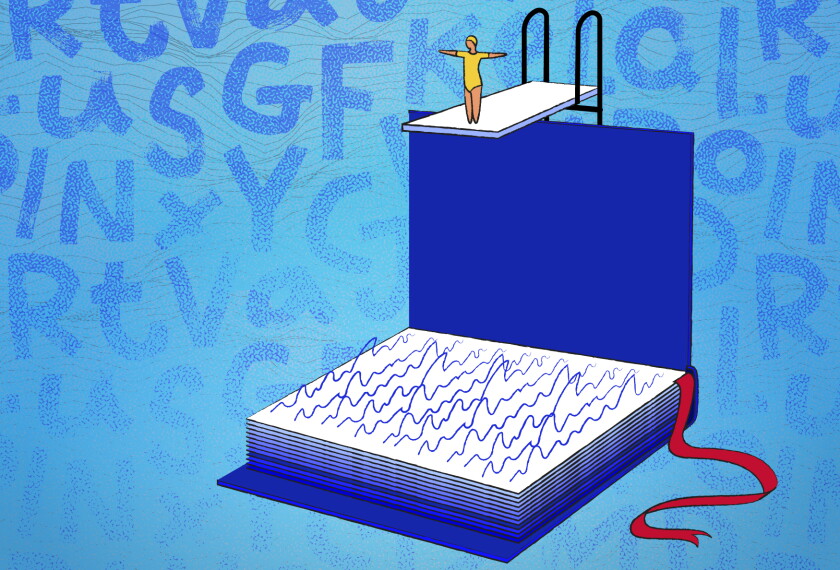
Reading & Literacy
Reading and writing instruction. The science of reading. Early literacy. State reading policy. Explore EdWeek’s full coverage
See also: Early Literacy, Writing, Books
Special Report
Beyond 3rd Grade: What to Do When Older Students Struggle to Read
Many secondary students also struggle with basic reading. How can schools catch them up?

Special Report
Different Subjects, Different Reading
How can teachers help students master each content area's specialized vocabulary, tools, and ways of communicating?

Special Report
Reading to Understand: Unlocking the Elements of Comprehension
Reading comprehension is a complex element of the "science of reading." Learn how schools can foster students’ ability to make sense of texts.

 Reading & Literacy What the Research Says Is 3rd Grade Retention the Secret to Better Reading Outcomes—Or Something Else?A new study suggests that the benefit to kids doesn’t actually come from having them repeat a grade.
Reading & Literacy Opinion Want Students to Read on Grade Level? These Strategies Can HelpHere's how to scaffold literacy instruction through active reading, peer-assisted learning, and more.Reading & Literacy Quiz Quiz Yourself: How Much Do You Know About Building Early Literacy Skills?SponsorThis content is provided by our sponsor. It is not written by and does not necessarily reflect the views of Education Week's editorial staff.Answer 7 questions about students' relationships with mathematics.
Reading & Literacy Opinion Bringing the Science of Reading to Your School? Remember This One ThingThe science of reading can’t succeed without the art of teaching.
Reading & Literacy What the Research Says Are Early-Reading Laws Changing Teaching Practices?Laws mandating shifts in professional development and training don't always give teachers curriculum support.
Reading & Literacy 'Science of Reading’ Advocates Underscore: It’s Not Just About PhonicsAt the Reading League's annual summit in Chicago, leaders hoped to change the narrative.
Reading & Literacy Opinion Don't Underestimate the Power of Graphic Novels for the ClassroomNot just an easy read: Comics and graphic novels can teach a host of skills, three educators explain.Reading & Literacy Webinar Trust in Science of Reading to Improve Intervention OutcomesSponsorThis content is provided by our sponsor. It is not written by and does not necessarily reflect the views of Education Week's editorial staff.There’s no time to waste when it comes to literacy. Getting intervention right is critical. Learn best practices, tangible examples, and tools proven to improve reading outcomes.
Reading & Literacy More States Are Taking Aim at a Controversial Early Reading MethodLawmakers in some states are trying to ban the "cueing" approach, which asks students to rely on pictures or context clues to identify words.
Reading & Literacy Letter to the Editor Reading Comprehension MattersFocusing on evidence-based teaching practices is critical when teaching students how to read, says this letter to the editor.
Reading & Literacy What the Research Says Want to Improve Early Reading Comprehension? Start With Sentence StructureWe speak differently than we write. For comprehension development, children need exposure to syntax common to both.Reading & Literacy Webinar What Kids Are Reading in 2025: Closing Skill Gaps this YearSponsorThis content is provided by our sponsor. It is not written by and does not necessarily reflect the views of Education Week's editorial staff.Join us to explore insights from new research on K–12 student reading—including the major impact of just 15 minutes of daily reading time.
Reading & Literacy Video How Everyday Objects Can Strengthen Phonemic AwarenessTeachers can create homegrown kits to help students master phonemic awareness—how to manipulate the sounds in English.
Reading & Literacy Opinion If Literacy Is a Priority, Why Do We Cling to the Wrong Practices?There have been two huge developments this year related to how we teach reading.
Reading & Literacy Reading Comprehension Teaching Has Improved—But Not Nearly EnoughA review paper of research from the past 50 years shows that many teachers still aren't deploying evidence-based methods.
Reading & Literacy What the Research Says Is 3rd Grade Retention the Secret to Better Reading Outcomes—Or Something Else?A new study suggests that the benefit to kids doesn’t actually come from having them repeat a grade.
Reading & Literacy Opinion Want Students to Read on Grade Level? These Strategies Can HelpHere's how to scaffold literacy instruction through active reading, peer-assisted learning, and more.Reading & Literacy Quiz Quiz Yourself: How Much Do You Know About Building Early Literacy Skills?SponsorThis content is provided by our sponsor. It is not written by and does not necessarily reflect the views of Education Week's editorial staff.Answer 7 questions about students' relationships with mathematics.
Reading & Literacy Opinion Bringing the Science of Reading to Your School? Remember This One ThingThe science of reading can’t succeed without the art of teaching.
Reading & Literacy What the Research Says Are Early-Reading Laws Changing Teaching Practices?Laws mandating shifts in professional development and training don't always give teachers curriculum support.
Reading & Literacy 'Science of Reading’ Advocates Underscore: It’s Not Just About PhonicsAt the Reading League's annual summit in Chicago, leaders hoped to change the narrative.
Reading & Literacy Opinion Don't Underestimate the Power of Graphic Novels for the ClassroomNot just an easy read: Comics and graphic novels can teach a host of skills, three educators explain.Reading & Literacy Webinar Trust in Science of Reading to Improve Intervention OutcomesSponsorThis content is provided by our sponsor. It is not written by and does not necessarily reflect the views of Education Week's editorial staff.There’s no time to waste when it comes to literacy. Getting intervention right is critical. Learn best practices, tangible examples, and tools proven to improve reading outcomes.
Reading & Literacy More States Are Taking Aim at a Controversial Early Reading MethodLawmakers in some states are trying to ban the "cueing" approach, which asks students to rely on pictures or context clues to identify words.
Reading & Literacy Letter to the Editor Reading Comprehension MattersFocusing on evidence-based teaching practices is critical when teaching students how to read, says this letter to the editor.
Reading & Literacy What the Research Says Want to Improve Early Reading Comprehension? Start With Sentence StructureWe speak differently than we write. For comprehension development, children need exposure to syntax common to both.Reading & Literacy Webinar What Kids Are Reading in 2025: Closing Skill Gaps this YearSponsorThis content is provided by our sponsor. It is not written by and does not necessarily reflect the views of Education Week's editorial staff.Join us to explore insights from new research on K–12 student reading—including the major impact of just 15 minutes of daily reading time.
Reading & Literacy Video How Everyday Objects Can Strengthen Phonemic AwarenessTeachers can create homegrown kits to help students master phonemic awareness—how to manipulate the sounds in English.
Reading & Literacy Opinion If Literacy Is a Priority, Why Do We Cling to the Wrong Practices?There have been two huge developments this year related to how we teach reading.
Reading & Literacy Reading Comprehension Teaching Has Improved—But Not Nearly EnoughA review paper of research from the past 50 years shows that many teachers still aren't deploying evidence-based methods.