

There’s record-breaking engagement for the World Cup—20 billion digital viewers have tuned in to watch it and stadiums across three countries have been packed. Given the event’s enormous popularity, how can educators use the global event to create stronger engagement with students and families?
A pair of researchers who study health issues see a distinct opportunity for schools with the World Cup: The soccer mega-competition can build students’ sense of belonging—and more broadly, support their mental health—at a time when that sense of connection for many students is tenuous.
Creating a sense of belonging is important because it makes students want to attend school and engage in learning. That’s a longstanding goal of district leaders and classroom educators—and it’s especially true today, when loneliness affects 1 in 6 people worldwide and the percentage is highest among 13- to 17-year-olds (20.9%), according to a 2025 report by the World Health Organization’s commission on social connection.
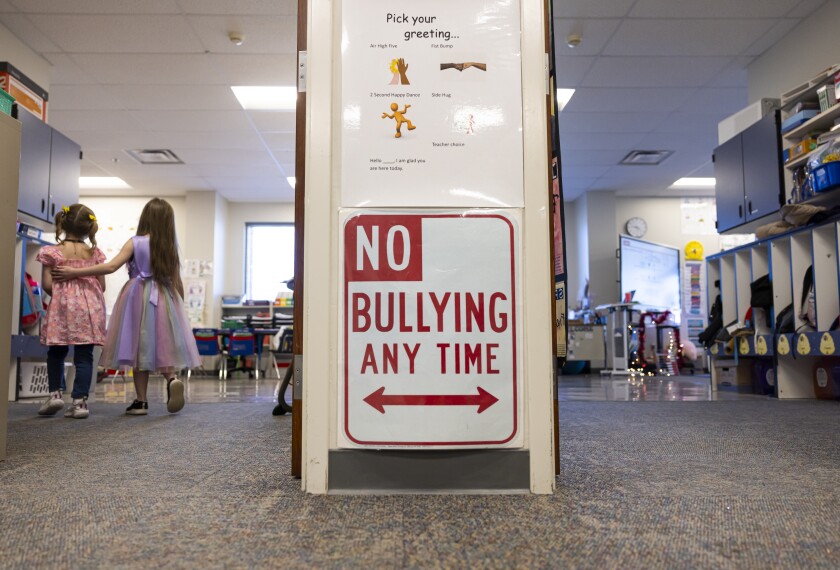
Teens who report feeling lonely are also 22% more likely to get lower grades in school, the report found.
But creating a sense of belonging in school environments is easier said than done. Some ways to gauge whether students feel that sense of connection include whether they can name a school staff member who cares about them, whether they have a supportive peer group, and whether they are participating in school work or projects, according to previous Education Week reporting.
At Surgo Health, a public-benefit corporation focused on healthcare access, Shums Alikhan, a senior manager, and Adele Wang, a senior research scientist, say the World Cup and other major international events can naturally create a way for students to come together.
In a conversation with Education Week, Alikhan and Wang discussed the importance of belonging and how the sporting event is an opportunity for educators.
This interview has been edited for length and clarity.
Let’s start with the basics: What’s the connection between mental health and belonging?
Alikhan: We found in our mental health 2024 survey of 10- to 24-year olds that belonging was one of the strongest predictors for mental health. Young people who feel like they belong were 1.7 times more likely to be happy, and they were 1.5 times more likely to find their life meaningful. And then, on the other hand, we found that those who don’t feel like they belong were 2.5 times more likely to show symptoms of depression and anxiety. So there’s definitely a very strong correlation there.
Are the effects especially pronounced within specific age groups of students?
Wang: Kids who are 10 to 17 years old, who feel that they don’t belong, are more than three times as likely to say that they show depression and anxiety symptoms. And then, we also see that kids who say that they do belong are 1.6 times more likely to say that their life is meaningful.

What factors affect belonging?
Alikhan: One of the main things is access to community, environments, and places—these spaces where youth really can go to foster that sense of belonging.
We heard time and time again that sports teams, clubs, and after-school activities support young people’s mental health and foster belonging. That’s within school, but also outside of school and in community spaces as well.
But if the school doesn’t have the proper funding or the infrastructure to necessarily support those programs, that sense of belonging is going to be at a loss there.
Where do sports come into play?
Wang: We asked young people what they did to help with their mental health, and 72% of young people said that they had tried joining a community group, like joining a sports team. And among these young people, 66% find it to be helpful for their mental health.
How can educators create an environment of belonging?
Alikhan: Educators can focus on the youth who have less belonging, so that includes LGBTQ+ youth, Black youth, Hispanic youth—youth really living in these environments where belonging may not necessarily come as easily to them.
Educators can co-create with youth. They don’t need to create a space or a program, instead they should involve the youth. For example, having a leader who is a student or having a team of students and asking them what kind of space they would like to have. They can ask students if after school makes sense for these group activities.
Involving students will make them more likely to attend and come to these spaces, and then you’ll really get a sense of what they would like as well.
How can the World Cup bridge these gaps?
Alikhan: The World Cup is a low-touch-point way of getting these students together. Maybe they don’t necessarily want to join a sports team, because sometimes that can be a little bit intimidating.
A World Cup watch party, tournament, trivia, where you are just fostering the sense of belonging, creating the space for everyone to come together around a shared activity—it’s a low-touch point. It’s an entryway to get them in.

This global event is one of the few moments when the whole world watches the same thing at once, and that changes things for kids who don’t come from the culture everyone around them shares.
A student in Mississippi might cheer for Brazil because of a grandmother in São Paulo; a kid whose family is from Morocco suddenly has something peers want to know about. That’s belonging showing up through identity specifically because the tournament lets a student be American, Brazilian, and Moroccan at the same time.
To benefit from the atmosphere around the World Cup, do the students themselves have to be athletic?
Alikhan: Not at all, and this is what makes the World Cup unique. Following stats and players, decorating a classroom door, running a snack table during a watch party, and designing a bulletin board on player stories from different countries are ways students can still participate.
A student who feels like the “un-athletic one” in gym class can still be the one who knows every team’s stats or organizes the class World Cup watch party. That’s a legitimate on-ramp to feeling included, and it doesn’t require them to be very athletic at all.
What opportunities does the World Cup offer for parents or caregivers to connect with students in new ways?
Alikhan: A global tournament gives families a low-pressure, built-in shared activity that doesn’t require a hard conversation or a scheduled “check-in,” which is often what makes it work.
Watching a match together, even in the background while doing something else, gives parents and kids a shared reference point and something easy to talk about that isn’t grades, screen time, or the usual friction points.
So you see a benefit in the informality, and casual nature of those activities.
Alikhan: For families with ties to a competing country, it can also be a moment where a parent’s own history and identity become something the student wants to hear about, unprompted. That’s valuable because it’s the student initiating curiosity rather than the parent trying to instill it, and again differentiates the World Cup because it’s a global event.
Schools can help intentionally by sending families simple, no-pressure prompts, a family watch-party guide, an “ask your parent which player they loved as a kid” homework prompt, and a suggestion to let students choose the snack or team to root for as a family.
None of this requires parents to know or care about soccer. It just uses the tournament as a shared occasion, which is often the missing ingredient in family connection, not the lack of things to talk about, but the lack of a natural occasion to talk at all.
The final of this year’s competition is later this week. How can teachers capitalize on this moment even after the Cup has ended?
Alikhan: If a class ran a World Cup bracket or watch party, that same format can be repurposed around anything. For example, it can also be repurposed through a reading challenge, a science fair, or a trivia league. The content can change, but the underlying belonging mechanism stays the same because it allows youth to come together in low-touch ways.

And so can these activities carry forward into the academic year?
Alikhan: When youth come back in the fall, open the year by naming the shared memory around the World Cup. Kids come back in August or September having lived through a global event together, even if they experienced it at home, at camp, or in front of a screen.
Teachers can ask students, as a first-week activity, “What team surprised you?” and “Who did you watch a game with?” Which gives teachers a ready-made, low-stakes belonging exercise before they’ve built any classroom culture yet. It’s a shortcut to shared identity that doesn’t require weeks of relationship-building first and it allows some kids to start talking and open up.
Wouldn’t the summer break interfere with educators’ ambitions to engage students in events like the World Cup?
Alikhan: One of the big things that comes up is these two to three months when students are away. There can be less of a sense of belonging because they are not seeing their peers.
During the school year, teachers can think of ways to protect clubs, team activities, or community spaces during the summer. This could be very valuable, especially as budgets tighten or as we think broadly about the mental health infrastructure.
Wang: A lot of that is also increasing accessibility to these activities and team organizations. These additional extracurricular activities, a lot of young people don’t actually have access to, whether it’s due to costs or transportation.
Are there other examples like the World Cup that educators can use to create belonging?
Alikhan: This is really around any type of current event, so the next big one that I can think of is the election that’s coming up.
We did a survey asking youth about politics and how they feel. They want to talk about politics, they want to talk about current events, but they don’t have the space to do so. A possibility is creating an assembly at school around that and talking about the election, what’s coming up, what to expect.
It doesn’t have to be something that occurs every couple of years. There are enough current events that occur, and youth are telling us they want to talk about it, they want to be heard, they want a safe space where they can really share their opinions.


