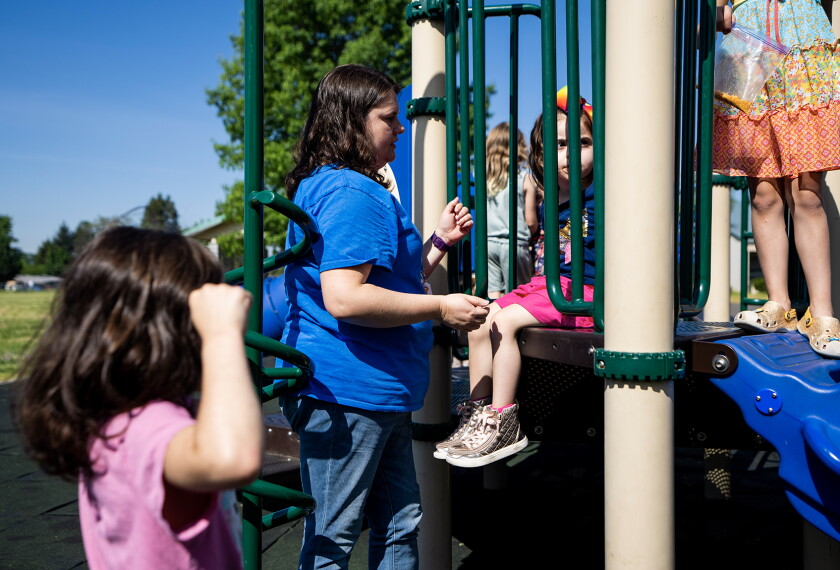
The misidentification of special education students is a problem for many educators, and some experts say the solution is more individualized than some may think.
In a recent ‘A Seat at the Table’ webinar, focused on proven interventions for academic success in special education, panelists agreed there are a handful of issues that contribute to the misidentification of Black and brown students as needing special education, with one being the mindsets educators have.
The number of students in special education in the United States has doubled over the past four decades, from 3.6 million in the 1976-77 school year to almost 7.3 million in 2021-22, according to the Pew Research Center.
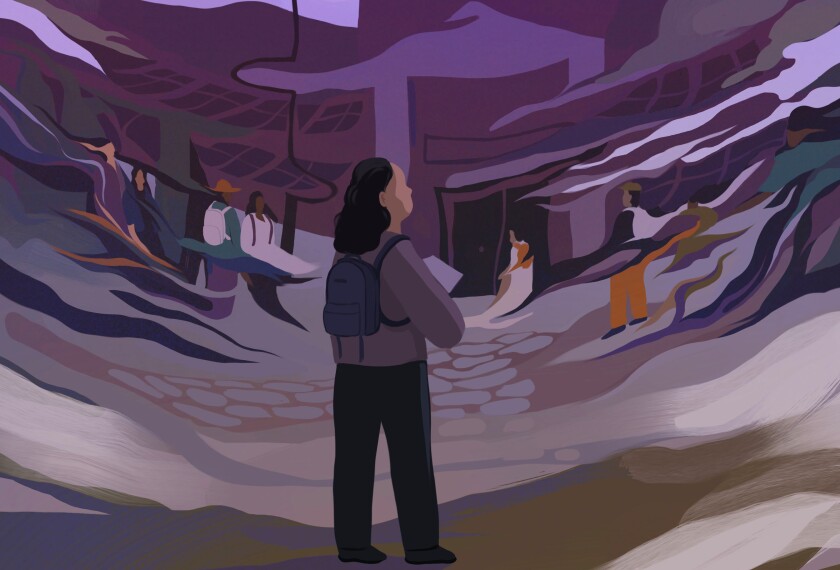
When it comes to special education, students of color can be misidentified based on teacher bias, as shown in a 2020 National Center for Learning Disabilities report. Some experts say that the solution to this challenge depends on teachers’ mindset.
“Due to bias within the education system (including within assessments and academic and other policies), students of color can be misidentified as needing special education, and are then placed in more restrictive settings,” says the 2020 report.
Refining support systems and prioritizing data-driven engagement with students can help educators change their mindsets, as panelists discussed.
“When we have a mindset that every student comes to us with strengths and assets, and things to learn ... and every part of their identity is beneficial and an asset to our community, that goes a long way,” Spencer-Iiams said.
Jennifer Spencer-Iiams, an assistant superintendent of the West Linn-Wilsonville school district in Oregon, believes mindset plays an important role in developing special education services and programs for students.
Individualized support is fundamental in understanding the resources students need on a case-by-case basis, instead of generalizing students’ needs, Spencer-Iiams added. She emphasized the importance of believing in every student’s strengths to be able to develop an appropriate support system.
Tiffany Anderson, the superintendent of the Topeka, Kan. public schools said it is important to train educators on what it means for a student to require a special education curriculum. Otherwise, teachers may categorize students as needing the special education curriculum when they actually need an alternative.
“An aligned, standards-based curriculum that is culturally relevant makes a difference in ensuring that there is not an overidentification or a disproportionate number of Black or brown students labeled as special education,” Anderson said.
She also emphasized the importance of “systems of support” that include parents to help them better understand how to advocate for themselves and their children. These systems also include the necessary instruction at home for students to “work within a space [in] which they can self-regulate their behavior,” she said.
Dorothy Valentine, a teacher in Spencer-Iiam’s district, added that support systems should be demystified to better serve students, and “explicit instruction” works for general education as well.
“It’s not just a special education thing, especially in literacy and foundational skills that all students benefit from explicit instruction,” Valentine said.
She says it’s important for educators to look at the makeup of their students, given their different individual needs, and redesign instruction to meet those needs.
When Valentine noticed some of her students having literacy struggles, instead of classifying them as needing special education, she dug further into their backgrounds. Finding that many were English-language learners, she redesigned her approach to student learning.
“I probably spent the first six to eight weeks really digging into self-regulation and tools, ... and in the end, that really served my students long term, and it served them academically as well,” Valentine said.
Valentine describes her classroom as “just a classroom,” where all students are treated equally. She says that mindset helps students more than immediately classifying them as a part of the special education system.
Spencer-Iiams, West Linn’s assistant superintendent, speaks to school leaders nationally, emphasizing the importance of diverse systems that work to meet students’ needs, instead of a generalized method of special education.
“We as leaders have to make sure there are truly well-developed systems of support where we’re not [defaulting] to disability,” Spencer-Iiams said.