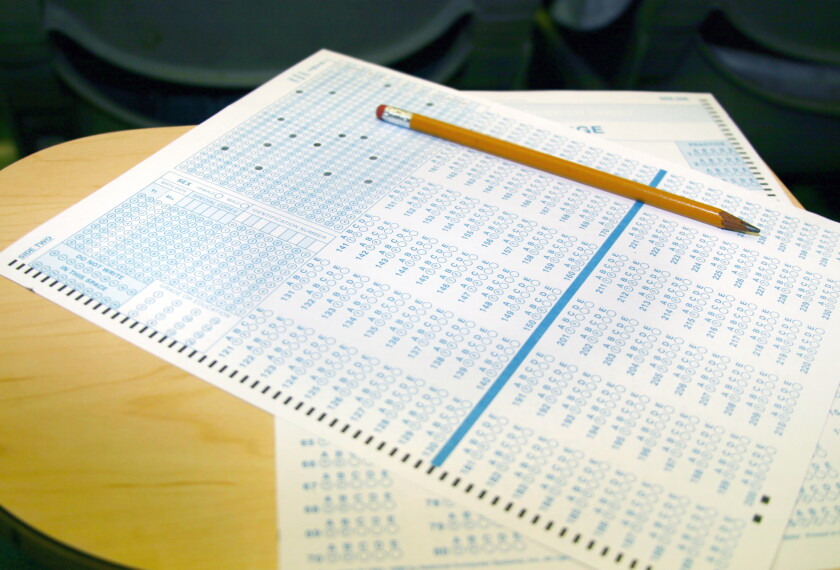
Florida’s recent decision to sharply curtail its role in a state consortium developing assessments aligned with the Common Core State Standards has called into question the prospects for the tests and whether more states will decide to chart their own course.
Republican Gov. Rick Scott last week served notice that Florida would leave the Partnership for Assessment of Readiness for College and Careers (which includes 19 states and the District of Columbia) and relinquish its role as the financial representative for the consortium, while simultaneously initiating a new search for common-core assessments aside from the ones PARCC is developing.
In a Sept. 23 letter to U.S. Secretary of Education Arne Duncan, Gov. Scott expressed fundamental concerns about the federal government’s involvement in the consortium.
“Unfortunately today, PARCC has become a primary entry point for the involvement of the federal government in many of these state and local decisions,” he wrote. The governor, however, did not highlight in this letter any specific examples of federal intrusion into state schools through PARCC.
Cost, Usefulness
Gov. Scott also cited concerns expressed over the summer by two Republican state lawmakers, Florida state Senate President Don Gaetz and Speaker of the House Will Weatherford, about the PARCC tests, including their cost and the usefulness of the results for teachers.
Officials from PARCC have said these concerns are not based on accurate information. A cost analysis by the think tank Education Sector determined that PARCC’s tests would save Florida money on assessments.
In a separate letter to the state board of education, Gov. Scott seemed to signal tepid support for the common core.
The words and actions from Gov. Scott last week are “going to have outsized significance, and it’s going to sting more” for common-core advocates than if the same thing had happened in another state, said Frederick M. Hess, who oversees education policy studies at the American Enterprise Institute, a Washington think tank. That’s because Florida is home to former Gov. Jeb Bush, a high-profile Republican and a vocal common-core champion.
But supporters of PARCC say that work on the new assessments will go on unhindered. In fact, Florida has not been actively involved in PARCC for months, said Massachusetts education Commissioner Mitchell D. Chester, the chairman of PARCC’s governing board.
“I’ve believed all along that no single state will make or break the future of PARCC,” he said.
There was some initial confusion last week about whether Florida was formally leaving PARCC altogether. Although Gov. Scott said publicly that the state was withdrawing, the state is technically remaining a member of PARCC’s governing board (although not as the fiscal agent) pending its final decision about which assessments to use for the common core, said Florida department of education spokesman Joe Follick.
In September, Florida Commissioner of Education Pam Stewart and board members had discussed deciding on a common-core assessment in March of 2014, and she said Mr. Scott’s announcement did not change that timeline.
“We’ll be examining all options,” Ms. Stewart said.
Winning Strategy?
Gov. Scott is clearly “playing to his base” and trying to quell political opposition to the common core itself among conservatives with his decision about PARCC, said Michael J. Petrilli, the executive vice president at the Thomas B. Fordham Institute, a Washington-based think tank that supports the standards.
But he argued that officials who try to distance themselves from certain policies related to the standards, while keeping the common core itself in place, may not appease the common core’s conservative critics, citing Georgia as an example.
In August, after that state had left PARCC, Georgia Gov. Nathan Deal, a Republican, ordered the state school board to conduct a review of the common core in response to opponents to the standards in the state who had raised concerns about the “reading exemplars” (essentially recommended texts) that accompany the standards.
“The politics are terrible on the right,” Mr. Petrilli said.
On the common core itself, Gov. Scott argued in a separate letter last week to Gary Chartrand, the president of the Florida board of education, that what people needed to know is “not whether our leaders are ‘for Common Core’ or ‘against Common Core,’” but whether the state had the “highest standards” while rejecting federal intrusion.
This year, both Georgia and Indiana have announced their departures from PARCC. Oklahoma has decided not to use the PARCC assessments, but it has not left the group, and Pennsylvania has said it will not use tests from PARCC or Smarter Balanced, the other multistate common-core testing group, though it hasn’t left either group.