
Assessment Report Roundup

Computer Science Draws Undergrads With Disabilities

By Sarah D. Sparks — February 07, 2017 1 min read
  • Save to favorites
  • Print

Students with disabilities are as likely as typically developing students to enter science and engineering fields in college, according to new data from the National Science Foundation.

The finding is part of the NSF’s annual study of students from traditionally underrepresented groups—including women, minorities, and students with disabilities—in science, technology, engineering, and mathematics fields.
College Track

BRIC ARCHIVE

New federal data show that students with disabilities accounted for 1 in 10 undergraduate college students in the United States in 2012. They were more likely than other students to attend a two-year institution.

As of 2012, the most recent year for data, about 2.4 million of the 21.8 million students pursuing an undergraduate degree reported having a disability. That’s 11 percent, roughly on par with the 12 percent of K-12 students with a disability in U.S. schools. Those with disabilities were significantly older than undergraduates without disabilities; 36 percent were older than 30, compared with only 24 percent of those without disabilities. They were also slightly more likely than students without a disability to attend two-year rather than four-year colleges.

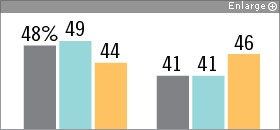
The data show students with disabilities were as likely as other students to enroll in science fields; they were a little more likely to study computer science and slightly less likely to pursue engineering or life sciences than their nondisabled peers. Students with disabilities were also equally likely to get financial aid for college.

However, students with disabilities were less likely to enroll in graduate school, often needed for top science careers, the data show. In 2012, only 7 percent of graduate students reported having a disability. And once out of college, students with disabilities who do go into science and engineering fields are as likely as their nondisabled peers to work in industry or government jobs.

Related Tags:

A version of this article appeared in the February 08, 2017 edition of Education Week as Computer Science Draws Undergrads With Disabilities

Events

This content is provided by our sponsor. It is not written by and does not necessarily reflect the views of Education Week's editorial staff.
Sponsor
College & Workforce Readiness Webinar
Smarter Tools, Stronger Outcomes: Empowering CTE Educators With Future-Ready Solutions
Open doors to meaningful, hands-on careers with research-backed insights, ideas, and examples of successful CTE programs.
Content provided by Pearson
Recruitment & Retention Webinar EdRecruiter 2026 Survey Results: How School Districts are Finding and Keeping Talent
Discover the latest K-12 hiring trends from EdWeek’s nationwide survey of job seekers and district HR professionals.
This content is provided by our sponsor. It is not written by and does not necessarily reflect the views of Education Week's editorial staff.
Sponsor
Professional Development Webinar
Recalibrating PLCs for Student Growth in the New Year
Get advice from K-12 leaders on resetting your PLCs for spring by utilizing winter assessment data and aligning PLC work with MTSS cycles.
Content provided by Otus

EdWeek Top School Jobs

Teacher Jobs
Search over ten thousand teaching jobs nationwide — elementary, middle, high school and more.
View Jobs
Principal Jobs
Find hundreds of jobs for principals, assistant principals, and other school leadership roles.
View Jobs
Administrator Jobs
Over a thousand district-level jobs: superintendents, directors, more.
View Jobs
Support Staff Jobs
Search thousands of jobs, from paraprofessionals to counselors and more.
View Jobs

Read Next

Assessment In Case You Missed It: How Schools Are Measuring Student Success
Explore stories about grading practices, what truly reflects student achievement, and more.
5 min read
Grading and assessment SR
Robert Neubecker for Education Week
Assessment Quiz Quiz Yourself: How Much Do You Know About Standardized Testing & Improving Student Outcomes?
Answer 7 questions about improving standardized testing and student outcomes.
Assessment Fewer Subjects, Students, Data Points: Feds to Scale Back NAEP
Some 4th and 12th grade tests won't proceed as planned, following sweeping cuts to the U.S. Department of Education research arm last month.
5 min read
Evaluate Score, Forecast, Businessman Holding Telescope on Performance Measure
iStock/Getty
Assessment Download A Guide to Equitable Grading in Schools (DOWNLOADABLE)
See how traditional and equitable grading practices differ in this downloadable guide.
1 min read
Grading reform lead art
Illustration by Laura Baker/Education Week with E+ and iStock/Getty
