Flanked by states moving to raise their teachers’ salaries, and having temporarily waived one of its own licensing requirements out of desperation, Arkansas is seeking a solution to a teacher shortage that policymakers there say already has reached “crisis” levels.
A new Arkansas Teacher Quality Task Force was to begin holding meetings in Little Rock this week in the hope of drafting a comprehensive strategy to better recruit and retain new educators. Appointed by the state board of education, the 18-member panel expects to examine raising salaries, expanding alternative paths into the profession, and creating new incentives to work in shortage areas.
The group—which includes state lawmakers, education officials, union leaders, and other representatives of school groups—hopes to complete a set of recommendations before the Arkansas legislature convenes for its biennial session in January.
“If we do not make major strides for teacher quality in the 2001 session, it would be extremely difficult to try to make that up in 2003,” said Lu Hardin, the director of the Arkansas Department of Higher Education. “In fact, if that happened, it would take a major tax increase, and that’s not going to happen.”
A Troubling Gap
Just how serious the situation has gotten in Arkansas became clear last month, when the state school board voted to allow some new hires to begin teaching without having taken the state’s licensing exams. To adopt such a major policy change while the legislature was not in session meant the panel had to declare a “crisis.”
The decision, however, affected only the state’s Non-traditional Licensure Program, which allows people to teach without having taken education courses or student-taught, as long as they have adequate subject-matter backgrounds and agree to attend training workshops over the summer and on weekends. Until the board’s action, such candidates had to pass exams covering basic skills, subject matter, and pedagogy before starting their first teaching jobs.
Education department officials say that after the board’s vote, 30 more candidates joined the 120 who already were in the nontraditional program. Those 30 still must pass the tests before the beginning of their second school year of teaching.
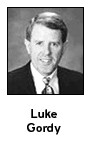
“The alternative is to have a bunch of kids in classrooms without any teachers,” said Luke Gordy, who chairs the state board. “It’s a stopgap measure, and it certainly won’t be extended past that period of time, as far as I’m concerned.”
The action followed a harsh assessment of the state’s school systems issued by the Little Rock-based Arkansas Business and Education Alliance, a nonprofit group. Arguing that the state has “come to accept the unacceptable,” a report by the alliance paints the picture of a state on the verge of slipping into dead last in the nation in education spending and student performance.
Among other data, the report put the average teacher salary in Arkansas last year at $32,350, well below the national average of $40,528 and behind neighboring Missouri, Tennessee, and Texas.
More troubling still, Mississippi and Oklahoma have embarked on new efforts to substantially raise salaries for their teachers, and Louisiana voters are poised to consider a tax plan in November that is designed to finance such an increase in their state.
“The fact of the matter is that we’re chasing a moving target,” said state Sen. John A. Riggs IV, a member of the new task force. “And what gets me frustrated is how we view education in Arkansas. All we’ve been doing is to just get incrementally better. But the fact is that our education system is one of the five worst, or the two or three worst, in the country.”
If the salary gap grows, it will exacerbate districts’ difficulty in finding qualified teachers in such high-demand subjects as mathematics and science, the Democratic lawmaker added.
By one estimate, the state’s traditional teacher-preparation programs in 1998 produced just 31 math teachers, and only two chemistry teachers. Another problem is that while some schools in central Arkansas get multiple applicants for each job opening, those in the high-poverty Mississippi Delta region are starved for recruits.
‘Some Hard Decisions’
To alleviate the problem, Arkansas policymakers expect to enact changes in what has been a relatively small alternative-licensure program. While just 150 teachers are becoming licensed this year through the nontraditional route, some 1,700 annually get their credentials through the conventional route of education coursework and student teaching.
Under a set of proposals the state school board plans to review this week, Arkansas would create a new screening committee of teachers and education department officials who would interview and evaluate applicants to the alternative program and draft individualized training plans for each.
|
Some considered “exceptionally well-qualified,” such as those with graduate degrees in the subjects they planned to teach, could waive the subject- matter portion of the state’s licensing exam—but not the sections dealing with pedagogy.
“Our intention is not to weaken the standards for admission to the teaching profession,” Mr. Gordy said. “Our whole goal is to broaden opportunities for people seeking to enter the profession.”
The teacher-salary issue is likely to be the toughest one to tackle. Last spring, Gov. Mike Huckabee, a Republican, suggested an across-the-board raise of $3,000 for Arkansas teachers, to be phased in over the next two years. Later, however, a blue-ribbon panel of K-12 and higher education leaders suggested that the raise would have to be twice that amount for Arkansas to be competitive with surrounding states.
“It’s going to be a hell of a legislative session, and it’s not going to be very fun, to be honest,” said Mr. Riggs, the state senator. “Politicians are the worst at making hard decisions, and we have to make some hard decisions.”


