After being sidetracked four years ago, ACT Inc. is about to create a national network of computerized-testing centers where it will offer products to help job-seekers learn and demonstrate the skills they need to bolster their careers.
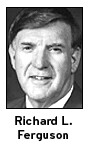
The Iowa City, Iowa-based publisher of the ACT—the college-entrance exam taken by high school students primarily in the Midwest and the South—will open 40 testing centers in the next few months and is on its way to having 250 operating by the end of next year, said Richard L. Ferguson, the president of ACT.
|
At the centers, students and people already in the workforce will be able to take ACT’s Work Keys assessment, which tests general skills. Certification exams that ACT prepares for professional organizations will also be given at the centers.
“It’s a forward-looking system,” Mr. Ferguson said in an interview last week. “The system accommodates you wherever you want to be or wherever you are.”
ACT currently operates testing centers at community colleges in Fort Smith, Ark; Cedar Rapids, Iowa; Lowell, Mass.; and Austin, Texas. New centers are scheduled to open at community colleges in large markets such Boston, Chicago, Charlotte, N.C., and New York City.
Mr. Ferguson said that by the end of next year, ACT would be operating testing centers in every major metropolitan area.
“We have many requests from parties that want to be centers,” he said. “We have identified the 250 locations that we need to be in.”
Catching Up
The test-maker fell behind in the race to create computer-based-testing centers in 1996. The National Association of Securities Dealers and ACT had been partners for two years and had reached an agreement for ACT to buy the association’s centers. But the securities dealers backed away from the deal when they received a more lucrative offer from Sylvan Learning Centers Inc. at the last minute.
ACT is suing the Baltimore-based company in a federal antitrust suit that is pending. U.S. District Judge Michael J. Melloy, the chief judge for the Northern District of Iowa, refused on Dec. 30 to rule in Sylvan’s favor and scheduled a jury trial to determine whether Sylvan had monopolized the market. Sylvan operates 1,200 testing centers in the United States.
ACT said it was seeking $50 million in damages.
In the four years since the securities dealers sold the testing centers to Sylvan, ACT has assembled partners for its new group of testing centers. It is working with EDS—a Plano, Texas, technology company—and is building its own network of centers at community colleges.
“We would be further along than we are today” if the securities dealers had not chosen to work with Sylvan, Mr. Ferguson said last week.
Michael F. Brockmeyer, the lawyer representing Sylvan, declined to comment on the case because it is pending.
The Educational Testing Service, the maker of the SAT college-entrance exam and several graduate-admissions exams, has a partnership with and ownership stake in Sylvan. As a provision of the partnership, Sylvan promises not to offer assessments from ETS competitors at its testing centers. (“Testing ETS,” Dec. 1, 1999.)
Last week, Sylvan announced it has agreed to sell its testing-center division to Thomson Corp., a Canadian publisher, for $775 million. The deal will not relieve Sylvan from liability in the antitrust case, according to Robert Burgoyne, ACT’s lawyer.
Full Service
At ACT’s computerized-testing centers, students and job-hunters will be able to determine whether they are qualified for jobs they want. After taking Work Keys, a prospective employee should know how well he or she performs skills needed for specific job descriptions.
When applicants fall short, they will be able to access software leading them through exercises aimed at improving their skills.
The nonprofit test-maker also plans to offer computerized versions of professional-certification exams at the testing centers. Its clients include associations representing social workers, dietitians, and medical technicians.
The ACT admissions test, which 1 million high school students take each year, will continue to be a paper-and-pencil exam.
The Kentucky Community and Technical College System will open centers at each of its 28 campuses. Other community college systems also are interested in creating centers at all their campuses, Mr. Ferguson said. Colorado, Hawaii, and Oklahoma are planning to open similar networks of statewide testing centers.


