A wide-ranging school accountability package was signed into law last week in South Carolina, where legislators plan to set aside $36.2 million for the 1998-99 school year to help schools meet recently adopted state standards for learning.
The reform law mandates annual ratings of schools and funding to test students of all ages, shrink class sizes, and pay for professional-development courses. In doing so, it hits on a range of school issues now in the news in many states.
“This is an historic piece of legislation for the state,” state Superintendent of Education Barbara Stock Nielsen said in a telephone interview. “It provides tools to the teachers.”
One of those tools will be mandatory report cards on school performance, due to be issued by the state school board and an oversight committee starting in 2001. The committee will be made up of educators, legislators, school administrators, and business leaders.
Last week, the reform measure drew praise from many state observers. Only a handful of conservative lawmakers opposed the bill, lobbying to include a provision allowing children in failing schools to transfer to other schools. Some also backed rating schools with an A-F system, a measure others said would stigmatize low-performing schools.
“The reality is...these standards are enough to put children back on track,” said Ed McMullen, the president of the South Carolina Policy Council Education Foundation in Columbia, a conservative think tank. “Social promotion doesn’t exist any longer. It is a guarantee that children are forced to learn.”
The reform funding is expected to be incorporated into the fiscal 1999 budget scheduled for legislative approval this week. Earlier this year, Gov. David Beasley, a Republican, proposed spending $2 billion on K-12 education overall in 1999.
Grading the Schools
Under the new law, every school in the state will be labeled annually using one of five descriptions: excellent, good, average, below average, or unsatisfactory. The report card will also list educational trends, needs, and long-term performance in the school, and include the principal’s evaluation of the school.
An external review committee will be set up to evaluate schools that rate below average or unsatisfactory.
As long as local educators and administrators are not left out of those discussions, Joyce Abel, the president of the South Carolina Education Association, said, she approves of the plan. In years past, the state ignored the plight of low-performing schools until it was too late, then intervened, usurping local advisers, she said.
“Just because a school is not performing well doesn’t mean those teachers don’t have some expertise,” said Ms. Abel, whose organization is an affiliate of the National Education Association.
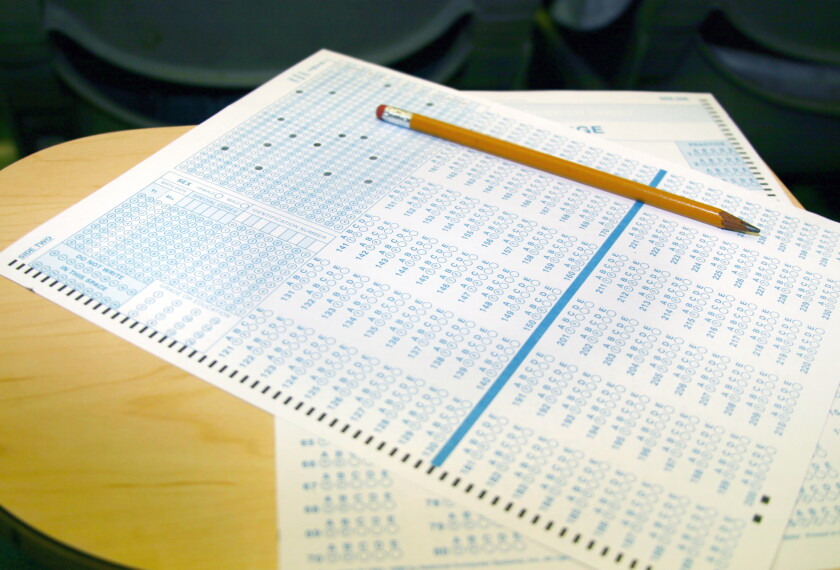
South Carolina created state standards in 1995 for the 3rd, 6th, 8th, and 10th grades and piloted tests based on those standards this April. An analysis of the test results has not yet been completed, but the state plans to spend $11.5 million in the fiscal year starting July 1 to upgrade the standards and test students in all grade levels.
Under the new law, students who do not meet state standards, as well as those set by their teachers, will be placed on academic probation and most likely held back a grade, a policy that lawmakers hope will end so-called social promotions.
“The thing I’m most pleased about is that we’ve now got a rigorous set of standards to be applied throughout the entire state,” said Clara Heinsohn, a 4th grade teacher who served on a state policy committee that shaped the accountability bill. “Consequently, everyone will be on the same page.”
The law also provides for spending anywhere from $800,000 to $1.4 million in fiscal 1999 for teacher professional development and hiring of principal-mentors and master-teachers for disadvantaged districts.
Class-Size Provision
As part of the reform package, South Carolina also plans to spend $20 million in fiscal 1999 on reducing class sizes.
The law mandates a pupil-teacher ratio of 15-to-1 in the early grades in disadvantaged schools.
Beginning in the fall, schools across the state will add classes in either the 1st, 2nd, or 3rd grade in an attempt to shrink the student-to-teacher ratio, Ms. Nielsen said in the interview.
Money remaining in that pot will be used to limit class sizes in schools with high percentages of students who receive free or reduced-price lunches, she said.