Education Funding

Schools Can Help Families Apply for Federal Help in Paying for Home Internet Access

By Alyson Klein — May 12, 2021 2 min read
Image of a child's hand on a keyboard.
  • Save to favorites
  • Print

Families who qualify for the free and reduced-price lunch program can get $50 off their monthly broadband bills, thanks to a new, emergency federal program, the U.S. Department of Education and the Federal Communications Commission emphasized in a May 12 meeting.

Low-income families living on tribal lands are eligible for an even steeper discount, $75 a month.

What’s more, students in post-secondary education who receive Pell Grants can also tap the funding. And eligible families can receive $100 in one-time help in paying for digital devices—such as laptops, tablets, and desktop computers—as long as the family contributes between $10 and $50 for the hardware.

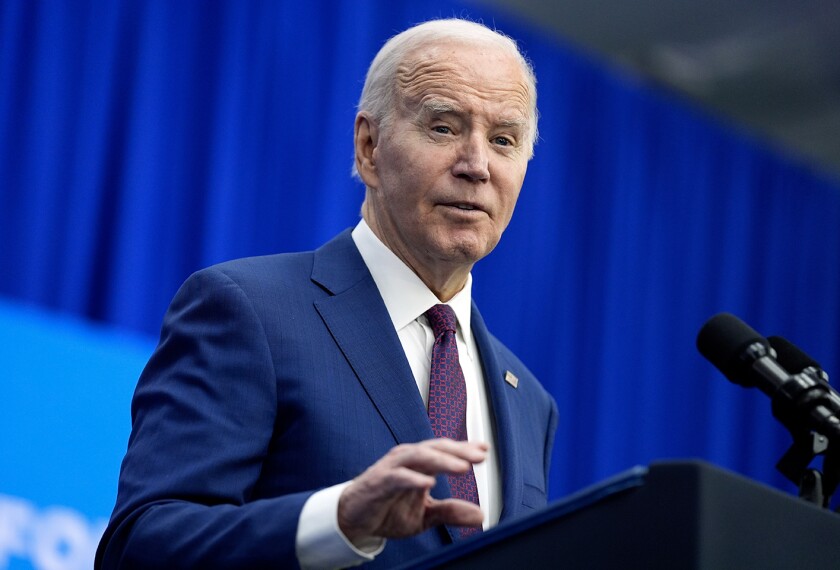
Applications for this $3.2 billion program opened just this week, even though the money for it was approved by Congress late last year. The Biden administration wants to make sure that families know about the benefits and it is urging school districts to help spread the word.

“Internet access is essential for modern life,” said Jessica Rosenworcel, the acting chairwoman of the FCC, during a call with reporters. “Broadband access is no longer a nice to have, it’s a need to have.”

Even before the pandemic, she said, students sat in cars in school parking lots so that they could access school Wi-Fi to complete their assignments, or headed to a fast-food restaurant and did their “homework with a side of fries.”

But once COVID-19 hit and nearly every school was forced to hold virtual classes, “the homework gap became a full-fledged education gap,” she said.

Speaking at the same May 12 meeting, U.S. Secretary of Education Miguel Cardona, who served as state schools chief in Connecticut at the start of the pandemic, said that when school buildings shut down, the state immediately “wanted to close the digital divide. Providing broadband access and providing a digital device was essential.”

The federal funding for the program—the Emergency Broadband Benefit—is temporary, and Rosenworcel was unable to say how long she expected the money to last. Still, advocates are already pushing to make the funding permanent.

The FCC is also exploring whether the E-rate program—which currently funds internet access in school buildings and libraries—could be expanded to include students’ homes.

The Emergency Broadband Benefit program will produce key data on broadband needs, and the administration will study it closely, Rosenworcel said. “My hope at the FCC [is that] we can return to Congress and offer some ideas about what a successor might look like,” she said.

School districts can also help raise awareness of the program, and even give families a hand in applying, the department suggested. For instance, districts can create an “outreach team” or work with community organizations to get the word out, and help with applications.

They can also help families find participating internet service providers in their communities by using a “Companies Near Me” tool. Or they can organize a “provider fair” where families can meet with local providers to compare services and ask questions. The Biden administration created an “outreach tool kit” to help with these efforts.

Events

This content is provided by our sponsor. It is not written by and does not necessarily reflect the views of Education Week's editorial staff.
Sponsor
Special Education Webinar
Bringing Dyslexia Screening into the Future
Explore the latest research shaping dyslexia screening and learn how schools can identify and support students more effectively.
Content provided by Renaissance
Artificial Intelligence K-12 Essentials Forum How Schools Are Navigating AI Advances
Join this free virtual event to learn how schools are striking a balance between using AI and avoiding its potentially harmful effects.
This content is provided by our sponsor. It is not written by and does not necessarily reflect the views of Education Week's editorial staff.
Sponsor
Reading & Literacy Webinar
A Blueprint for Structured Literacy: Building a Shared Vision for Classroom Success—Presented by the International Dyslexia Association
Leading experts and educators come together for a dynamic discussion on how to make Structured Literacy a reality in every classroom.
Content provided by Wilson Language Training

EdWeek Top School Jobs

Teacher Jobs
Search over ten thousand teaching jobs nationwide — elementary, middle, high school and more.
View Jobs
Principal Jobs
Find hundreds of jobs for principals, assistant principals, and other school leadership roles.
View Jobs
Administrator Jobs
Over a thousand district-level jobs: superintendents, directors, more.
View Jobs
Support Staff Jobs
Search thousands of jobs, from paraprofessionals to counselors and more.
View Jobs

Read Next

Education Funding Opinion The Federal Shutdown Is a Rorschach Test for Education
Polarization, confusion, and perverse incentives turn a serious discussion into a stylized debate.
7 min read
The United States Capitol building as a bookcase filled with red, white, and blue policy books in a Washington DC landscape.
Luca D'Urbino for Education Week
Education Funding Many Districts Will Lose Federal Funds Until the Shutdown Ends
And if federal layoffs go through, the Ed. Dept. would lack staff to send out the funds afterward, too.
7 min read
Students from Rosebud Elementary School perform in a drum circle during a meeting about abusive conditions at Native American boarding schools at Sinte Gleska University on the Rosebud Sioux Reservation in Mission, S.D., on Oct. 15, 2022.
Students from Rosebud Elementary School perform in a drum circle on Oct. 15, 2022. The Todd County district, which includes the Rosebud school, relies on the federal Impact Aid program for nearly 40 percent of its annual budget. Impact Aid payments are on hold during the federal shutdown, and the Trump administration has laid off the federal employees who administer the program.
Matthew Brown/AP
Education Funding Trump Admin. Relaunches School Mental Health Grants It Yanked—With a Twist
The administration abruptly discontinued the grant programs in April, saying they reflected Biden-era priorities.
6 min read
Protesters gather at the State Capitol in Salem, Ore., on Feb. 18, 2019, calling for education funding during the "March for Our Students" rally.
Protesters call for education funding in Salem, Ore., on Feb. 18, 2019. The Trump administration has relaunched two school mental health grant programs after abruptly discontinuing the awards in April. Now, the grants will only support efforts to boost the ranks of school psychologists, and not school counselors, social workers, or any other types of school mental health professionals.
Alex Milan Tracy/Sipa via AP
Education Funding Trump Administration Slashes STEM Education Research Grants
Some experts say the funding cuts are at odds with the administration's AI learning priorities.
3 min read
Vector illustration of a giant pair of scissors coming in the side of the frame about to cut dollar signs that are falling off of a microscope. There is a businessman at the top of a ladder looking down into the microscope at the dollar signs falling off the lense.
Collage by Gina Tomko/Education Week and Getty